Insights < BACK TO ALL INSIGHTS

Dismissive of Dismissal
Dismissive of Dismissal
By: James Trusty
During the two Trump administrations, a trend has begun to emerge of federal judges challenging the once-unrestricted authority of the Department of Justice (DOJ) to dismiss indictments. The longstanding framework of separation of powers suggests this judicial pushback is unsupported activism, but the judges claim the Federal Rules of Criminal Procedure (“Rules”) do not relegate their role to rubber stamping. Ultimately, this trajectory may lead us to an impossible impasse—a game of chicken where reputations, relationships and the balance of power might be forever altered in the context of dismissal.
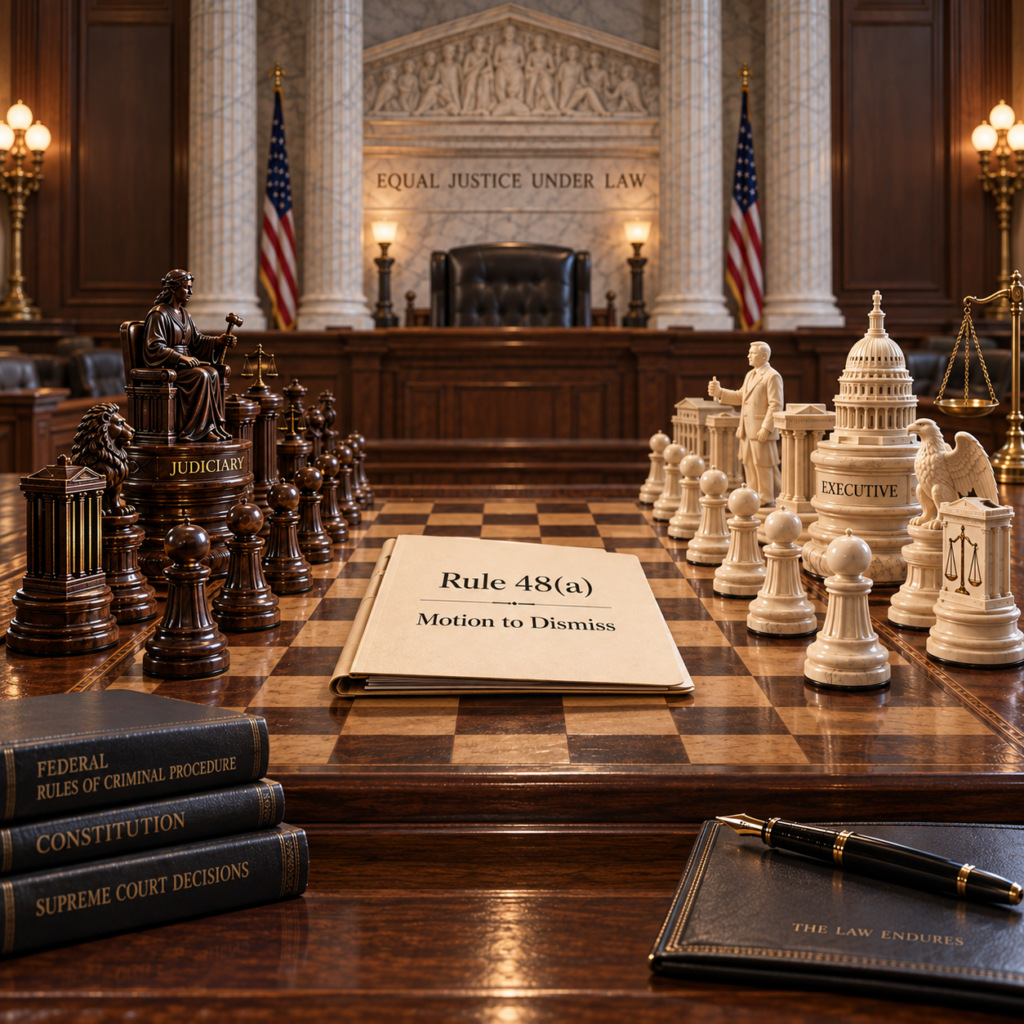
Pursuant to Rule 48(a), “[t]he government may, with leave of court, dismiss an indictment.” Exactly what “leave of court” means in terms of judicial scrutiny is the challenging question. Some case law suggests that the court’s role is limited to protecting a defendant from prosecutorial gamesmanship manifesting in dismissing an indictment with an eye towards re-indicting. The prejudice to a defendant in that scenario may be where the first indictment was simply a tool to incarcerate the defendant while an investigation continued, or where speedy trial rights are being circumvented by the indictment and reindictment sequence.
Dismissal with Criticism
But a high-profile prosecution in Washington, D.C. challenged the status quo. General Michael Flynn was charged with making a false statement to the FBI in 2017. He pleaded guilty but the sentencing date dragged on as his attorney raised the possibility of withdrawing the guilty plea. Before the matter was ultimately subjected to a pardon in late 2020, the Trump Administration’s DOJ sought to dismiss it. Not only did Judge Emmett Sullivan balk at simply accepting the dismissal’s validity, but he appointed former mob prosecutor and District Court judge John Gleeson as an amicus curiae[1] to help Judge Sullivan determine whether he had to dismiss the case. Gleeson skewered the decision-making of the Trump DOJ,[2] and the D.C. Circuit Court of Appeals eventually ruled that Judge Sullivan could explore the DOJ’s reasoning before making any decision to dismiss. Tired by the meddlesome process, President Trump pardoned Flynn on Thanksgiving. Judge Sullivan soon after dismissed the case, but not before issuing a highly critical 43-page opinion.
Last week, The White House Government Transparency Task Force released notes and a report from the FBI agents who interviewed Flynn. They are reportedly inconsistent on capturing the key components of the false statement allegation.[3] These previously undisclosed bombshells would have likely mooted the entire justification battle if they had seen daylight back in or before 2020, as should have happened through the discovery process.
Judicial Pushback
In Brooklyn, the high-profile dismissal battle over the indictment of Indian billionaire Gautam Adani and several company executives in 2024 has been presided over by Judge Nicholas Garaufis, and he has taken an active role that could be viewed as even more aggressive than Judge Sullivan’s approach in Flynn. The dismissal of fraud and bribery charges pending against Adani was accepted by the judge on a justification of insufficient evidence. But to date he has refused to dismiss bribery and obstruction charges against Adani’s codefendants, challenging DOJ’s representations as to its reasons and likely being aware of media reports suggesting wrong-doing or even quid pro quos as the true motivation of the Administration in dismissing the charges. Judge Garaufis even went so far as to order Adani to swear off the possibility that his promise of a $10 billion investment in the U.S economy was actually a quid pro quo for dismissal. Requiring a criminal defendant to support a prosecution’s planned dismissal by answering questions under oath is truly an aggressive moment of judicial involvement.
Last month the issue resurfaced in Washington, D.C., with Judge Carl Nichols refusing to immediately dismiss Steve Bannon’s contempt of Congress conviction. Judge Nichols’ denial indicated that the government’s motion “does not explain its motivations for seeking dismissal,”[4] which seems to suggest a perspective on dismissal much like Judge Garaufis’s treatment of Adani. For the moment, DOJ is likely considering whether to accept Nichols’ invitation to re-submit the motion with more specificity, but they also may explore alternatives (like a higher court issuing a mandamus to Judge Nichols) so as to not help create this new procedural precedent.
A little earlier in August, U.S. District Judge Amit Mehta granted the motion to dismiss the cases against eight Oath Keepers, who had been convicted of seditious conspiracy stemming from January 6. Judge Mehta pointed out that the post-verdict motion to dismiss did not cite legal deficiencies, prosecutorial misconduct, or anything wrongful about the convictions, but his strong dislike for the result did not supplant “the primacy of the Executive Branch in making charging decisions.”[5] This judge, then, chose to loudly criticize the Executive Branch’s decision, but he did not lose track of the constitutional balance wherein prosecutors can indict—or “un-indict”—with the judge having no real control over those decisions.
The Slippery Slope
One potential flashpoint for this conflict between branches of government could be when a judge refuses to dismiss but DOJ digs in against the court’s intrusiveness. If neither the prosecution nor the defendant wants the case to go forward, but a judge sets the matter in for a hearing, what happens if nobody shows? Would a judge really issue a bench warrant against a defendant who has been told his/her case is being dismissed? Would a judge issue a show cause order for a contempt hearing because DOJ refuses to staff a hearing that the judge is forcing upon them?
It is fair to point out that these non-dismissal scenarios seemingly are taking place only in high-profile matters. Indeed, most practitioners will agree that whether in federal or state courts, motions to dismiss are routinely accepted with almost no detailing of the prosecutor’s rationale. The fact that the fight seems limited to high-profile matters suggests that judges are rising to the lure of media attention of their political commentary rather than uniformly pursuing some principled interpretation of “leave of the court.”
If the judges are overreaching and blurring the line that separates governmental powers, they could also—unwittingly, I’m sure—be steering us all towards a criminal justice system like that in France, where an investigating magistrate can imprison a target for months prior to any indictment, question the target in court for endless hours, and forever blur the distinction between judges and prosecutors. It may be premature to make such a dire prediction, but the impact of these fights over courthouse power should not be underestimated.
[1] “Friend of the Court.”
[2] https://www.politico.com/news/2020/06/10/gleeson-flynn-sullivan-barr-justice-department-311018
[3] https://www.msn.com/en-us/news/other/new-fbi-notes-undercut-comey-era-false-statements-case-against-michael-flynn/ar-AA2bTQpt?ocid=entnewsntp&pc=U531&cvid=6aa2ea17b3d74089b53b74e18ed8572d&ei=12
[4] https://news.bloomberglaw.com/us-law-week/doj-fails-to-get-steve-bannons-contempt-indictment-dismissed
[5] U.S. v. Elmer Rhodes III, et al. Case No. 22-cr-00015, document 981, page 15.