Insights < BACK TO ALL INSIGHTS

How Much is Too Much? – Second Circuit Establishes Guardrails for Sentencing Hearings
How Much is Too Much? – Second Circuit Establishes Guardrails for Sentencing Hearings
By: James Trusty
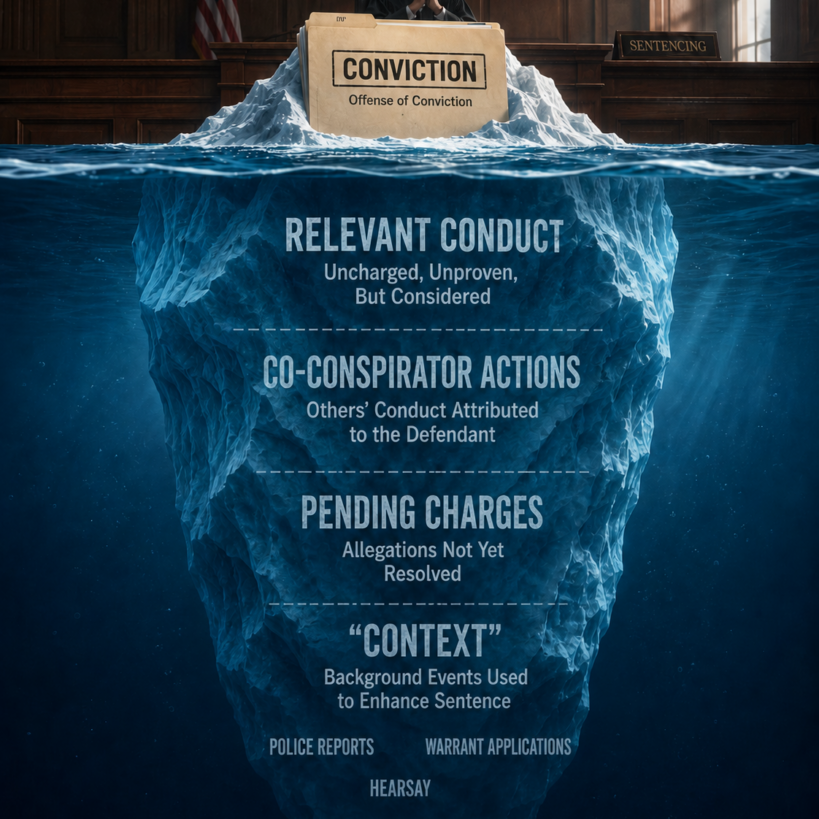
As any federal criminal practitioner can attest, judges holding a sentencing hearing are privy to an intentionally wider universe of information about the defendant than a jury would have heard about at trial. We want judges to consider all sorts of things about the offender and the offense, beyond just the facts establishing the crime – social background, employment history, criminal record, substance abuse history, mental health issues, and more. Particularly in federal proceedings, a lot of ink, angst, and argument is devoted to addressing thorny issues of unadjudicated “relevant conduct” and “jointly undertaken criminal activity.” In many cases, these expansive concepts can lead to a tax case having the same penalty as a murder prosecution (“Al Capone sentenced for tax evasion”) or a judge holding defendant A accountable for co-conspirator Z’s arguably free-lanced criminal conduct.
Last month, the Second Circuit addressed the need to conform to procedural protections before slamming a defendant for new (but unresolved) criminal conduct or for treating another person’s criminal conduct as simply “context” to enhance the punishment of the defendant appearing for sentencing. In United States v. Chase Dralle, AKA Chevy, No. 24-2424 (2nd Cir., May 12, 2026), the Court reviewed the sentencing of Dralle, convicted of illegal receipt of a trafficked firearm, before a Connecticut District Court judge. The gun conviction carried with it a stipulated guideline range of 12-18 months of imprisonment, but after considering the actions of Dralle’s gun dealer and accepting that Dralle was responsible for a post-arrest assault that had not yet been charged, the judge imposed a 30-month sentence.
Three months before Dralle bought the illegal firearm from a man named Bagley, Mr. Bagley’s vehicle was involved in two separate shooting incidents—one where Bagley was shot and showed up at a hospital1 and another where a person in another car was the recipient of a gunshot wound. The sentencing court gave confusing lip service to the notion of Dralle “not being sentenced here for those things” while simultaneously announcing it “can’t ignore the context” accompanying Dralle’s crime.
The Second Circuit focused on the procedure that must accompany factual determinations in a sentencing hearing. There was no allegation that the conduct of Bagley involved “jointly undertaken criminal activity” or any allegation that Dralle and Bagley were co-conspirators. Practically speaking, a substantive offense of conviction (no conspiracy charge) and a limited statement of facts to support the guilty plea are key safeguards from the defense perspective. The prosecutors were left in the unenviable position of having to latch on to the judge’s “context” claim to excuse the use of those prior shootings as relevant, foreseeable conduct to enhance Dralle’s sentence. Even with defense counsel failing to object at the sentencing—thus creating a normally unsurmountable plain error standard of review—the Circuit remanded Dralle’s case for resentencing based on this “contextual” leap above the applicable sentencing guideline range.
The Second Circuit’s opinion spent considerably more time addressing the post-offense assault allegation, again providing a procedural roadmap for the consideration of pending criminal matters. Here, there was no need to assess foreseeability or the parameters of conspiratorial activity, as the accusation was that Dralle himself got into a physical melee, referred to as the “Trumbull incident” based on its occurrence in Trumbull, Connecticut. Once again, defense counsel never uttered a clear objection to the judge’s consideration of this incident, but the judge’s procedural flaws seemingly overshadowed the question of which standard of review would ultimately apply.
The Court noted the general availability of relevant conduct to a sentencing judge, but pointed out that facts relevant to the sentencing must be found by a preponderance of the evidence. While the sentencing judge has broad discretion on how to resolve these factual issues, it cannot just treat the conduct as proven simply because it is described in a Probation Office warrant request or even a police report. Beyond the foundational issue, the sentencing judge never announced the basis of its fact-finding, specifically asked the defense for its position on the conduct’s applicability, nor even made a finding that the preponderance of evidence standard had been met. In Dralle, all the judge had was a warrant request with a factual summary of the skirmish, and because of the Trumbull incident’s recency, the accusation never made its way into the Pre Sentence Investigation report. While the Second Circuit pulled up short from relying on those procedural flaws clearly establishing plain error (due to the remand based on the other claim) its message about record-creating is clear.
The dissent blasted away at how the majority “flyspecks” the sentencing proceeding, undervalues the significance of a plain error standard, and requires “robotic incantations” by the sentencing judge. The dissent also points out that the whole Trumbull incident analysis technically constitutes dicta. At heart, the dissent gets to a question left somewhat unresolved, if subtly disparaged, by the majority opinion – was the 30-month sentence unreasonable? Not surprisingly, the dissent was fine with the upward variance.2
White collar practitioners, in particular, have gotten sadly accustomed to “jointly undertaken activity” serving to wipe out distinctions based on having a lesser role in the crime. Dralle is a good reminder that objecting to use of unadjudicated crimes or “contextual” conclusions by the judge remains an important obligation, and fighting hard to keep police reports or similar documents from being deemed sufficient proof of a damning fact is a strategy that can pay off. Fresh off an appellate admonishment, the judge will be fascinating to watch during Mr. Dralle’s remanded sentencing.