Insights < BACK TO ALL INSIGHTS

Murdaugh She Wrote
Murdaugh She Wrote
By: James Trusty
As the information regarding Alex Murdaugh’s conniving, murderous ways began to spread far beyond the Lowcountry of South Carolina and into the cable and social media airwaves, a curious and ominous thing took root. The temptation of star power and riches slumped stealthily behind the public face of the proceedings, causing a low-level bureaucrat to destroy the notion of an impartial jury in one of the country’s more conspicuous trials.
High profile trials will always be a big part of American culture. Many of us follow each “trial of the century” with rapt attention. I feel antiquated mentioning the OJ Simpson trial—it now feels like a case that I have to pull out of a dusty World Book Encyclopedia to remind the younger generation that the verdict announcement was one of those “where were you when…” moments in American history. Of course, even without the modern proliferation of media, we have always had huge trials. The kidnaping and murder of Charles “Lucky” Lindbergh’s baby by Bruno Hauptmann led to a death penalty verdict in 1935. The Rosenbergs espionage trial in 1951 led to their execution just two years later.[1] Hell, more recently we had people calling the divorce trial of Johnny Depp and Amber Heard the “trial of the century,” equating the once-couple’s squalid marriage details with the juiciest murder-mystery.
Fascination with these trials probably is accompanied by a whole range of motivations, ranging from schadenfreude or voyeurism to a simple desire to see justice fairly meted out. That’s all fine, and there’s no sign of it changing anytime soon. What is not fine is the increasingly common phenomenon of “celebrity jurors”—people who seek to get on the jury with their own agenda to later embark on media tours and even, in some cases, to try to cash in with a book. Enter the latest evolution of that troubling trend, Rebecca Hill.
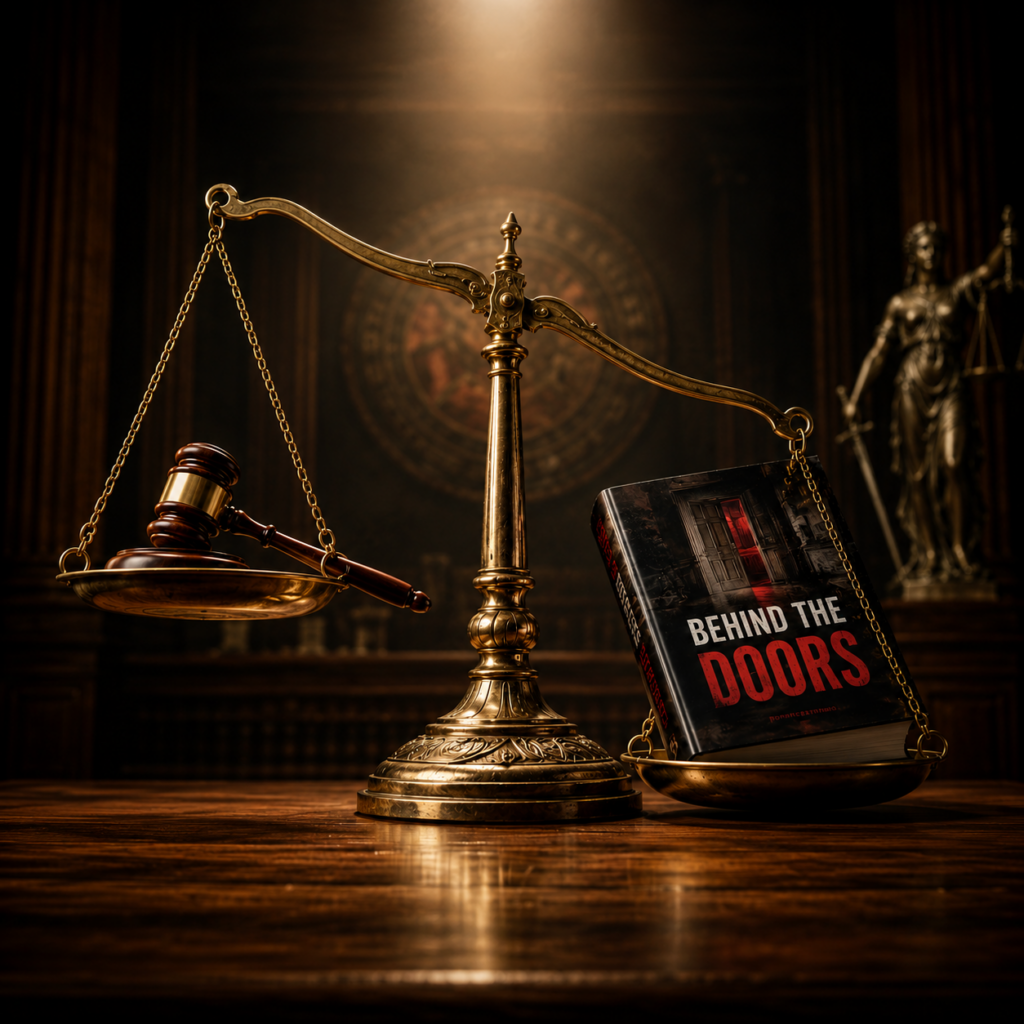
During Murdaugh’s non-capital trial in 2023, the courthouse clerk—an elected official responsible for courthouse operations and administration—decided to put all ten fingers on the scales of justice. Ms. Hill was planning on writing a book called “Behind the Doors of Justice: The Murdaugh Murders.” Apparently to make sure the book’s final chapter went the way she wanted it to go, Ms. Becky alerted the jurors to the likelihood of Alex lying on the witness stand, dangled the “you all will be famous” pledge in front of the sequestered twelve, and even lied to an inquiring judge about sharing sealed exhibits with a reporter. She would eventually plead guilty to obstruction and misconduct in office, resulting in no jail time but requiring her to pay back $11,000 in bonuses she had authorized for herself during her Reign of Error.
Yes, it is fair to say I am vilifying this pathetic version of a public servant. Her greed for fame and book sales ultimately rendered a long and difficult trial a legal nullity. Imagine being a loved one of Maggie or Paul Murdaugh and finding out a greedy clerk had destroyed the finality of the trial and the sanctity of its guilty verdict. So there’s no confusion, all of us should still hold plenty of moral condemnation in our hearts for the ruthless murderer of an innocent mom and her son. Primary blame for the event remains primary blame.
That said, I would suggest that Becky Hill was not the only bad actor that tainted Alex’s trial. Shortly after the verdict, the defense attorneys caught wind of Becky’s bad behavior, particularly as her book hit the shelves just four months after the trial. They soon obtained sworn affidavits from jurors, documenting the misconduct, and even including book-hungry Becky advising the jury, “this shouldn’t take long” as they began their deliberations. This led to another unforgiveable chapter of poor judgment – Justice Jean Toal.
Justice Toal, a former South Carolina Supreme Court Chief Justice, was brought into the case to handle the motion for new trial. Justice Toal’s questioning of Hill was pointed and effective in exposing Hill’s unauthorized sharing of sealed materials. But Toal’s ultimate denial of the motion for a new trial was home cooking of the worst variety. She consistently relied upon the state’s powerful evidence against Murdaugh as a way of white-washing the outrageous misconduct of Hill. In fact, the former Chief Justice was dismissive of the juror testimony, recharacterizing it in her “factual findings” in a minimalist, bland way. It struck me at the time that she was sugar-coating serious procedural fouls, and her colleagues on the South Carolina Supreme Court saw through it as well, citing “shocking jury interference” in unanimously reversing the conviction last week. Whether Toal had some misplaced loyalty towards the clerk or an overriding disdain for sociopathic lawyers who slaughter their families, she was uniquely positioned to sadly and somberly stand up for fair process, which is our best guarantor for fair results. Her job left no room for saying “meh” to Hill’s jury tampering.
Not to be outshined by the clerk and Justice’s procedural follies, the prosecution team has now announced the possibility of seeking the death penalty in the retrial, despite deciding against its pursuit before the 2023 trial. Legally, they may be correct in deciding they are not foreclosed by “implied acquittal” concepts that would attach Double Jeopardy protections to the non-death verdict from trial 1, but they are literally walking themselves into a textbook example of vindictive prosecution. Due Process protects a defendant from retaliatory actions of a prosecutor after successfully exercising a legal or constitutional right. Succeeding on an appeal based on misconduct in the courthouse and then facing the death penalty is second only to prosecutorial misconduct in triggering a valid vindictiveness claim. I certainly would not have shed a tear if Alex had been sentenced to death in the first trial, but pursuing it now looks and feels weirdly retaliatory.
Lowcountry justice can still prevail with a successful retrial and reimposition of a life sentence. But the institution of justice needs new rules and/or new vigilance to stop dishonesty during the jury selection process and within the surrounding courthouse administration. The halting of this disturbing trend of cashing in may not be easy. One possibility would be an expansion of the “Son of Sam” laws that many states have enacted to keep offenders from cashing in with kiss-and-tell books from prison, although First Amendment concerns have generally narrowed those laws to be forfeiture actions against the convicted. Telling jurors or others with familiarity with the case that they cannot write a book may be constitutionally problematic. Frankly, the best answer to this problem does not leap to mind, but inaction will only guarantee injustice–and each compromised verdict only erodes public faith in the important institution of criminal justice.
[1] There have always been questions as to whether Ethel did anything other than support her husband in his sharing of atomic secrets with the Soviet Union. Declassified documents from the National Security Agency as well as from Russian sources (to the extent those can be trusted) suggest she knew of Julius’s conduct but did nothing to actually justify the prosecution.