Insights < BACK TO ALL INSIGHTS

What Witnesses Need to Know About Congressional Investigations, Part 1
What Witnesses Need to Know About Congressional Investigations, Part 1
By: James Trusty
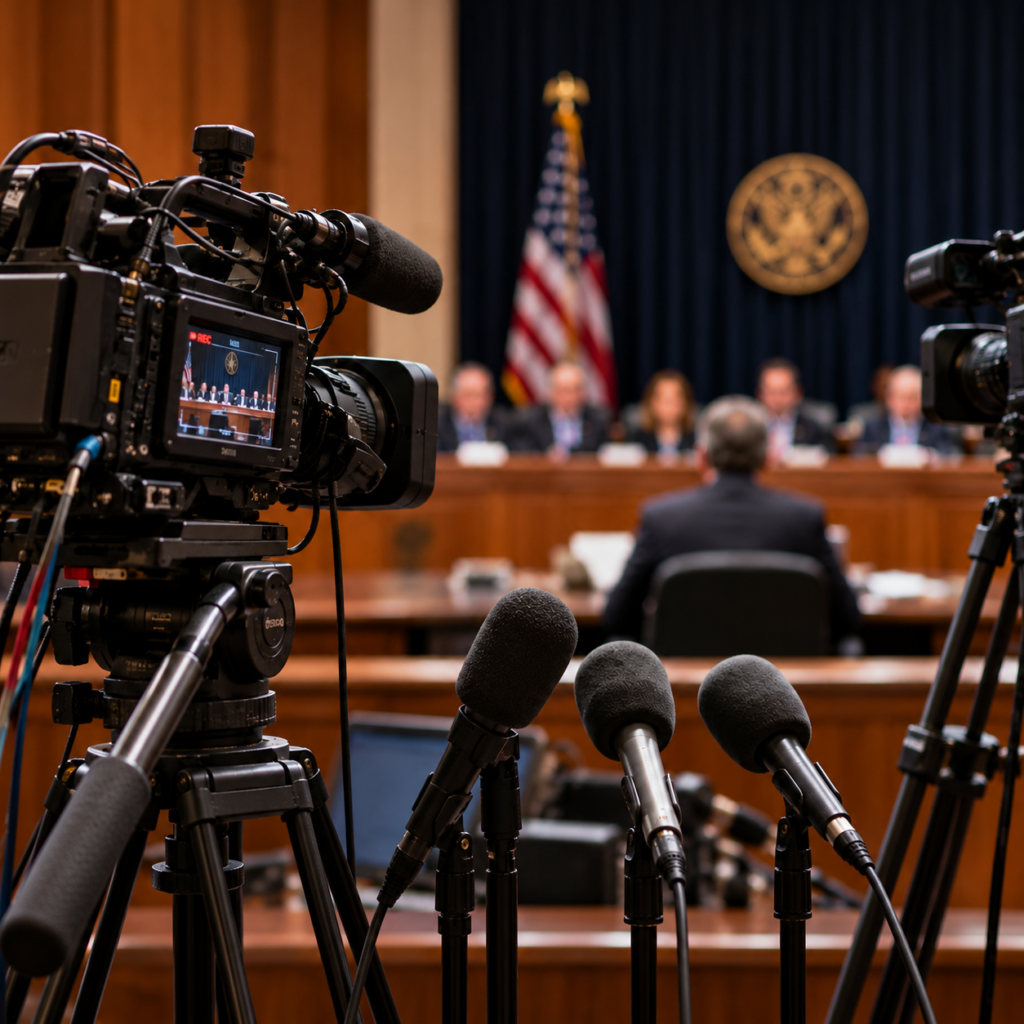
One of the consequences of the midterm blue wave is that Democrats ascending to committee chairs will bring a torrent of subpoenas and interviews, covering topics ranging from the handling of the Iranian war to presidential pardons to the regulation of AI, as well as all points in between. Election night comments like “Lawyer up,” “Subpoenas,” and “We’re going to bring accountability to those who have visited unprecedented corruption on this country,” indicate that Democratic leaders plan to call Trump administration officials and associates to testify beginning in January. Hearings are partisan by design, but witnesses should also expect detailed, well-researched questions. Congressional hearings follow looser rules than courts and are broadcast publicly, so inadequate preparation can carry serious legal and reputational consequences.
How does Congress notify a witness that it wants their testimony, and can a subpoena be challenged?
Witnesses facing these interviews may find out about their impending testimony through a variety of means. There may be letterhead requests for information, documents, or answers that serve as an informal way of collecting information that otherwise would require a subpoena. Others may sense what is coming because of soundbites such as the above ones, and sometimes the first contact with Congress is a lengthy and accusation-filled subpoena. In typical litigation, the lawyer’s first instinct is to see if there is a way to quash, or at least narrow, the subpoena’s reach through a filed motion. In congressional inquiries, however, the “legislative purpose” requirement for oversight is extremely broad (see Barenblatt v. United States, 360 U.S. 109 (1959)). A good advocate may be able to work with staffers to narrow the subpoena’s reach by agreement, but courts rarely intervene if negotiations fail (see Eastland v. U.S. Servicemen’s Fund, 421 U.S. 491 (1975)).
Should a witness agree to a voluntary interview or closed-door deposition?
Once a witness learns Congress wants their testimony, the tactical decisions begin. A voluntary interview or closed-door deposition lets counsel negotiate terms such as scope, but the committee can still compel testimony later, and it can release the transcript or quote it in a public hearing. Counsel should weigh those risks before agreeing. Either way, the witness needs preparation on the procedural rules and on the risk that an out-of-context statement becomes a damaging soundbite.
What happens if a witness ignores or violates a congressional subpoena?
Compelling a witness’s appearance and truthful testimony is enforceable under the power of contempt (2 U.S.C. §§ 192, 194) and the federal perjury and false statement laws. Ignoring a subpoena and not showing up risks contempt of Congress and a criminal referral. Notably, former White House trade advisor Peter Navarro declined to cooperate with the House Select Committee, citing former President Trump’s invocation of executive privilege. Courts rejected that argument, and a jury convicted him of contempt of Congress. He served four months in prison after reporting in March 2024. Contempt referrals are prosecuted by the Department of Justice, which has discretion over whether to bring charges, so enforcement depends in part on the administration in office. Sworn or unsworn, a clear and provable false statement to Congress can also lead to a DOJ referral.
Should a witness take the Fifth Amendment before Congress?
A witness with a legitimate Fifth Amendment privilege against self-incrimination can invoke it before Congress (see Quinn v. United States, 349 U.S. 155 (1955)). The privilege applies when the witness has a reasonable apprehension of criminal prosecution. While a legally sound invocation carries no formal penalty, it can carry a public cost. Members often press witnesses about an invocation, and the exchange can become a soundbite that shapes public opinion. When Dr. Anthony Fauci invoked the Fifth Amendment repeatedly at a July 2026 Senate hearing, Sen. Josh Hawley asked what color tie he was wearing, and headlines followed. That kind of coverage can help or harm a witness’s reputation and legal position. Whether to invoke the Fifth is a decision for the witness and counsel to make together, before the hearing.
Do attorney-client and executive privilege apply in a congressional investigation?
Attorney-client privilege may not protect a witness before Congress. Congress maintains it has no obligation to recognize it, though the Supreme Court has suggested in passing that common law privileges may apply to congressional subpoenas (see Trump v. Mazars USA, LLP, 140 S. Ct. 2019 (2020)). In practice, committees often avoid questions that call for privileged attorney-client communications.
Executive privilege works differently. It belongs to the presidency, not the witness, and the sitting president’s position carries the most weight. President Biden declined to assert it over President Trump’s White House records requested by the January 6 committee, and the Supreme Court declined to block their release (Trump v. Thompson, 142 S. Ct. 680 (2022)).
Because neither privilege is guaranteed, a witness should not assume it will hold. Counsel should identify privileged communications early, raise them with committee staff before the hearing, and prepare the witness for how to respond if a question reaches them. A witness who withholds information on a privilege claim the committee rejects risks contempt, as Peter Navarro’s prosecution shows.
What is congressional questioning like?
Congressional questioning differs from courtroom examination. Members often make statements rather than ask questions, and witnesses may be asked only to confirm or deny them. In the House, each member typically gets five minutes to question a witness, so sustained, building-block cross-examination is rare. Because questioning alternates between parties, a witness can face friendly questions from one member and adversarial ones from the next. Witnesses should practice short, direct answers and expect the tone to change from one member to the next.
How should a witness answer hostile questions from Congress?
Hostile questions are expected, so a witness should set an answering strategy before the hearing. Counsel should identify the angles each member is likely to pursue, based on the committee’s political aims and the member’s background. In the hearing room, a witness who stays calm under withering criticism can make the questioner look unbalanced or partisan. The witness should answer the question asked, stay truthful, and avoid arguing or speculating. Knowing the procedural rules also helps, including how to respond when a question misstates the facts.
Do witnesses need a lawyer experienced in congressional investigations?
Yes. Congressional investigations combine legal exposure with public scrutiny. Experienced counsel knows how committee staff work, how hearings run, and how testimony can affect a related criminal or civil matter. Counsel should be involved before the first document request or interview so the witness can negotiate scope, decide on voluntary testimony, and prepare for questioning.
Ifrah Law’s white collar defense lawyers represent individuals and companies facing government investigations. The firm also represents online gaming and gambling businesses in regulatory investigations and enforcement matters.
About the Author
James M. Trusty is a Member at Ifrah Law. After 27 years as a prosecutor, he regularly represents high-profile executives and professional athletes in public and private matters. Chambers USA ranks him as one of America’s leading lawyers for litigation in White-Collar Crime and Government Investigations.
Sources
Rep. Robert Garcia (@RepRobertGarcia), Post on X (Nov. 3, 2026), https://x.com/RepRobertGarcia/status/2117818643342041235
Sen. Ron Wyden (@RonWyden), Post on X (Nov. 3, 2026), https://x.com/RonWyden/status/2117830246342828496
Ryan Mancini, Sanders says Democrats should hold Trump accountable but ‘cannot spend all of our time’, The Hill (Nov. 8, 2026), https://thehill.com/homenews/senate/6206576-sanders-democrats-trump-accountability/
Barenblatt v. United States, 360 U.S. 109 (1959), https://www.oyez.org/cases/1958/35
Eastland v. U.S. Servicemen’s Fund, 421 U.S. 491 (1975), https://www.oyez.org/cases/1974/73-1923
2 U.S.C. § 192, https://www.law.cornell.edu/uscode/text/2/192
2 U.S.C. § 194, https://www.law.cornell.edu/uscode/text/2/194
18 U.S.C. § 1621, https://www.law.cornell.edu/uscode/text/18/1621
18 U.S.C. § 1001, https://www.law.cornell.edu/uscode/text/18/1001
Press Release, U.S. Att’y’s Off. for the D.C., Ex-White House Trade Advisor Peter Navarro Sentenced to Four Months in Prison on Two Counts of Contempt of Congress (Jan. 25, 2024), https://www.justice.gov/usao-dc/pr/ex-white-house-trade-advisor-peter-navarro-sentenced-four-months-prison-two-counts
Adriana Gomez Licon, Trump White House official Peter Navarro reports to prison to serve contempt of Congress sentence, Associated Press via PBS NewsHour (Mar. 19, 2024), https://www.pbs.org/newshour/politics/trump-white-house-official-peter-navarro-reports-to-prison-to-serve-contempt-of-congress-sentence
Quinn v. United States, 349 U.S. 155 (1955), https://supreme.justia.com/cases/federal/us/349/155/
Fauci invokes 5th Amendment right during GOP-led hearing on COVID origins, PBS NewsHour (July 29, 2026), https://www.pbs.org/newshour/show/fauci-invokes-5th-amendment-right-during-gop-led-hearing-on-covid-origins
Trump v. Mazars USA, LLP, 140 S. Ct. 2019 (2020), https://www.oyez.org/cases/2019/19-715
Trump v. Thompson, No. 21A272 (U.S. Jan. 19, 2022) (order), https://www.supremecourt.gov/opinions/21pdf/21a272_9p6b.Pdf
Cong. Rsch. Serv., Report RL30539, https://www.everycrsreport.com/reports/RL30539.html