Insights < BACK TO ALL INSIGHTS

CFTC Plants the Flag on Regulating Prediction Markets
CFTC Plants the Flag on Regulating Prediction Markets
By: John Mikuta
On February 25, 2026, the Commodity Futures Trading Commission (“CFTC”), the governmental body primarily responsible for overseeing prediction markets, took a significant step toward consolidating its authority to oversee trading activities on prediction-market platforms.[1] The CFTC’s Division of Enforcement issued a “Prediction Markets Advisory” describing two enforcement actions brought by Kalshi, the world’s largest prediction market.[2] Both enforcement actions involved trades by Kalshi users who either had direct or indirect influence over the outcome of the event or had access to material non-public information related to the event.
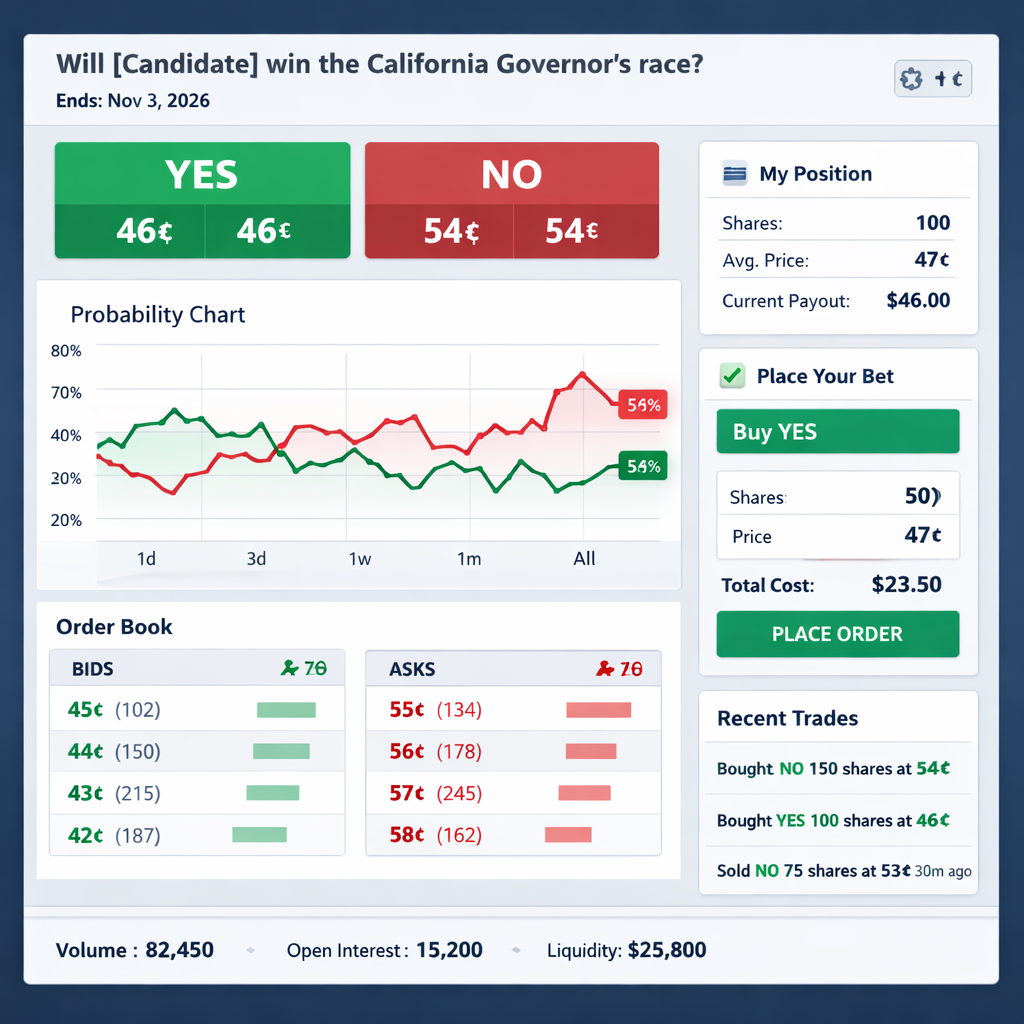
In the first action, a candidate for Governor of California traded about $200 on his own candidacy and posted about it on social media.[3] Kalshi’s surveillance department located the social media post and contacted the candidate, who admitted that his trades violated Kalshi’s rules and were improper. Kalshi imposed a fine of $2,246.36, consisting of $246.36 in disgorgement and a $2,000 penalty, in addition to a 5-year suspension from direct or indirect access to the platform.
In the second action, an individual employed as an editor for a popular YouTube channel made a number of trades related to the YouTube channel.[4] Kalshi’s surveillance system flagged the trader’s near-perfect success on markets with low odds. Upon investigation, Kalshi discovered the trader’s employment status and concluded that the trader likely had material, non-public advance knowledge of the content of the channel’s videos prior to their posting. Kalshi imposed a $20,397.58 fine, consisting of $5,397.58 in disgorgement and a $15,000 penalty, in addition to a 2-year suspension from direct or indirect access to the platform.
The CFTC’s advisory stated that the two Kalshi traders potentially violated Section 6(c)(1) of the Commodity Exchange Act as well as Commission Regulations 180.1(a)(1) and (3). The advisory further emphasized that “[w]hile Kalshi’s internal enforcement program handled these matters,” the CFTC “has full authority to police illegal trading practices” occurring on any of its Designated Contract Markets (“DCMs”), including those relating to prediction markets.
The advisory noted that its DCMs, which include Kalshi,[5] have an independent duty to “maintain audit trails, conduct surveillance, and enforce rules against prohibited practices.” The advisory warned that the CFTC Division of Enforcement “will investigate and prosecute violations, as it always has with respect to conduct occurring on DCMs” and “continues to coordinate with DCMs regarding their enforcement dockets and referral of appropriate potential violations to the Division for investigation.” The advisory noted that the CFTC has the full authority to police illegal trading practices, including misappropriation of confidential information, pre-arranged trading, disruptive trading, fraud, and manipulation.
The CFTC’s advisory comes at a time when prediction markets are both growing in popularity and facing increased scrutiny related to insider trading.[6] Tech giant OpenAI recently fired an employee for using confidential company information to trade on prediction markets.[7] And one Polymarket user made over $500,000 by predicting that Iranian Supreme Leader Ayatollah Ali Khamenei would be out of power shortly before a United States-Israel air strike killed him on February 28, 2026.[8]
Against this backdrop, it is not surprising that the CFTC sought to publicize its ability and willingness to investigate and enforce insider trading incidents in prediction markets. In a post on the social media platform X, formerly known as Twitter, CFTC Chairman Mike Selig further emphasized that “exchanges are the [] first line of defense in policing insider trading in prediction markets” and warned users that “if you attempt to engage in manipulation, fraud, or insider trading, we will find you and take action.”[9]
Chairman Selig is a noted advocate for exclusive federal jurisdiction over prediction markets. In an op-ed, Selig decried the “onslaught of state-driven litigation” alleging that prediction markets are “a form of gambling and therefore subject to state laws.” [10] Selig stressed that “[t]he CFTC will no longer sit idly by while overzealous state governments undermine the agency’s exclusive jurisdiction over these markets by seeking to establish statewide prohibitions on these exciting products.” In light of this, the CFTC’s advisory is likely a further attempt to legitimize and consolidate the agency’s power to regulate prediction markets, investigate wrongdoing, and enforce laws and regulations.
In any event, companies and individuals should be aware that suspicious prediction market activity is likely to draw scrutiny. Companies should consider taking steps to prevent misappropriation of confidential information and warning employees of the consequences of prediction-market trading using confidential information or on events over which they can influence the outcome.
[1] CFTC Enforcement Division Issues Prediction Markets Advisory, Release No. 9185-26 (Feb. 25, 2026), https://www.cftc.gov/PressRoom/PressReleases/9185-26.
[2] Tradeweb and Kalshi Announce Strategic Partnership to Expand Institutional Access to Prediction Markets, Tradeweb Markets (Feb. 19, 2026), https://www.tradeweb.com/newsroom/media-center/news-releases/tradeweb-and-kalshi-announce-strategic-partnership-to-expand-institutional-access-to-prediction-markets/.
[3] Bobby DeNault, Two Insider Cases We’ve Recently Closed, KalshiNews (Feb. 25, 2026), https://news.kalshi.com/p/kalshi-trading-violation-enforcement-cases.
[4] Id.
[5] Constantin Burgi, Wanying Deng, Karl Whelan, The economics of the Kalshi prediction market, Centre for Economic Policy Research, (Feb. 18, 2026), https://cepr.org/voxeu/columns/economics-kalshi-prediction-market.
[6] See, e.g., John Mikuta, Prediction Markets Raising Predictable Questions of Regulation, Public Policy, Ifrah on iGaming (Jan. 27, 2026), https://www.ifrahlaw.com/ifrah-on-igaming/prediction-markets-raising-predictable-questions-of-regulation-public-policy/.
[7] Kate Knibbs, OpenAI Fires an Employee for Prediction Market Insider Trading, Wired (Feb. 27, 2026), https://www.wired.com/story/openai-fires-employee-insider-trading-polymarket-kalshi/.
[8] Bobby Allyn, Prediction Market Trader ‘Magamyman’ Made $553,000 on Death of Iran’s Supreme Leader, NPR (Mar. 1, 2026), https://www.npr.org/2026/03/01/nx-s1-5731568/polymarket-trade-iran-supreme-leader-killing.
[9] Mike Selig (@ChairmanSelig), X (Feb. 25, 2026, at 3:17 PM ET), https://x.com/ChairmanSelig/status/2026753412545609809.
[10] Chairman Michael S. Selig, Chairman Selig: Op-Ed | States Encroach on Prediction Markets, CFTC (Feb. 17, 2026), https://www.cftc.gov/PressRoom/SpeechesTestimony/seligstatement021726.