


Insights < BACK TO ALL INSIGHTS

Massachusetts Explores iGaming Legalization: Opportunities, Risks, and Next Steps
Massachusetts Explores iGaming Legalization: Opportunities, Risks, and Next Steps
By: Katie Kovalsky
Massachusetts Explores iGaming Legalization: Opportunities, Risks, and Next Steps
As states consider legalizing iGaming, legislatures must consider not only whether to legalize but also how the industry should be regulated. While legalization presents opportunities for increased tax revenue and consumer protections, it also raises concerns about responsible gaming, youth exposure, and enforcement against illegal operators. Massachusetts is one state currently evaluating this decision. A bill introduced by the Massachusetts legislature in August of last year sought to legalize iGaming statewide.[1] The bill— H4431—proposed empowering the Massachusetts Gaming Commission with licensing and overseeing the iGaming casinos throughout the state.[2]
As of March of this year, Massachusetts lawmakers voted to send the bill to study, delaying any potential passage to at least 2027. [3] Despite the delay, the Massachusetts legislation just this week considered a study presented by the Massachusetts Gaming Commission on the potential impacts of iGaming on public health (the “Massachusetts study”). The Massachusetts study aimed to examine the potential public health impacts of iGaming as well as key considerations for policy, regulation, and research in the event that iGaming is legalized in the state.
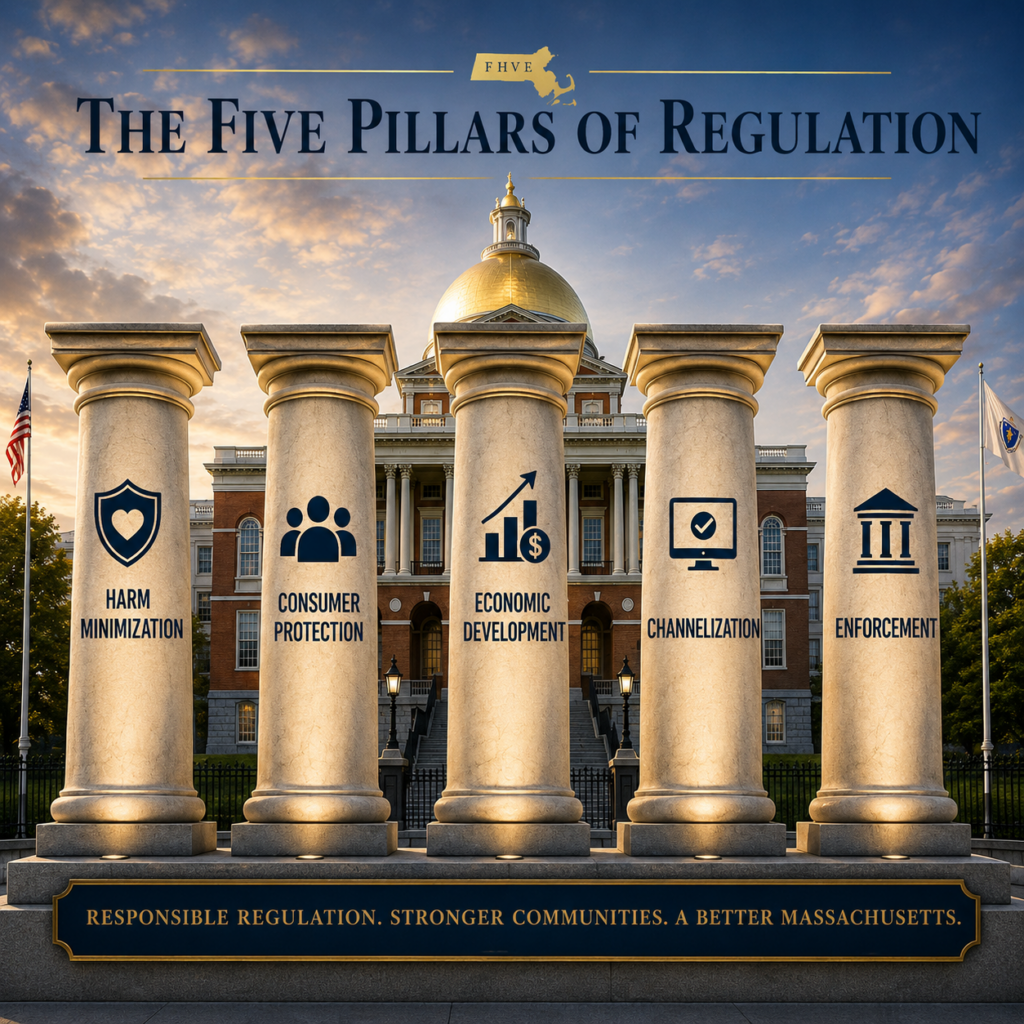
While the study assessed potential public health harms such as problem gambling and the protection of the youth, it also discussed a strategic framework that could help minimize the potential negative impacts and maximize benefits of legalized iGaming[4]. These strategies include: (1) making harm minimization the foundation of regulation; (2) ensuring multiple levels of protection; (3) maximizing economic development to support public health; (4) maximizing channelization to achieve all objectives; and (5) ensuring sufficient mandate and resources to achieve objectives. These principles are helpful guideposts for Massachusetts and other states to consider in evaluating the legalization and regulation of iGaming.
Make harm minimization the foundation of regulation and ensure multiple levels of protection.
In deciding to regulate iGaming, it is critical for parties to understand and prioritize the impact effective regulations have on minimizing public health risks and driving economic development for the purposes of helping the community. It is through regulation that states can proactively protect their citizens by setting up structures to address issues such as problem gambling and protecting the youth. It is also critical these regulations ensure various levels of protection—spanning from advertising regulations to enforcing player protection tools.
By way of example, New Jersey, who legalized iGaming in 2023, has enacted advertising requirements that prohibit advertising within media outlets or channels that primarily appeal to underage individuals or where a certain percentage of the audience may reasonably be expected to be underage. [5] New Jersey has also implemented rules that require the use of data and automatic algorithmic triggers for responsible and problem gambling intervention.[6] New Jersey’s approach illustrates that comprehensive iGaming regulation can extend beyond legalization to include important safeguards to minimize the potential harms of gambling.
Maximizing economic development to support public health.
The taxation and economic benefit of a legalized iGaming industry is no doubt a large consideration for state legislators. In 2024 the American Gaming Association estimated that online casinos generate $8.41 billion in tax revenue across seven states with legal iGaming.[7]
Beyond just the sheer amount of tax collected, it is also critical to evaluate how state governments spend this money. In Michigan for example, 65% of iGaming taxes go toward the Internet Gaming Fund, which is used to fund problem gambling prevention and first responder support as well as the Michigan School Aid Fund. The next 30% of tax revenue goes to the City of Detroit, and the remaining 5% supports the Agriculture Equine Industry Development Fund, which oversees the state’s horse breeding, research and racing industry.[8] In New Jersey, the majority of tax revenues from iGaming fund the Casino Revenue Fund, which supports seniors and individuals with disabilities by providing financial assistance through reducing property, rent and utility costs as well as adding or expanding health services. [9]
As the Massachusetts study noted, the economic development potential is a critical factor to consider in evaluating the legalization of iGaming. It specifically recommended that legislature be intentional in evaluating the taxes to impose on iGaming in order to meet the needs and expectations of its community.
Maximizing channelization to achieve all objectives.
Another strategy for implementing iGaming legalization in a deliberate and responsible manner is to clearly distinguish between the regulated and illegal gambling markets to minimize unintended public harm. Regulators can do so by defining the regulated market to make it explicit that unregulated operators offering iGaming are illegal. The Massachusetts study suggests doing so by investing in public education and creating structure for monitoring the enforcement of the unregulated markets.
Ensuring sufficient mandate and resources to achieve objectives.
Finally, in considering the legalization of iGaming, legislatures should ensure regulators and enforcement agencies have adequate resources to monitor compliance and take action when needed. Importantly, collaboration should be a focus whether it be with agencies in other states or the federal government to ensure there is structure in place to handle intricate and unique problems in the iGaming space—for example, monitoring the legality of social media and influencer advertising.
The legalization and regulation of iGaming offers states, including Massachusetts, an opportunity to replace unregulated gambling with a framework that provides meaningful consumer protections, regulatory oversight, and new sources of public revenue. However, states should approach iGaming thoughtfully, considering its broader implications for public health, responsible gaming, consumer safety, and long-term economic outcomes. The strategies discussed and explored in the Massachusetts study explain that by adopting comprehensive regulatory frameworks, legislatures can maximize the benefits of legalization iGaming while minimizing its potential risks by being intentional, strategic, and thoughtful with respect to all societal impacts.
[1] Kevin Lentz, Massachusetts iGaming Bill Sets Ambitious 2026 Target, WSN (Sept. 5, 2025, 3:35 AM ET), https://www.wsn.com/betting/massachusetts-igaming-bill-ambitious-target/
[2] Id.
[3] Quinn Allen, Massachusetts Online Casino Push Paused as Lawmakers Eye 2027 Revisit, RG (Mar. 18, 2026, 2:08 PM), https://rg.org/news/gambling-industry/massachusetts-igaming-delayed-2027
[4] Massachusetts Gaming Commission, Potential Impacts of iGaming on Public Health in Massachusetts (Jan. 2026), prepared by PRET Solutions Inc., https://massgaming.com/wp-content/uploads/Potential-impact-of-iGaming-MA-Final-Report-January-2026-1-1.pdf
[5] Am. Gaming Ass’n, Responsible Gaming Regulations and Statutes Guide (July 8, 2025), https://www.americangaming.org/resources/responsible-gaming-regulations-and-statutes-guide/
[6] Id.
[7] Grant Lucas, Where Does Tax Revenue from Legal Online Casinos Go in Michigan, New Jersey, Pennsylvania, and West Virginia?, SportsLine (updated Dec. 2, 2025, 6:07 PM UTC), https://www.sportsline.com/casinos/where-does-tax-revenue-from-legal-online-casinos-go-in-michigan-new-jersey-pennsylvania-and-west-virginia
[8] Id.
[9] Id.
