Insights < BACK TO ALL INSIGHTS

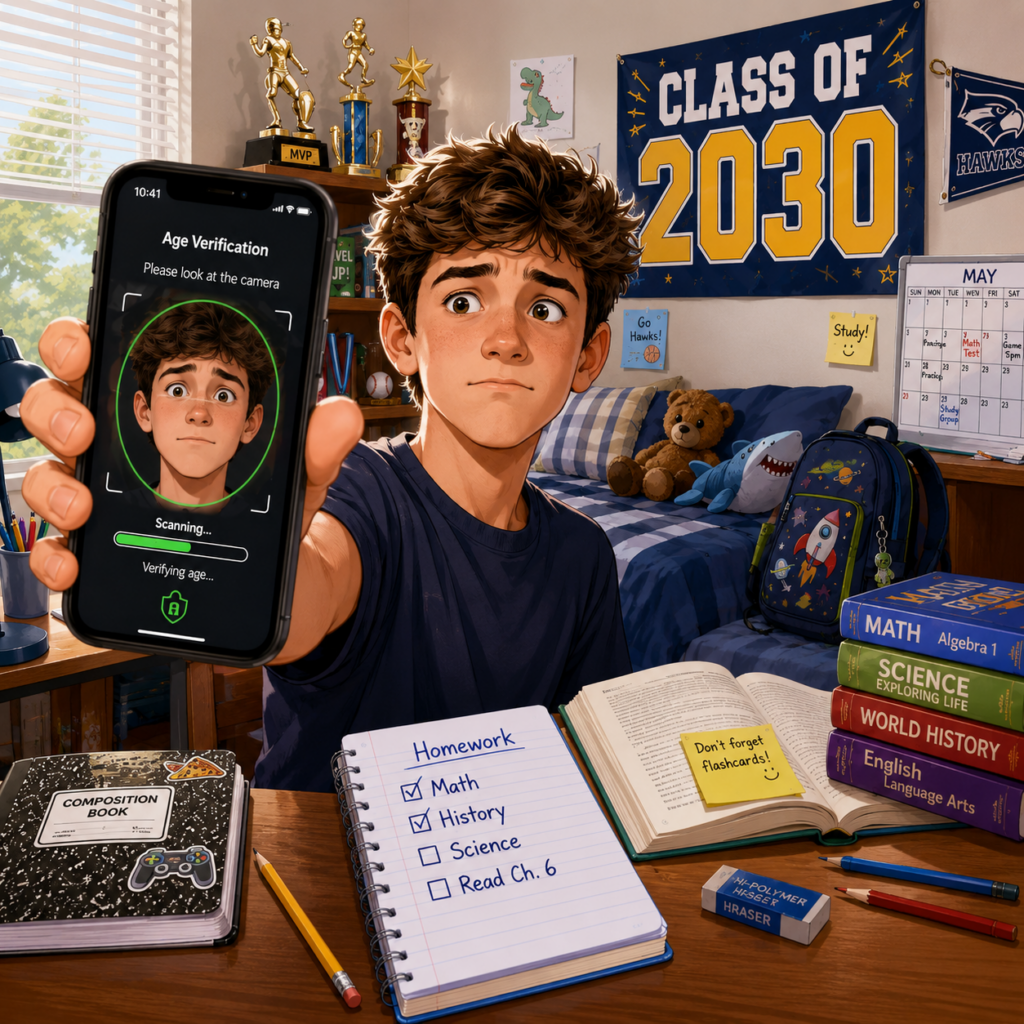
Betting on Technology: Bipartisan Proposal for Requiring Facial Recognition to Keep Minors from Wagering Online
Betting on Technology: Bipartisan Proposal for Requiring Facial Recognition to Keep Minors from Wagering Online
By: Lauren Scribner
“As every parent knows, when you tell a kid not to do something, they almost always end up trying to do it,” said Congresswoman Kristen MacDonald Rivet (MI-8) about the recently introduced bipartisan “Facial Recognition to Protect Children Act” (“proposed Act”).[1] She continued, “[k]ids under the age of 18 shouldn’t be making bets, but now it’s just a few taps away on their phones. Our commonsense, bipartisan bill will put a stop to it.”[2]
The proposed Act, introduced by Congressman Josh Gottheimer (NJ-5) and joined by Kalshi CEO Tarek Mansour and other supporting Members of Congress, requires prediction markets and online sportsbooks to verify a user’s age using facial recognition technology before that user can place a bet or trade.[3]
Specifically, the text of the bill states that a wagering operator[4] or prediction market platform operator “may not permit a user to access . . . [the] platform” or place an order or wager that the operator “has not verified, using commercially available facial recognition technology, has attained more than 18 years of age.”[5]
At first glance, the proposed legislation begs a few questions. First—is this really necessary? Are children really placing bets using accounts held by their parents or other adults? Second, will an operator’s use of facial recognition technology stop minors from accessing their parents’ accounts? And third, what are the operators going to do with all that data?
- Is this really necessary?
The short answer appears to be yes. The statistics touted by Congressman Gottheimer and the other supporters are staggering. At large, Americans wagered an estimated $160 billion on sports in 2025, which generated roughly $16 billion in revenue—“more than Americans spend on movies, books, concerts, and professional sports tickets combined.”[6] Research from Common Sense Media “reveals that gambling has become common among adolescent boys, with more than a third of boys gambling before they turn 18,”[7] and some boys even admitting to gambling as early as age 11.[8]
According to Congressman Gottheimer’s announcement, in Tennessee, sportsbooks flagged more than 400 underage accounts in 2024—up from approximately 100 accounts the year prior.[9] And in Iowa, over 80 reports of underage gambling have been flagged for criminal investigation.[10]
When considering gambling’s popularity in our culture, for better or worse, it makes sense that minors would become exposed to it, especially considering that it is now as easy to gamble as it is to “text[] a friend or watch[] a video.”[11] One mother whose son began gambling at age 11 puts it this way—”[r]emoving the guardrails has created a slippery slope for kids: ‘If my kid had to get in a car, drive to a bank, take out money, drive to a casino, go into the casino, show an ID at the door — he probably wouldn’t be a gambling addict.’”[12]
Although the evidence presented in support of facial recognition lies somewhere between anecdotal and comprehensive, gambling proponents will be hard-pressed to challenge the basic notion that measures should be taken to prevent children from accessing prediction market platforms.
- Will using facial recognition technology really fix this problem?
The facial recognition technology is designed to “read facial structure and patterns to estimate a user’s age.”[13] But while facial recognition technology performs well in controlled testing environments, there are concerns with its reliability out in the “real world.”
Indeed, Tech Policy Press reports that “standardized evaluations [of facial recognition technology] now report figures as high as 99.95% accuracy. . . . But there’s a problem: these near-perfect numbers fail to reflect reality. Facial recognition appears to be significantly less accurate in real-world settings.”[14] This is because lab evaluations fail to account for how the technology can perform in less-controlled environments, such as “on a rainy street, or inside a crowded stadium.”[15]
For example, with respect to school children specifically, “evaluation data used to test algorithms remain much less representative of younger age ranges” and “individuals between the ages of 12-18 are [generally] under-represented, and those under the age of 12 entirely omitted, bringing into question the deployment of this technology on youth.”[16] And with older kids, it is unclear how the technology translates for a child 17 years of age that looks 18 years of age, or vice versa.
Additionally, it appears that users who do not already have facial recognition technology activated on their phones may not be able to use the facial recognition features mandated by the proposed Act. In that instance, it is unclear how operators will implement heightened security measures to combat minors using their platforms.
While facial recognition technology may not be 100% effective at preventing children from gambling on prediction market platforms, that does not mean its usage is a bad idea, especially when it is coupled with other security measures.
Recently, Mansour of Kalshi announced additional security features, in addition to encouraging parents to activate facial recognition technology on their phones so the platform can utilize it for the proposed Act’s intended purpose. Kalshi will integrate “selfies” into its Know-Your-Customer (KYC) process “as an extra protection layer from higher-risk individuals” and an “Inner Circle” feature that can send real-time alerts of a user’s account activity to friends and family.[17]
- What will the operators do with this influx of data?
Despite its widespread and commonplace usage, using facial recognition technology will always raise privacy concerns, and those concerns become heightened when minor children are involved. While the proposed legislation mandates that the operator refrain from collecting data “beyond what is reasonably necessary, proportionate, and limited to the purposes for verifying the age of the user”—it appears to delegate that determination to the sportsbooks themselves, meaning the scope of the data collected will largely be shielded from public view.[18]
It is not hard to imagine how parents who agree that their children should be blocked out of their prediction market accounts could take issue with an operator collecting photos of their child’s face, particularly in light of the vague and deferential retention language in the proposed Act discussed in more detail below. Ultimately, the collection of biometric data poses unique vulnerabilities because of its highly invasive nature. For example, in the event of an operator’s data breach, a child’s face could be permanently inked into the public eye. Even more concerning is the fact that the child’s photograph would be forever associated with an attempt to illegally access a gambling platform. Something like that could follow an individual for quite some time. The proposed Act also requires deletion of all collected data that the “operator determines is not necessary for compliance” with the new rule.[19] Again, this determination is left up to operators, meaning we cannot know for sure exactly how much data will be retained and for how long, nor exactly how the facial recognition data will be used. Considering the invasive nature of this data, the lack of restrictions in the proposed Act surrounding retention are surprising. Data privacy proponents likely would have advocated for a specified, brief retention period ending with an explicit requirement that all collected data must be destroyed. Also absent from the proposed Act are any restrictions on who can access the collected data, such as such as limiting access to law enforcement officials.
*******
To be clear, the proposed Act is undoubtedly a necessary measure to protect minors from the dangers of being involved in gambling activity. But it should just be the first step for operators in implementing a comprehensive plan to protect minors from accessing these platforms. As prediction markets continue to come under enhanced scrutiny,[20] preventing minors from accessing these platforms should be yet another issue at the center of the discussion of how to regulate them.
[1] RELEASE: To Protect Children, Gottheimer Introduces New Bipartisan Bill Requiring Facial Recognition Age Verification for Online Sportsbooks, Josh Gottheimer: NJ’s Fifth District (July 15, 2026), https://gottheimer.house.gov/posts/release-to-protect-children-gottheimer-introduces-new-bipartisan-bill-requiring-facial-recognition-age-verification-for-online-sportsbooks (last accessed: July 26, 2026).
[2] Id.
[3] Id.
[4] The bill defines a “wagering operator” to include both “a licensed gaming facility that offers sports wagering; and [] an interactive sports wagering platform.” See H.R. 9706 §2(d)(6) (accessible at: https://www.govtrack.us/congress/bills/119/hr9706/text) (last accessed: July 26, 2026).
[5] H.R. 9706 §2(a)(1). The proposed Act also seeks to amend Section 5c of the Commodity Exchange Act (7 U.S.C. 7a–2) by adding special rules relating to event contracts, requiring Federal Trade Commission review or approval of event contracts that may be contrary to the public interest, and specifying standards for promotional material, among other additions. See H.R. 9706 §2(c).
[6] RELEASE: To Protect Children, supra.
[7] Betting on Boys: Understanding Gambling Among Adolescent Boys, Common Sense Media (Jan. 29, 2026), https://www.commonsensemedia.org/research/betting-on-boys-understanding-gambling-among-adolescent-boys (last accessed: July 26, 2026).
[8] RELEASE: To Protect Children, supra.
[9] Id.
[10] Id.
[11] Carrillo, Sequoia, More teens are getting hooked on gambling. Parents say it often goes undetected, NPR (Apr. 5, 2026), https://www.npr.org/2026/04/05/nx-s1-5762276/teens-getting-hooked-on-gambling-sports-betting (last accessed: July 27, 2026).
[12] Id.
[13] RELEASE: To Protect Children, supra.
[14] Canmetin, Teo, et al., Why We Shouldn’t Trust Facial Recognition’s Glowing Test Scores, Tech Policy.Press (Aug. 18, 2025), https://www.techpolicy.press/why-we-shouldnt-trust-facial-recognitions-glowing-test-scores/ (last accessed: July 26, 2026).
[15] Id.
[16] Id.
[17] New Customer Protection Measures, Kalshi News (May 4, 2026), https://news.kalshi.com/p/new-customer-protection-measures-kalshi-expanded-trader-safeguards (last accessed: July 26, 2026).
[18] H.R. 9706 §2(a)(2).
[19] H.R. 9706 §2(a)(2).
[20] Shapero, Julia, Kalshi launches features to keep kids off betting platform, The Hill (May 4, 2026), https://thehill.com/policy/technology/5862176-kalshi-cracks-down-on-minors/ (last accessed: July 26, 2026).