Insights < BACK TO ALL INSIGHTS

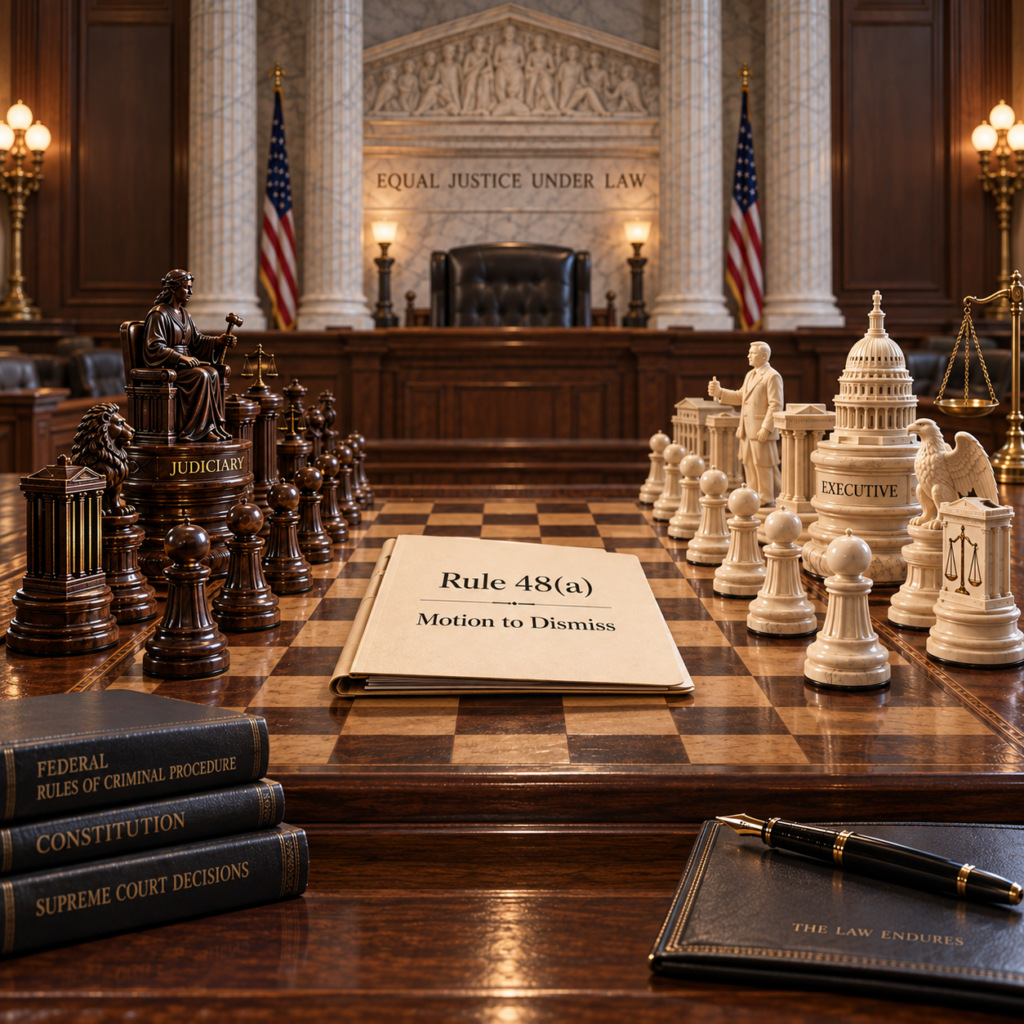
Dismissive of Dismissal
FEATURED
September 25, 2026
Dismissive of Dismissal
By: James Trusty
During the two Trump administrations, a trend has begun to emerge of federal judges challenging the once-unrestricted authority of the Department of Justice (DOJ) to dismiss indictments. The longstanding framework of separation of powers suggests this judicial pushback is unsupported activism, but the judges claim the Federal Rules of Criminal Procedure (“Rules”) do not relegate their role to rubber stamping. Ultimately, this trajectory may lead us to an impossible impasse—a game of chicken where reputations, relationships and the balance of power might be forever altered in the context of dismissal. Pursuant to Rule 48(a), “[t]he government may, with leave of court, dismiss an indictment.” Exactly what “leave of court” means in terms of judicial scrutiny is the challenging question. Some…
In the age of AI, litigators must read between the lines—literally.
August 18, 2026
In the age of AI, litigators must read between the lines—literally.
By: Robert Ward
In the age of AI, litigators must read between the lines—literally. Any attorney who has litigated a case against a party proceeding pro se is familiar with the common refrain that courts liberally construe pro se filings.[1] This leniency was not enough for one Connecticut litigant. In a scheme that gives new meaning to the phrase “reading between the lines,” pro se plaintiff Matthew Elliot…
The DOJ Steps Up for Military Families
June 29, 2026
The DOJ Steps Up for Military Families
By: Lauren Scribner
The Servicemembers Civil Relief Act (SCRA), 50 U.S.C. § 4025a, grants military spouses portability of their professional licenses. That means when a military spouse moves with his or her servicemember to the servicemember’s assigned duty station in a new state, the spouse’s professional license essentially moves with them.[1] In order to take advantage of this license portability benefit in the new state, the SCRA requires…
SEC Continues to Focus on ICOs
October 3, 2017
SEC Continues to Focus on ICOs
By: Steven Eichorn
A new enforcement initiative by the Securities and Exchange Commission, part of its proclaimed efforts to address cyber-based threats and protect retail investors, indicates that the agency is including Initial Coin Offerings (ICOs) under its broad blanket of protection. Recent actions by the agency in the case of REcoin give more clues to its position on ICOs: on Friday, the SEC charged two companies and…
ICOs Facing an Uncertain Future in China and the U.S.
September 7, 2017
ICOs Facing an Uncertain Future in China and the U.S.
By: Steven Eichorn
This week, in a joint statement issued by the People’s Bank of China, the securities and banking regulators, and other government agencies, the Chinese government declared that initial coin offerings (ICOs) constitute “illegal open financing behavior” and immediately froze all ICO activity. The joint statement explained that the tokens issued in ICOs do not have legal and monetary properties, do not have the legal status…
How Poking the Bear Gets Your Assets Kicked
August 23, 2017
How Poking the Bear Gets Your Assets Kicked
By: James Trusty
For many decades, the 4th Circuit Court of Appeals was viewed as a very conservative place, where prosecutors were usually quite comfortable with the status quo, a largely “law and order” kind of venue. During the Obama presidency, the Court’s makeup changed dramatically, with a batch of younger, more liberal judges joining the “old guard” from Virginia, North Carolina, and South Carolina. Consequently, this particular…
Supreme Court to Decide Whether Prosecutors Can Use Pleas to Skirt Constitution
August 11, 2017
Supreme Court to Decide Whether Prosecutors Can Use Pleas to Skirt Constitution
By: Ifrah Law
While the endless portrayal of jury trials in media might indicate otherwise, trials are actually quite rare in the U.S. criminal justice system. With 97% of federal cases ending in pleas, the Atticus Finch conception of American justice has been largely confined to books. Ordinarily, when an accused enters into a plea agreement, he waives his right to appeal his conviction—otherwise, future appeals could require…
Why Banning Criminals from the Web Doesn’t Work
July 21, 2017
Why Banning Criminals from the Web Doesn’t Work
By: Steven Eichorn
A few weeks ago, the Supreme Court issued a unanimous ruling in Packingham v. North Carolina, 137 S. Ct. 1730 (U.S. 2017) invalidating a state law outlawing registered sex offenders from accessing websites which could facilitate offender-minor direct communication. While the majority opinion and concurrence seems grounded in, and specific to, sex offender restrictions, the underlying characterizations and beliefs about websites has far-reaching consequences for…