Insights < BACK TO ALL INSIGHTS

Judging the Judges
FEATURED
October 2, 2026
Judging the Judges
By: Lauren Scribner
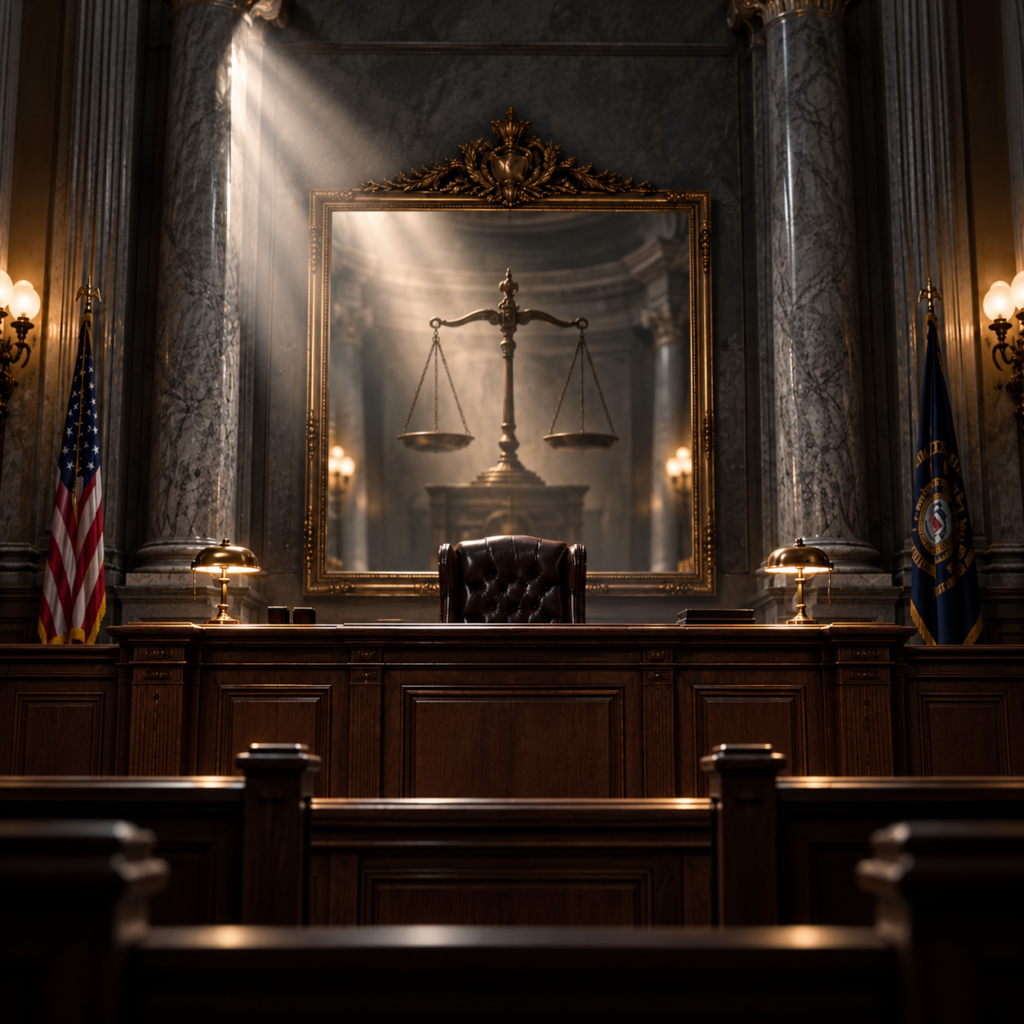
Judges are in the business of holding people accountable for crimes and misconduct—but how do we hold judges accountable for their own ethical lapses? Recently, in a moment of frustration, Florida Second Circuit Judge J. Layne Smith told three attorneys practicing in his courtroom that he “would like to tell the deputy to pull his gun and shoot all three of [them] as far as [his] level of frustration right now.”[1] Yes—you read that correctly. A presiding judge vocalized his thought to have attorneys practicing in his courtroom shot by courtroom security. What should the consequence be for using such threatening language? A mere public reprimand and recusal from that case?[2] Or, should there be some sort of tangible punishment?…
Dismissive of Dismissal
September 25, 2026
Dismissive of Dismissal
By: James Trusty
During the two Trump administrations, a trend has begun to emerge of federal judges challenging the once-unrestricted authority of the Department of Justice (DOJ) to dismiss indictments. The longstanding framework of separation of powers suggests this judicial pushback is unsupported activism, but the judges claim the Federal Rules of Criminal Procedure (“Rules”) do not relegate their role to rubber stamping. Ultimately, this trajectory may lead…
In the age of AI, litigators must read between the lines—literally.
August 18, 2026
In the age of AI, litigators must read between the lines—literally.
By: Robert Ward
In the age of AI, litigators must read between the lines—literally. Any attorney who has litigated a case against a party proceeding pro se is familiar with the common refrain that courts liberally construe pro se filings.[1] This leniency was not enough for one Connecticut litigant. In a scheme that gives new meaning to the phrase “reading between the lines,” pro se plaintiff Matthew Elliot…
Conspirators Get Prison Time for Defrauding Small Business 8(a) Program
July 22, 2013
Conspirators Get Prison Time for Defrauding Small Business 8(a) Program
By: Jeff Ifrah
White-collar crime can involve any number of types of fraud against the government or private parties. One that isn’t usually thought about but can result in serious jail time involves conspiracies to obtain government contracts fraudulently by setting up bogus small and minority-owned businesses in order to qualify for government preferences. In the past few months in the Eastern District of Virginia, several businesspeople have…
Judge Declares He’s Not Potted Plant, Asserts Right to Supervise Deferred Prosecution Agreements
July 19, 2013
Judge Declares He’s Not Potted Plant, Asserts Right to Supervise Deferred Prosecution Agreements
By: Ifrah Law
A recent decision by U.S. District Judge John Gleeson in the Eastern District of New York may be the harbinger of new limits on the government’s ability to use a prosecutorial tool of which it has become very fond lately – the deferred prosecution agreement. Judge Gleeson’s assertion that a district court has a right to approve or disapprove the use of a DPA in a…
High Court Clarifies Rule on Plea Discussions in Federal Criminal Cases
July 10, 2013
High Court Clarifies Rule on Plea Discussions in Federal Criminal Cases
By: Ifrah Law
In a unanimous decision, the Supreme Court held last month in United States v. Davila that a guilty plea does not need to be automatically vacated, regardless of whether there has been prejudice to the defendant, when a magistrate judge improperly advises a defendant to plead guilty. In 2009, Anthony Davila was charged with conspiracy to defraud the United States by filing false income tax…
BP Employee Gains Dismissal on Obstruction of Justice Charge
July 9, 2013
BP Employee Gains Dismissal on Obstruction of Justice Charge
By: Ifrah Law
When is a committee not a committee? When it is a subcommittee. More than just a punchline, this is one of the key facts that led a U.S. district judge recently to dismiss charges against an employee of British Petroleum arising from his statements made in response to inquiries from a Congressional subcommittee regarding the BP Horizon oil spill in the Gulf of Mexico. In…
Andrew Auernheimer Appeals Hacking Conviction in This Internet Law Case
July 5, 2013
Andrew Auernheimer Appeals Hacking Conviction in This Internet Law Case
By: Ifrah Law
Earlier this week, attorneys for convicted computer hacker Andrew “Weev” Auernheimer filed their opening brief in their appeal to the U.S. Court of Appeals for the Third Circuit to have his conviction overturned. In 2010, Auernheimer’s co-defendant Daniel Spitler, who agreed to plead guilty in 2011, discovered a flaw in AT&T’s iPad user database, that he used to collect 114,000 email addresses. Auernheimer then disclosed…