Insights < BACK TO ALL INSIGHTS

Judging the Judges
FEATURED
October 2, 2026
Judging the Judges
By: Lauren Scribner
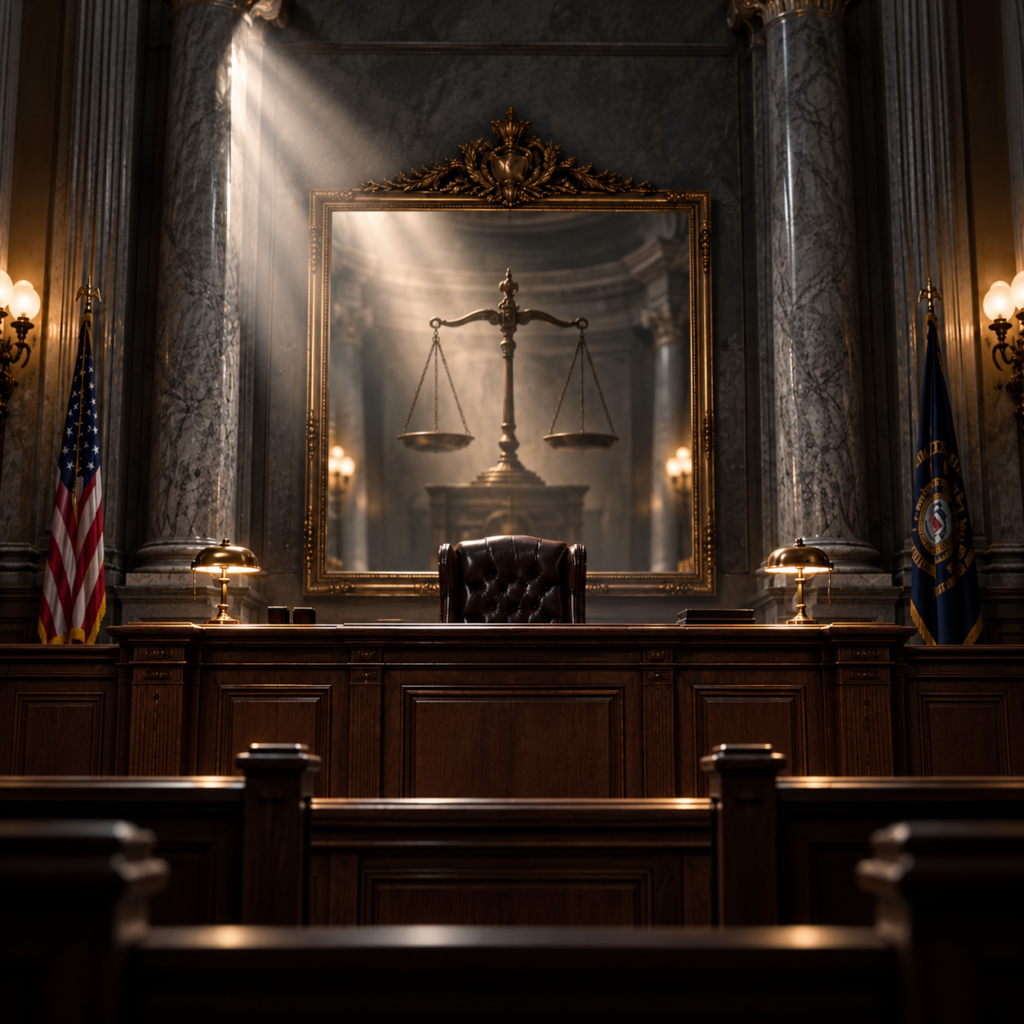
Judges are in the business of holding people accountable for crimes and misconduct—but how do we hold judges accountable for their own ethical lapses? Recently, in a moment of frustration, Florida Second Circuit Judge J. Layne Smith told three attorneys practicing in his courtroom that he “would like to tell the deputy to pull his gun and shoot all three of [them] as far as [his] level of frustration right now.”[1] Yes—you read that correctly. A presiding judge vocalized his thought to have attorneys practicing in his courtroom shot by courtroom security. What should the consequence be for using such threatening language? A mere public reprimand and recusal from that case?[2] Or, should there be some sort of tangible punishment?…
Dismissive of Dismissal
September 25, 2026
Dismissive of Dismissal
By: James Trusty
During the two Trump administrations, a trend has begun to emerge of federal judges challenging the once-unrestricted authority of the Department of Justice (DOJ) to dismiss indictments. The longstanding framework of separation of powers suggests this judicial pushback is unsupported activism, but the judges claim the Federal Rules of Criminal Procedure (“Rules”) do not relegate their role to rubber stamping. Ultimately, this trajectory may lead…
In the age of AI, litigators must read between the lines—literally.
August 18, 2026
In the age of AI, litigators must read between the lines—literally.
By: Robert Ward
In the age of AI, litigators must read between the lines—literally. Any attorney who has litigated a case against a party proceeding pro se is familiar with the common refrain that courts liberally construe pro se filings.[1] This leniency was not enough for one Connecticut litigant. In a scheme that gives new meaning to the phrase “reading between the lines,” pro se plaintiff Matthew Elliot…
ABA White Collar Conference: Political Commentary vs. Best Practices
March 16, 2026
ABA White Collar Conference: Political Commentary vs. Best Practices
By: James Trusty
This year’s ABA White Collar conference in San Diego displayed a good number of the usual suspects in these week-long educational echo chambers: smug moments of schadenfreude when panelists smirk at Trump administration missteps, not-so-subtle calls to arms by former prosecutors who hoist the “Rule of Law” banner, and former Southern District of New York (SDNY) prosecutors touting the superiority of their old office, even…
Chatbots, Copyrights, and the Courts: The Latest in Litigation Developments in the Cases Against OpenAI
January 5, 2026
Chatbots, Copyrights, and the Courts: The Latest in Litigation Developments in the Cases Against OpenAI
By: Abbey Block
Litigation Update: Open AI’s Discovery Woes and Fair Use Defenses in Infringement Lawsuits Since its formation in 2015, the artificial intelligence company “Open AI” – most known for its creation of the widely used chatbot, “ChatGPT” – has faced its fair share of legal disputes. Two of the most notorious lawsuits, one filed by the New York Times and the other by a class of…
The Truth Will Out – Even About Mar-a-Lago
December 27, 2025
The Truth Will Out – Even About Mar-a-Lago
By: James Trusty
The Truth Will Out is a fairly obscure phrase that was popularized in Shakespeare’s “The Merchant of Venice.” It suggests that even against the most active obstruction and obfuscation, the Truth seemingly has an invisible hand behind it that relentlessly—if slowly—pushes it into plain view. Nearly 2 ½ years after the FBI’s raid on Mar-a-Lago, the Truth may be emerging into the daylight. August 8,…
White-Collar Sentencing Under the Amended Guidelines: Fewer Steps, Same Dance
November 12, 2025
White-Collar Sentencing Under the Amended Guidelines: Fewer Steps, Same Dance
By: Robert Ward
For years, the U.S. Sentencing Commission’s Guidelines Manual has guided courts through a three-step process to determine the sentence to be imposed. At a high level, that process looked like this: First, the court would calculate the guideline range based on relevant offense conduct and related factors, along with the defendant’s criminal history. Second, the court would consider the Sentencing Commission’s policy statements or commentary…
Personal Information Flo-wing out of Control
October 20, 2025
Personal Information Flo-wing out of Control
By: Lauren Scribner
In September, a nearly $60 million settlement was reached in Frasco, et al v. Flo Health, Inc., Meta Platforms, Inc., Google, LLC, and Flurry, Inc. The case,[1] a class action filed in 2021, alleged inter alia that Flo Health Inc. (“Flo”), a popular women’s health tracking application estimated to have over 38 million monthly users, invaded the privacy of its users by sharing personal and…