Insights < BACK TO ALL INSIGHTS

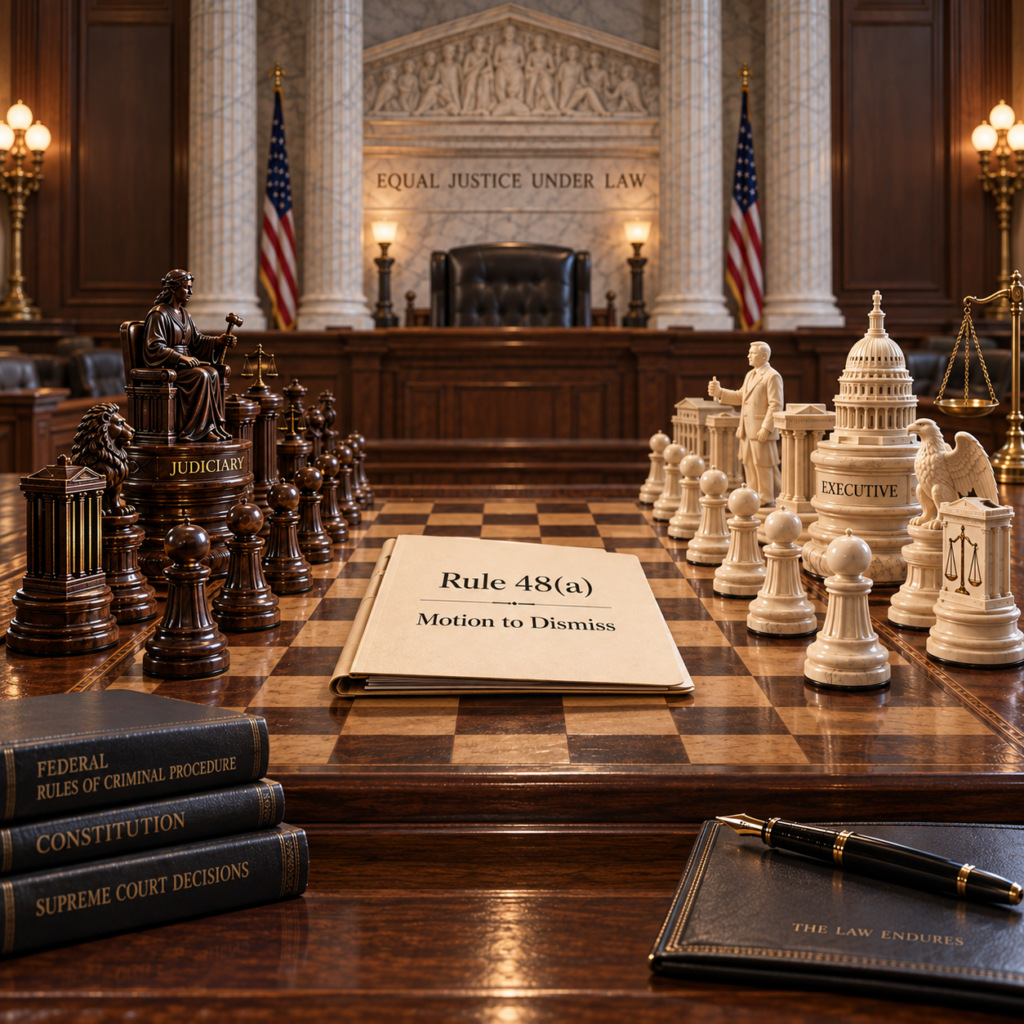
Dismissive of Dismissal
FEATURED
September 25, 2026
Dismissive of Dismissal
By: James Trusty
During the two Trump administrations, a trend has begun to emerge of federal judges challenging the once-unrestricted authority of the Department of Justice (DOJ) to dismiss indictments. The longstanding framework of separation of powers suggests this judicial pushback is unsupported activism, but the judges claim the Federal Rules of Criminal Procedure (“Rules”) do not relegate their role to rubber stamping. Ultimately, this trajectory may lead us to an impossible impasse—a game of chicken where reputations, relationships and the balance of power might be forever altered in the context of dismissal. Pursuant to Rule 48(a), “[t]he government may, with leave of court, dismiss an indictment.” Exactly what “leave of court” means in terms of judicial scrutiny is the challenging question. Some…
In the age of AI, litigators must read between the lines—literally.
August 18, 2026
In the age of AI, litigators must read between the lines—literally.
By: Robert Ward
In the age of AI, litigators must read between the lines—literally. Any attorney who has litigated a case against a party proceeding pro se is familiar with the common refrain that courts liberally construe pro se filings.[1] This leniency was not enough for one Connecticut litigant. In a scheme that gives new meaning to the phrase “reading between the lines,” pro se plaintiff Matthew Elliot…
The DOJ Steps Up for Military Families
June 29, 2026
The DOJ Steps Up for Military Families
By: Lauren Scribner
The Servicemembers Civil Relief Act (SCRA), 50 U.S.C. § 4025a, grants military spouses portability of their professional licenses. That means when a military spouse moves with his or her servicemember to the servicemember’s assigned duty station in a new state, the spouse’s professional license essentially moves with them.[1] In order to take advantage of this license portability benefit in the new state, the SCRA requires…
Bank Hit With FCA Complaint Over Mortgage Lending
May 3, 2011
Bank Hit With FCA Complaint Over Mortgage Lending
By: Ifrah Law
On May 3, 2011, the U.S. Department of Justice filed a civil case against Deutsche Bank, Germany’s largest bank, asserting that Deutsche Bank was liable for more than $1 billion to the U.S. government for its statements and actions during the mortgage meltdown of the last few years. This case is one of the few that has emerged from the mortgage crisis, and like many…
The Disintegration of White-Collar Criminal Bernie Madoff
April 27, 2011
The Disintegration of White-Collar Criminal Bernie Madoff
By: Ifrah Law
In December 2010, Bernie Madoff contacted the Financial Times to say that he was ready for his second prison interview. It had been two years since news broke of Madoff’s 16-year, $65 billion Ponzi scheme, and just 17 months since he began serving his 150-year sentence. By the time he was interviewed, his oldest son, Mark, had hanged himself on the second anniversary of Madoff’s…
DOJ Shows Its Continuing Strong Interest in FCPA Violations
April 21, 2011
DOJ Shows Its Continuing Strong Interest in FCPA Violations
By: Ifrah Law
Over the course of several years, officials of the United States Department of Justice have made clear the Department’s intent to enforce vigorously the dictates of the Foreign Corrupt Practices Act (FCPA). In general terms, the FCPA prohibits the offering or giving of things of value to any foreign official to assist in obtaining or retaining business. Last November, Assistant Attorney General Lanny Breuer warned…
Strike Force Hits Hard at Massive Medicare Fraud
March 31, 2011
Strike Force Hits Hard at Massive Medicare Fraud
By: Ifrah Law
Last month, the Federal Medicare Strike Force charged 111 defendants in nine states for their alleged participation in fraud schemes that reportedly cost Medicare almost a quarter billion dollars. Last month’s sweep resulted from the Justice Department’s and Health and Human Services’ work with the FBI, the HHS inspector general, and various state and local law enforcement officials. It represents the largest federal takedown of health-care…
The Great Race: Legal Online Poker Advances in Nevada, Hawaii Legislatures
March 24, 2011
The Great Race: Legal Online Poker Advances in Nevada, Hawaii Legislatures
By: Ifrah Law
Hearing Clarifies Issues in Nevada The Nevada Assembly Committee on Judiciary met on March 24, 2011, to discuss AB 258, which would provide for the licensing and operation of Internet poker in Nevada for the first time. Committee members were, not surprisingly, interested in the possible benefit or harm to Nevada’s existing bricks-and-mortar gaming industry from the legislation – such as the possible creation of…