Insights < BACK TO ALL INSIGHTS

Judging the Judges
FEATURED
October 2, 2026
Judging the Judges
By: Lauren Scribner
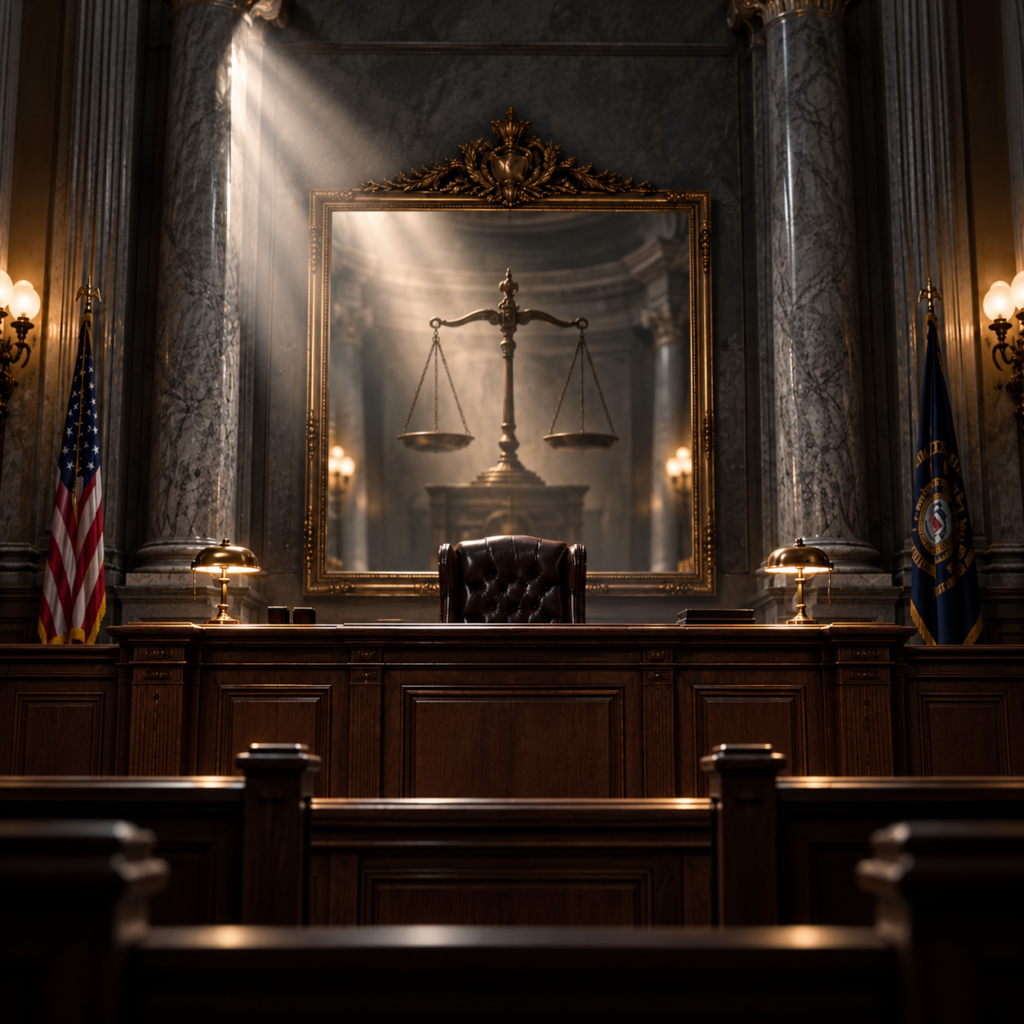
Judges are in the business of holding people accountable for crimes and misconduct—but how do we hold judges accountable for their own ethical lapses? Recently, in a moment of frustration, Florida Second Circuit Judge J. Layne Smith told three attorneys practicing in his courtroom that he “would like to tell the deputy to pull his gun and shoot all three of [them] as far as [his] level of frustration right now.”[1] Yes—you read that correctly. A presiding judge vocalized his thought to have attorneys practicing in his courtroom shot by courtroom security. What should the consequence be for using such threatening language? A mere public reprimand and recusal from that case?[2] Or, should there be some sort of tangible punishment?…
Dismissive of Dismissal
September 25, 2026
Dismissive of Dismissal
By: James Trusty
During the two Trump administrations, a trend has begun to emerge of federal judges challenging the once-unrestricted authority of the Department of Justice (DOJ) to dismiss indictments. The longstanding framework of separation of powers suggests this judicial pushback is unsupported activism, but the judges claim the Federal Rules of Criminal Procedure (“Rules”) do not relegate their role to rubber stamping. Ultimately, this trajectory may lead…
In the age of AI, litigators must read between the lines—literally.
August 18, 2026
In the age of AI, litigators must read between the lines—literally.
By: Robert Ward
In the age of AI, litigators must read between the lines—literally. Any attorney who has litigated a case against a party proceeding pro se is familiar with the common refrain that courts liberally construe pro se filings.[1] This leniency was not enough for one Connecticut litigant. In a scheme that gives new meaning to the phrase “reading between the lines,” pro se plaintiff Matthew Elliot…
The Great Race: Legal Online Poker Advances in Nevada, Hawaii Legislatures
March 24, 2011
The Great Race: Legal Online Poker Advances in Nevada, Hawaii Legislatures
By: Ifrah Law
Hearing Clarifies Issues in Nevada The Nevada Assembly Committee on Judiciary met on March 24, 2011, to discuss AB 258, which would provide for the licensing and operation of Internet poker in Nevada for the first time. Committee members were, not surprisingly, interested in the possible benefit or harm to Nevada’s existing bricks-and-mortar gaming industry from the legislation – such as the possible creation of…
‘Taking the Fifth’ Before Congress: A New Ethics Twist
March 18, 2011
‘Taking the Fifth’ Before Congress: A New Ethics Twist
By: Ifrah Law
It’s unethical for a prosecutor to put a witness on the stand in a criminal trial when he or she knows in advance that the witness is going to take the Fifth Amendment and refuse to testify at all. Legal ethics authorities reason that the only effect of that kind of testimony is not to bring out relevant evidence but simply to prejudice the jury…
Brady Violation Leads to Reversal of Conviction in D.C.
March 14, 2011
Brady Violation Leads to Reversal of Conviction in D.C.
By: Ifrah Law
Editor’s note: This is a guest blog post by David Deitch, a Washington, D.C.-based litigator and the author of the White Collar Criminal Defense Blog. He can be reached at dbdeitch@nulldeitchlawdc.com. According to the D.C. Court of Appeals, when it comes to Brady disclosures, late is not necessarily better than never. In Miller v. United States, decided on March 3, 2011, the court overturned a conviction…
The Recession’s Effect on Federal Prison Sentences
March 7, 2011
The Recession’s Effect on Federal Prison Sentences
By: Ifrah Law
On March 2, 2011, Jeff Ifrah, founder of Ifrah Law, and Jeffrey Hamlin, an associate in the firm, published the following article in the Los Angeles Daily Journal. Prison inmates in the United States may have reason to thank Wall Street for the 2008 recession. The bloated federal deficit is forcing agencies to tighten their budgets, including the U.S. Department of Justice. According to its budget for…
Big Boeing Award, New Rules Won’t End DOD Conflicts of Interest
February 25, 2011
Big Boeing Award, New Rules Won’t End DOD Conflicts of Interest
By: Ifrah Law
After a decade of delays and embarrassing missteps, on February 24 the Air Force awarded one of the largest contracts in military history, a $35 billion deal to build nearly 200 giant airborne refueling tankers, to the Chicago-based Boeing Company. At one point, the Air Force had awarded the contract to a team composed of Northrop Grumman and EADS North America, a unit of European…