Insights < BACK TO ALL INSIGHTS

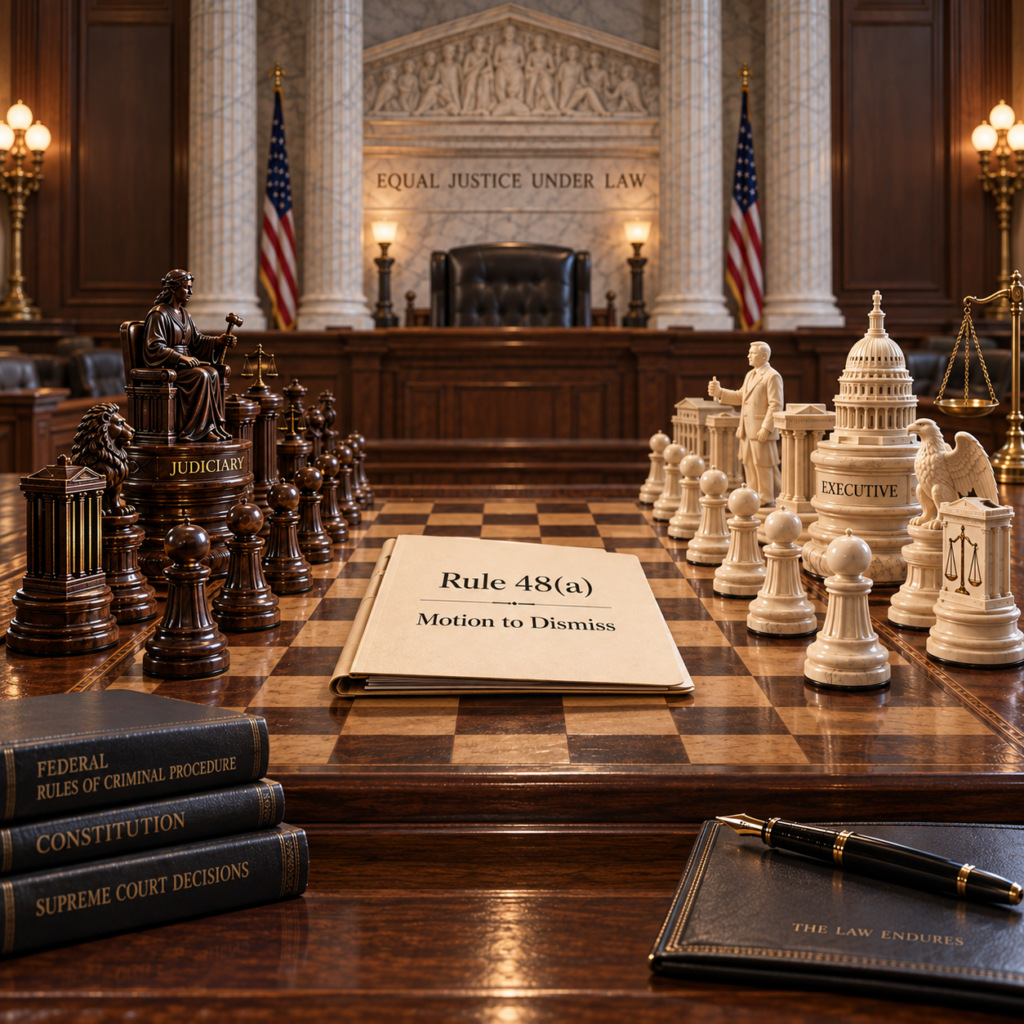
Dismissive of Dismissal
FEATURED
September 25, 2026
Dismissive of Dismissal
By: James Trusty
During the two Trump administrations, a trend has begun to emerge of federal judges challenging the once-unrestricted authority of the Department of Justice (DOJ) to dismiss indictments. The longstanding framework of separation of powers suggests this judicial pushback is unsupported activism, but the judges claim the Federal Rules of Criminal Procedure (“Rules”) do not relegate their role to rubber stamping. Ultimately, this trajectory may lead us to an impossible impasse—a game of chicken where reputations, relationships and the balance of power might be forever altered in the context of dismissal. Pursuant to Rule 48(a), “[t]he government may, with leave of court, dismiss an indictment.” Exactly what “leave of court” means in terms of judicial scrutiny is the challenging question. Some…
In the age of AI, litigators must read between the lines—literally.
August 18, 2026
In the age of AI, litigators must read between the lines—literally.
By: Robert Ward
In the age of AI, litigators must read between the lines—literally. Any attorney who has litigated a case against a party proceeding pro se is familiar with the common refrain that courts liberally construe pro se filings.[1] This leniency was not enough for one Connecticut litigant. In a scheme that gives new meaning to the phrase “reading between the lines,” pro se plaintiff Matthew Elliot…
The DOJ Steps Up for Military Families
June 29, 2026
The DOJ Steps Up for Military Families
By: Lauren Scribner
The Servicemembers Civil Relief Act (SCRA), 50 U.S.C. § 4025a, grants military spouses portability of their professional licenses. That means when a military spouse moves with his or her servicemember to the servicemember’s assigned duty station in a new state, the spouse’s professional license essentially moves with them.[1] In order to take advantage of this license portability benefit in the new state, the SCRA requires…
DOJ Notice Hints at a Sentencing Deal With Former Enron Exec Jeffrey Skilling
April 29, 2013
DOJ Notice Hints at a Sentencing Deal With Former Enron Exec Jeffrey Skilling
By: Nicole Kardell
Justice may or may not be blind; but she can buckle under pressure. It may take years, millions of dollars and armies of attorneys, but if you have the resources to test her mettle, you too may tip the balance in your favor. Almost seven years after his conviction on fraud and other charges, former Enron executive Jeffrey Skilling may finally be succeeding in his…
Court to Rule on Exceptions to Warrant Requirement for GPS Tracking
April 19, 2013
Court to Rule on Exceptions to Warrant Requirement for GPS Tracking
By: Jeffrey Hamlin
The U.S. Court of Appeals for the 3rd Circuit is set to become the first federal appellate court to answer the question left open by the Supreme Court in United States v. Jones. Last year, the Court held in Jones that a Fourth Amendment “search” occurs, and a warrant is required, when a GPS tracking device is attached by law enforcement to a person’s vehicle…
What’s at the Bottom of the ‘Robosigning’ Scandal?
April 9, 2013
What’s at the Bottom of the ‘Robosigning’ Scandal?
By: Nicole Kardell
The problematic practice of robosigning – whereby banks and other lenders improperly foreclosed on properties through formulaically processing foreclosure documents – has been much in the news over the past couple of years. The feds have been investigating banks and individuals; state attorneys general have joined forces in pursuit of robosigners; and, unsurprisingly, there have been a number of class actions filed by consumers whose…
Judge Strikes Down FBI’s Use of ‘National Security Letters’
March 29, 2013
Judge Strikes Down FBI’s Use of ‘National Security Letters’
By: Ifrah Law
In a recent decision, U.S. District Judge Susan Illston of the Northern District of California struck down the FBI’s use of National Security Letters (NSLs) as unconstitutional. Unbeknownst to most Americans, the FBI has been issuing thousands of NSLs every year. The letters demand that recipients, such as banks and telephone companies, provide customers’ information such as their transactional records, phone numbers dialed, and email…
Court: Data on Unsecured Network May Qualify for 4th Amendment Protection
March 11, 2013
Court: Data on Unsecured Network May Qualify for 4th Amendment Protection
By: Ifrah Law
The vast increase in the use of wireless data networks has led to new legal issues regarding network users’ right to privacy. A recent opinion issued by the U.S. District Court for the District of Oregon indicates that, under some circumstances, individuals on an unsecured wireless network have a reasonable expectation of privacy entitling them to Fourth Amendment protection. As a result, police officers must…