Insights < BACK TO ALL INSIGHTS

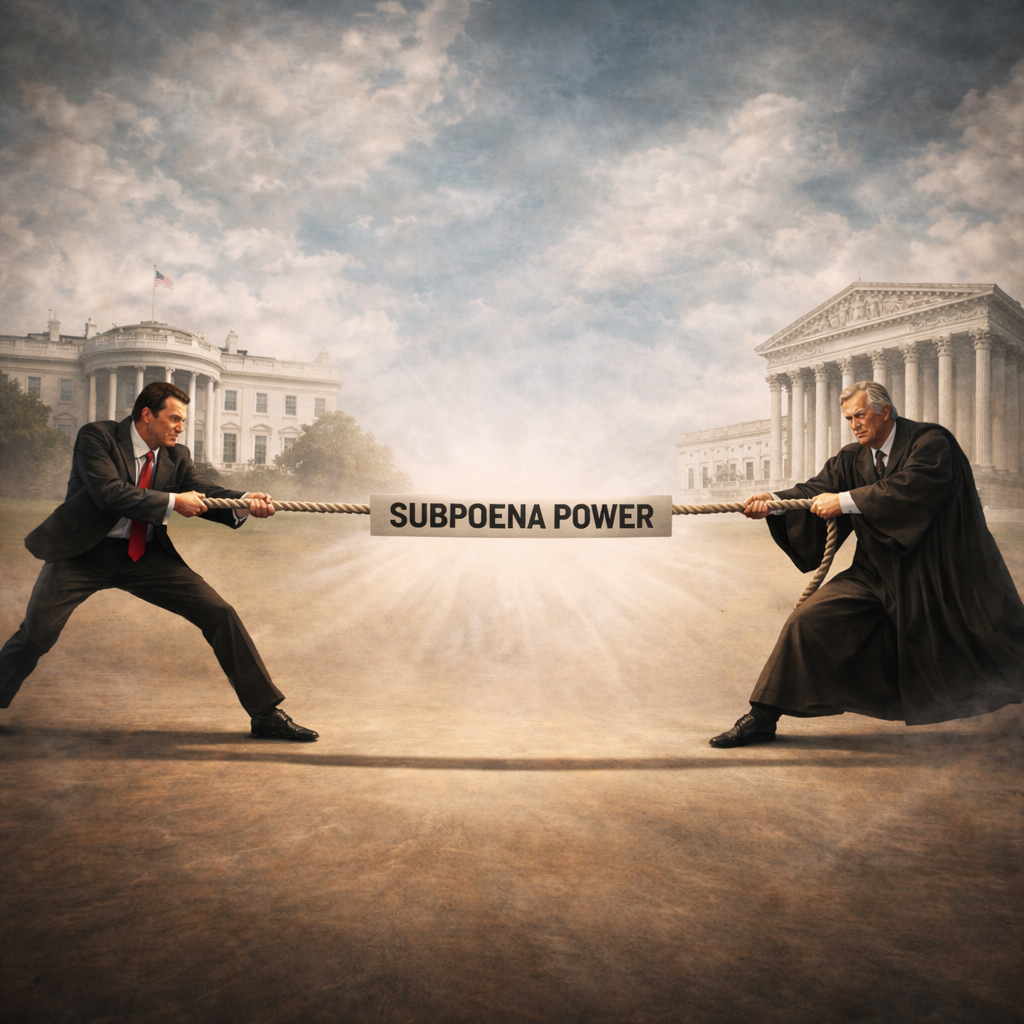
Overrun and Overreach: the New Challenge to Grand Jury Subpoenas
FEATURED
March 26, 2026
Overrun and Overreach: the New Challenge to Grand Jury Subpoenas
By: James Trusty
Most criminal law practitioners are quite familiar with clients receiving grand jury subpoenas. There are rituals we go through to figure out whether it’s a “friendly” subpoena, i.e. just trying to get business records from the client to be used against some other target, or whether it’s the visible start of a potential criminal prosecution against the client. Because the legal standard to justify issuing a subpoena is so low, an outright fight against the prosecutor issuing the subpoena is extremely uphill. A motion to quash is only granted “if compliance would be unreasonable or oppressive.”[1]Until a couple of weeks ago, that framework usually translated into successful challenges only when the subpoena’s request was so broad in terms of substance…
Through the Looking Glasses: Will the Public Accept Meta Ray-Bans?
March 17, 2026
Through the Looking Glasses: Will the Public Accept Meta Ray-Bans?
By: Nicole Kardell
What do a plastic grocery sack and a pair of Meta Ray-Bans have in common? The harm they can do to others who are powerless to their use. A grocer may pack a shopper’s groceries in a disposable plastic bag, and the shopper may be fine with the packing – the bag is cheap for both. But the environment ends up paying a hefty toll…
The New Corporate Enforcement Blueprint: DOJ’s “First-Ever” Department-Wide Corporate Enforcement Policy
March 16, 2026
The New Corporate Enforcement Blueprint: DOJ’s “First-Ever” Department-Wide Corporate Enforcement Policy
By: Robert Ward
Understanding the DOJ’s New Corporate Enforcement Framework On March 10, 2026, just weeks after the U.S. Attorney’s Office for the Southern District of New York (SDNY) released its updated voluntary corporate self-disclosure program for fraud and financial misconduct, the Department of Justice introduced its first Department‑wide Corporate Enforcement Policy (CEP). The CEP establishes a uniform approach for evaluating voluntary disclosures and cooperation across all DOJ…
This Gaming Case Didn’t Have to Be Prosecuted
February 26, 2013
This Gaming Case Didn’t Have to Be Prosecuted
By: Ifrah Law
A Nevada man now has a criminal record – simply because he placed a bet in a casino in Las Vegas and a casino employee didn’t ask him enough questions. Robert Walker recently pleaded guilty in federal court to one misdemeanor count involving a record-keeping violation and was sentenced to one year of unsupervised probation. He was also ordered to pay a $250 fine and…
Does ‘Speech or Debate’ Trump the Right to Defend Oneself in Court?
February 20, 2013
Does ‘Speech or Debate’ Trump the Right to Defend Oneself in Court?
By: Jeffrey Hamlin
On February 5, 2013, the Bipartisan Legal Advisory Group of the U.S. House of Representatives filed a brief urging the U.S. Court of Appeals for the D.C. Circuit to hold that U.S. legislators and their aides cannot be forced to testify about their legislative activities, even when their expected testimony might help exonerate a criminal defendant. The case raises interesting questions about the balancing of…
Domain Name Seizure – It’s Not Just a U.S. Law Enforcement Tactic
February 12, 2013
Domain Name Seizure – It’s Not Just a U.S. Law Enforcement Tactic
By: Ifrah Law
We have previously reported in this space about the use of domain name seizures by American law enforcement – for example, here and here. Recent media reports show that domain name seizure has become the go-to tactic for law enforcement for other countries as well. Canadian police made a series of arrests during an invitation-only Super Bowl party attended by 2300 people as part of…
Court Finds State Ban on Sex Offenders’ Use of Social Media Tramples Speech Rights
January 25, 2013
Court Finds State Ban on Sex Offenders’ Use of Social Media Tramples Speech Rights
By: Steven Eichorn
In a January 23, 2013, ruling, the U.S. Court of Appeals for the 7th Circuit held that an Indiana law that prohibited most registered sex offenders from using social media websites was unconstitutional because it was “not narrowly tailored to protect the state’s interest.” The decision was restricted to the Indiana statute on sex offenders and did not extend its reasoning to another, related issue…
Online Pharma Exec Gets 4 Years in Prison for Selling Foreign Drugs in U.S.
January 11, 2013
Online Pharma Exec Gets 4 Years in Prison for Selling Foreign Drugs in U.S.
By: Ifrah Law
Andrew Strempler, a Canadian citizen who helped to pioneer the cross-border online pharmacy industry, was sentenced on January 9, 2013, to four years in prison in connection with allegations that his former company sold fake and misbranded drugs to U.S. citizens. The sentence follows Strempler’s guilty plea in October in federal court in Miami to a charge of conspiracy to commit mail fraud. Strempler also…