Insights < BACK TO ALL INSIGHTS

Judging the Judges
FEATURED
October 2, 2026
Judging the Judges
By: Lauren Scribner
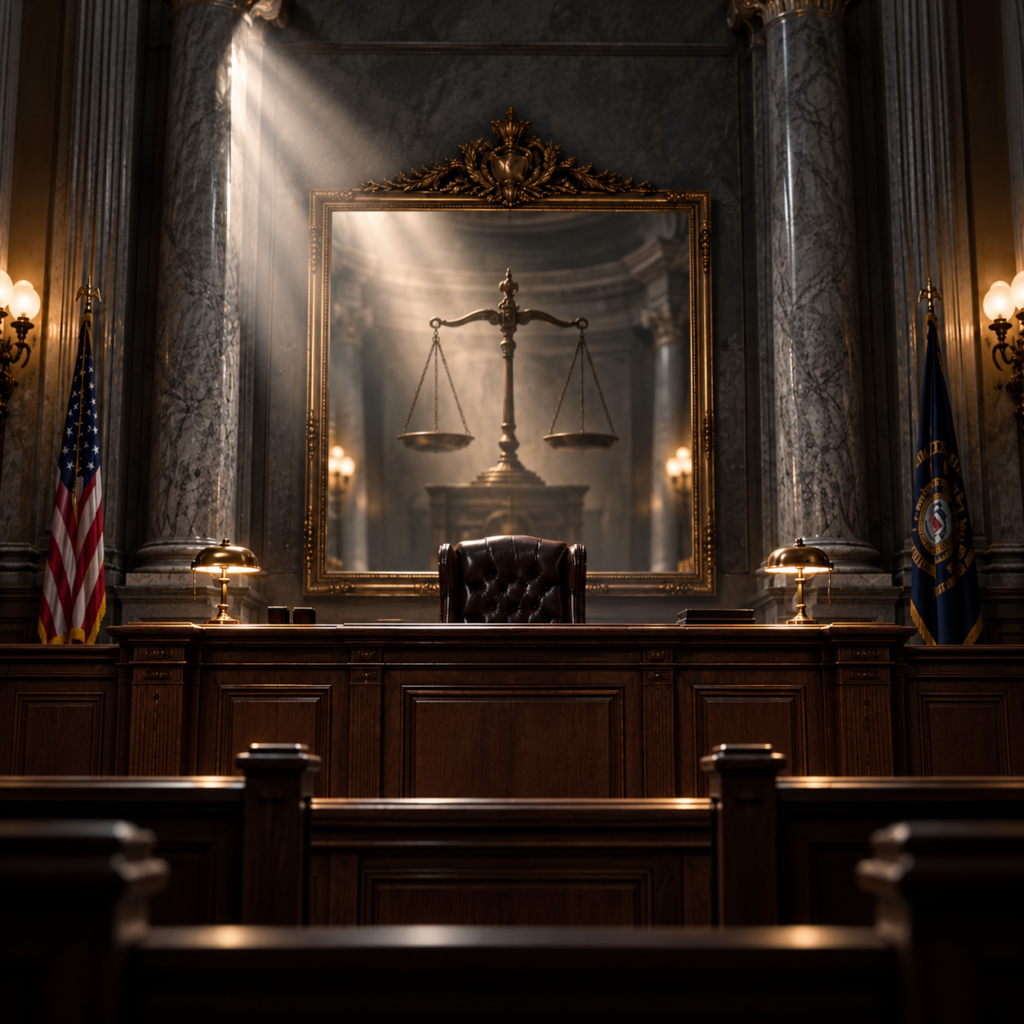
Judges are in the business of holding people accountable for crimes and misconduct—but how do we hold judges accountable for their own ethical lapses? Recently, in a moment of frustration, Florida Second Circuit Judge J. Layne Smith told three attorneys practicing in his courtroom that he “would like to tell the deputy to pull his gun and shoot all three of [them] as far as [his] level of frustration right now.”[1] Yes—you read that correctly. A presiding judge vocalized his thought to have attorneys practicing in his courtroom shot by courtroom security. What should the consequence be for using such threatening language? A mere public reprimand and recusal from that case?[2] Or, should there be some sort of tangible punishment?…
Dismissive of Dismissal
September 25, 2026
Dismissive of Dismissal
By: James Trusty
During the two Trump administrations, a trend has begun to emerge of federal judges challenging the once-unrestricted authority of the Department of Justice (DOJ) to dismiss indictments. The longstanding framework of separation of powers suggests this judicial pushback is unsupported activism, but the judges claim the Federal Rules of Criminal Procedure (“Rules”) do not relegate their role to rubber stamping. Ultimately, this trajectory may lead…
In the age of AI, litigators must read between the lines—literally.
August 18, 2026
In the age of AI, litigators must read between the lines—literally.
By: Robert Ward
In the age of AI, litigators must read between the lines—literally. Any attorney who has litigated a case against a party proceeding pro se is familiar with the common refrain that courts liberally construe pro se filings.[1] This leniency was not enough for one Connecticut litigant. In a scheme that gives new meaning to the phrase “reading between the lines,” pro se plaintiff Matthew Elliot…
Judge Weighs In on DOJ ‘Side Agreement’ With Bank
June 8, 2010
Judge Weighs In on DOJ ‘Side Agreement’ With Bank
By: Ifrah Law
In a rare occurrence, a so-called deferred prosecution agreement entered into by the U.S. Department of Justice with a target of a criminal investigation has been subject to scrutiny by a federal judge, and the result wasn’t favorable to the government. In fact, a judicial ruling in the case of a fired Miami bank executive appears to be a signal from the bench to the…
Is Google Ready to Protect Our Legal Rights?
June 7, 2010
Is Google Ready to Protect Our Legal Rights?
By: Ifrah Law
Is the government reading your e-mail messages? A routine law enforcement technique of using subpoenas instead of search warrants to obtain e-mail from internet service providers (ISPs) means that literally anyone who uses the Internet risks intrusion from unlawful government surveillance practices. Subpoenas can be issued under a much lower standard than the probable cause standard used for search warrants. They require only a reasonable…
Heritage, NACDL Session Weighs In on Criminal Intent
June 3, 2010
Heritage, NACDL Session Weighs In on Criminal Intent
By: Ifrah Law
An unusual coalition of the conservative Heritage Foundation and the National Association of Criminal Defense Lawyers (NACDL) recently issued a study entitled “Without Intent: How Congress Is Eroding the Criminal Intent Requirement in Federal Law.” See this blog’s discussion at Crime in the Suites: Has Congress Eroded the Intent Requirement in Criminal Law? and the discussions on the Letter of Apology and the Sentencing Law and…
Is Virginia Real?
May 26, 2010
Is Virginia Real?
By: Ifrah Law
U.S. Attorney Neil MacBride of the Eastern District of Virginia has been in the news of late. Last week, he announced plans to pursue prosecutions of high-profile securities-fraud cases in his district. For years, securities-fraud cases have been, with rare exception, primarily handled by the Southern District of New York. MacBride takes comfort in a December 2007 Fourth Circuit case that held that the Eastern…