Insights < BACK TO ALL INSIGHTS

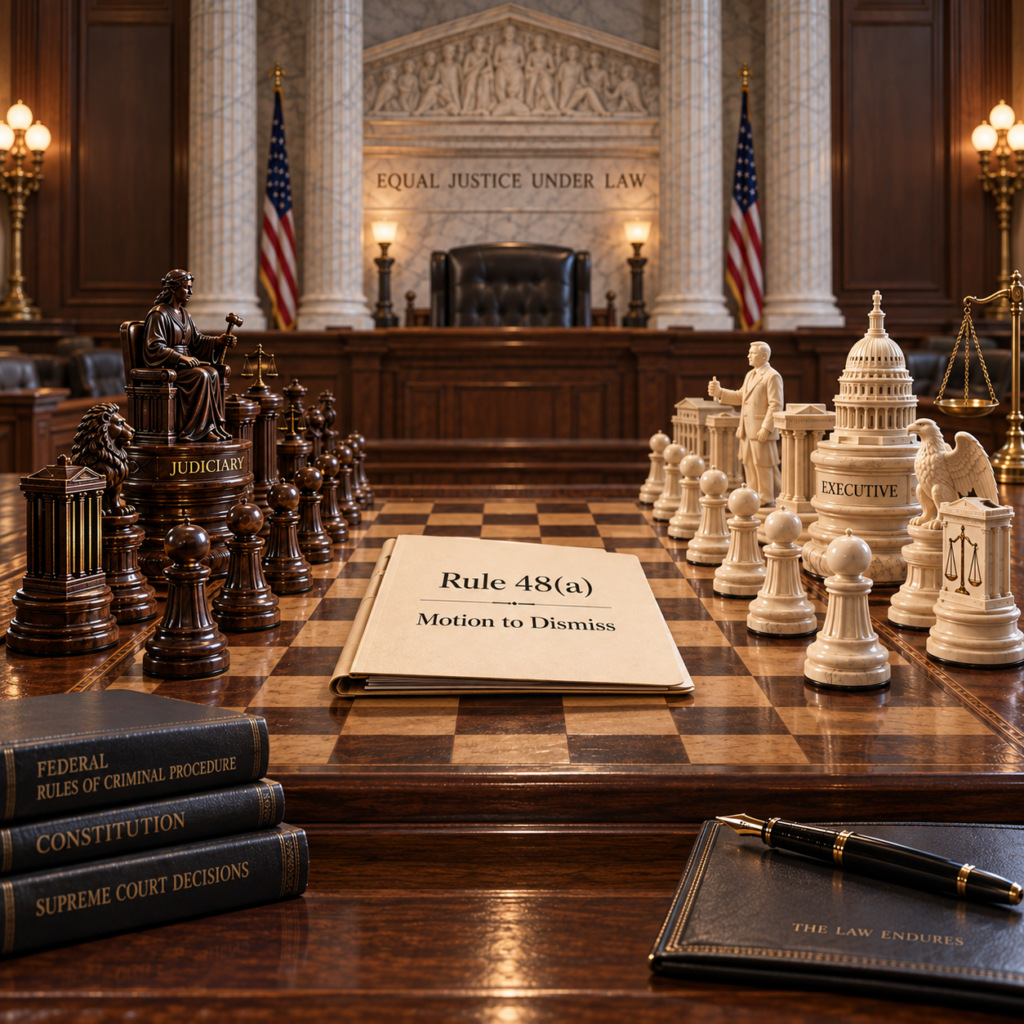
Dismissive of Dismissal
FEATURED
September 25, 2026
Dismissive of Dismissal
By: James Trusty
During the two Trump administrations, a trend has begun to emerge of federal judges challenging the once-unrestricted authority of the Department of Justice (DOJ) to dismiss indictments. The longstanding framework of separation of powers suggests this judicial pushback is unsupported activism, but the judges claim the Federal Rules of Criminal Procedure (“Rules”) do not relegate their role to rubber stamping. Ultimately, this trajectory may lead us to an impossible impasse—a game of chicken where reputations, relationships and the balance of power might be forever altered in the context of dismissal. Pursuant to Rule 48(a), “[t]he government may, with leave of court, dismiss an indictment.” Exactly what “leave of court” means in terms of judicial scrutiny is the challenging question. Some…
In the age of AI, litigators must read between the lines—literally.
August 18, 2026
In the age of AI, litigators must read between the lines—literally.
By: Robert Ward
In the age of AI, litigators must read between the lines—literally. Any attorney who has litigated a case against a party proceeding pro se is familiar with the common refrain that courts liberally construe pro se filings.[1] This leniency was not enough for one Connecticut litigant. In a scheme that gives new meaning to the phrase “reading between the lines,” pro se plaintiff Matthew Elliot…
The DOJ Steps Up for Military Families
June 29, 2026
The DOJ Steps Up for Military Families
By: Lauren Scribner
The Servicemembers Civil Relief Act (SCRA), 50 U.S.C. § 4025a, grants military spouses portability of their professional licenses. That means when a military spouse moves with his or her servicemember to the servicemember’s assigned duty station in a new state, the spouse’s professional license essentially moves with them.[1] In order to take advantage of this license portability benefit in the new state, the SCRA requires…
Rubashkin Gets 27-Year Federal Sentence for Fraud
June 21, 2010
Rubashkin Gets 27-Year Federal Sentence for Fraud
By: Ifrah Law
Today, U.S. District Judge Linda Reade in Iowa sentenced former kosher meatpacking executive Sholom Rubashkin to 27 years in a federal prison for his conviction on 86 counts of federal financial fraud charges. The prison term will be followed by five years of parole. Mr. Rubashkin will also be required to make restitution of nearly $27 million to several financial institutions. The sentence comes down almost…
A Rubashkin Acquittal: Did the Prosecutor Go Too Far?
June 11, 2010
A Rubashkin Acquittal: Did the Prosecutor Go Too Far?
By: Ifrah Law
Former Agriprocessors, Inc. executive Sholom Rubashkin was acquitted in Iowa state court on Monday, June 7, 2010, on all 67 counts of child labor violations relating to 26 teenagers from Latin America who worked at Rubashkin’s kosher meatpacking plant in Postville, Iowa. The jury reached its verdict during the second day of deliberations. During the month-long trial, the jury had heard testimony from several Guatemalan…
Judge Weighs In on DOJ ‘Side Agreement’ With Bank
June 8, 2010
Judge Weighs In on DOJ ‘Side Agreement’ With Bank
By: Ifrah Law
In a rare occurrence, a so-called deferred prosecution agreement entered into by the U.S. Department of Justice with a target of a criminal investigation has been subject to scrutiny by a federal judge, and the result wasn’t favorable to the government. In fact, a judicial ruling in the case of a fired Miami bank executive appears to be a signal from the bench to the…
Is Google Ready to Protect Our Legal Rights?
June 7, 2010
Is Google Ready to Protect Our Legal Rights?
By: Ifrah Law
Is the government reading your e-mail messages? A routine law enforcement technique of using subpoenas instead of search warrants to obtain e-mail from internet service providers (ISPs) means that literally anyone who uses the Internet risks intrusion from unlawful government surveillance practices. Subpoenas can be issued under a much lower standard than the probable cause standard used for search warrants. They require only a reasonable…
Heritage, NACDL Session Weighs In on Criminal Intent
June 3, 2010
Heritage, NACDL Session Weighs In on Criminal Intent
By: Ifrah Law
An unusual coalition of the conservative Heritage Foundation and the National Association of Criminal Defense Lawyers (NACDL) recently issued a study entitled “Without Intent: How Congress Is Eroding the Criminal Intent Requirement in Federal Law.” See this blog’s discussion at Crime in the Suites: Has Congress Eroded the Intent Requirement in Criminal Law? and the discussions on the Letter of Apology and the Sentencing Law and…