Insights < BACK TO ALL INSIGHTS

Dismissive of Dismissal
FEATURED
September 25, 2026
Dismissive of Dismissal
By: James Trusty
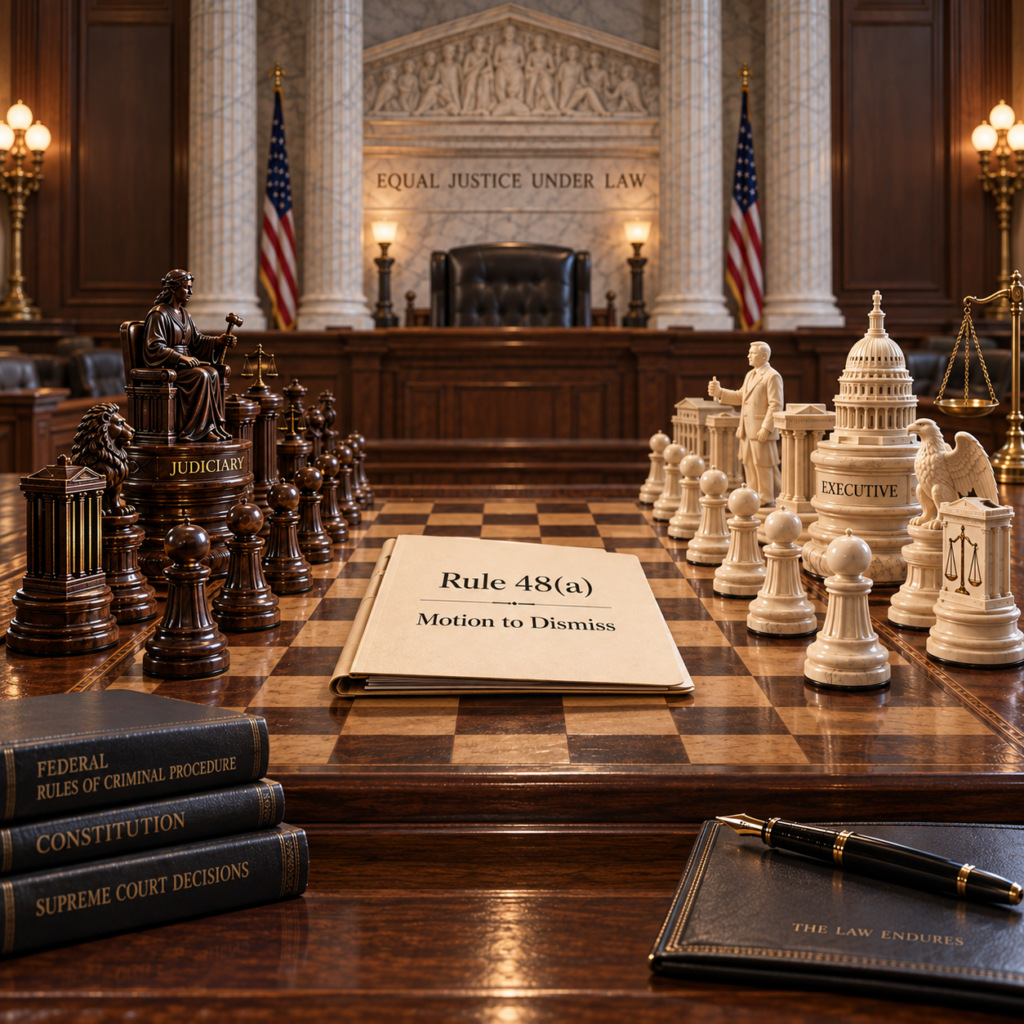
During the two Trump administrations, a trend has begun to emerge of federal judges challenging the once-unrestricted authority of the Department of Justice (DOJ) to dismiss indictments. The longstanding framework of separation of powers suggests this judicial pushback is unsupported activism, but the judges claim the Federal Rules of Criminal Procedure (“Rules”) do not relegate their role to rubber stamping. Ultimately, this trajectory may lead us to an impossible impasse—a game of chicken where reputations, relationships and the balance of power might be forever altered in the context of dismissal. Pursuant to Rule 48(a), “[t]he government may, with leave of court, dismiss an indictment.” Exactly what “leave of court” means in terms of judicial scrutiny is the challenging question. Some…
In the age of AI, litigators must read between the lines—literally.
August 18, 2026
In the age of AI, litigators must read between the lines—literally.
By: Robert Ward
In the age of AI, litigators must read between the lines—literally. Any attorney who has litigated a case against a party proceeding pro se is familiar with the common refrain that courts liberally construe pro se filings.[1] This leniency was not enough for one Connecticut litigant. In a scheme that gives new meaning to the phrase “reading between the lines,” pro se plaintiff Matthew Elliot…
The DOJ Steps Up for Military Families
June 29, 2026
The DOJ Steps Up for Military Families
By: Lauren Scribner
The Servicemembers Civil Relief Act (SCRA), 50 U.S.C. § 4025a, grants military spouses portability of their professional licenses. That means when a military spouse moves with his or her servicemember to the servicemember’s assigned duty station in a new state, the spouse’s professional license essentially moves with them.[1] In order to take advantage of this license portability benefit in the new state, the SCRA requires…
Is Virginia Real?
May 26, 2010
Is Virginia Real?
By: Ifrah Law
U.S. Attorney Neil MacBride of the Eastern District of Virginia has been in the news of late. Last week, he announced plans to pursue prosecutions of high-profile securities-fraud cases in his district. For years, securities-fraud cases have been, with rare exception, primarily handled by the Southern District of New York. MacBride takes comfort in a December 2007 Fourth Circuit case that held that the Eastern…
Is Craigslist Eligible for Immunity?
May 22, 2010
Is Craigslist Eligible for Immunity?
By: Ifrah Law
Connecticut Attorney General Richard Blumenthal and a coalition of 39 attorneys general have long accused Craigslist of furthering prostitution and human trafficking. Blumenthal’s May 3, 2010, subpoena to Craigslist has reignited the debate over the online bulletin board’s responsibility for prostitution ads posted on its site. Craigslist is clearly fighting back. Its CEO, James Buckmaster, recently wrote on the official Craigslist blog, “As AG Blumenthal…
The Fate of an Iowa Butcher — Scapegoat or Cautionary Tale?
May 14, 2010
The Fate of an Iowa Butcher — Scapegoat or Cautionary Tale?
By: Ifrah Law
On June 22, 2010, Chief U.S. District Judge Linda Reade of the Northern District of Iowa will impose a sentence on Sholom Rubashkin, formerly the plant manager at Agriprocessors, Inc., the now-defunct Postville, Iowa, kosher slaughterhouse. The sentencing comes more than two years after a massive immigration raid that netted a total of 289 undocumented workers and led to Rubashkin’s arrest and conviction. Rubashkin originally…
Not so Fast Kentucky
November 2, 2009
Not so Fast Kentucky
By: Ifrah Law
When the Commonwealth of Kentucky petitioned the Franklin Circuit County Court to seize www.fulltiltpoker.com, Pocket Kings Limited, asked a U.K Chancery Court to injoin FTP’s registrar, Safenames Limited, from complying with the Kentucky trial court order. In an order dated October 22, 2009, the Chancery Court granted Pocket King’s request and declared that Safenames shall not comply with any present or future seizure order from the Commonwealth…
Kentucky Supreme Court Considers Poker
November 2, 2009
Kentucky Supreme Court Considers Poker
By: Ifrah Law
On October 22, 2009, the Supreme Court of Kentucky heard oral arguments in the above referenced case. The case originated when the Commonwealth of Kentucky filed civil seizure and forfeiture proceedings against 141 domain names – virtually all of which offered or involved internet gaming. The Commonwealth contended that domain names constitute gambling devices under state law and as such were subject to seizure under…