Insights < BACK TO ALL INSIGHTS

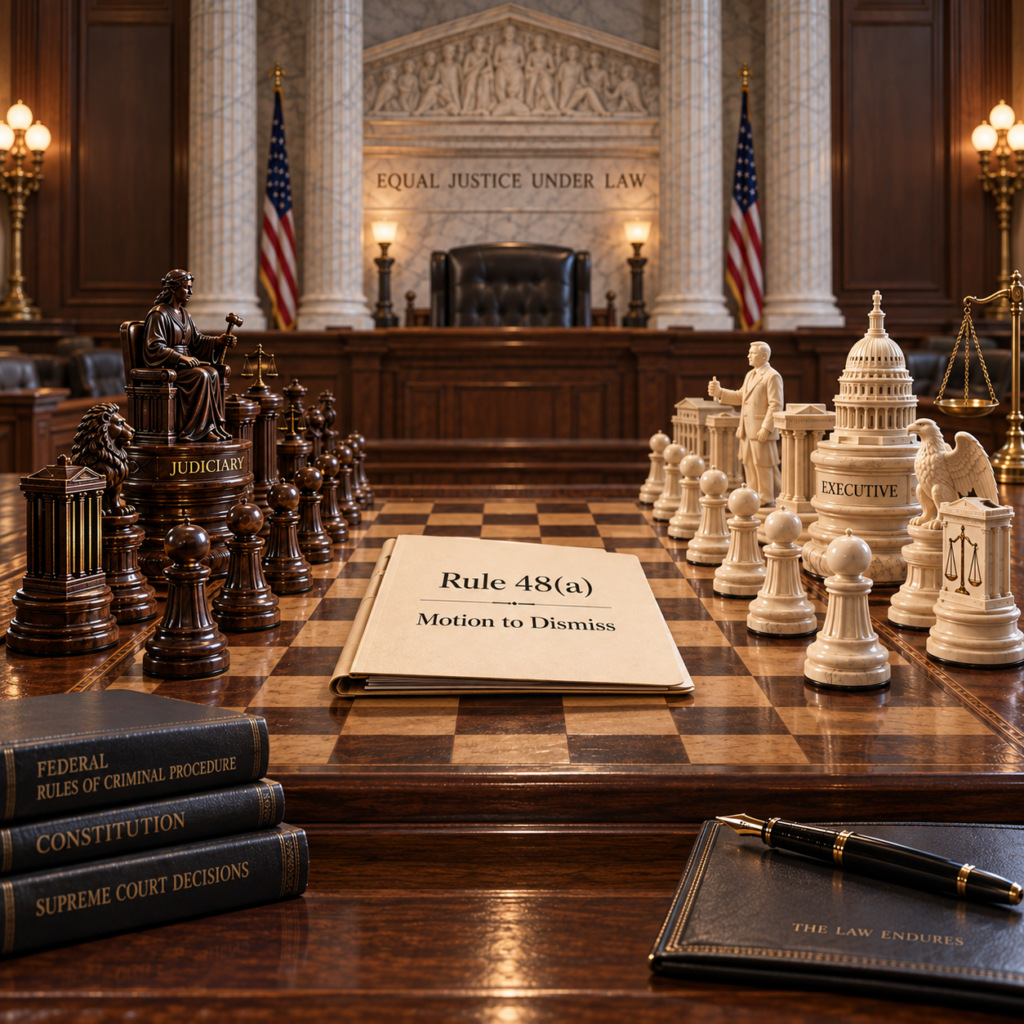
Dismissive of Dismissal
FEATURED
September 25, 2026
Dismissive of Dismissal
By: James Trusty
During the two Trump administrations, a trend has begun to emerge of federal judges challenging the once-unrestricted authority of the Department of Justice (DOJ) to dismiss indictments. The longstanding framework of separation of powers suggests this judicial pushback is unsupported activism, but the judges claim the Federal Rules of Criminal Procedure (“Rules”) do not relegate their role to rubber stamping. Ultimately, this trajectory may lead us to an impossible impasse—a game of chicken where reputations, relationships and the balance of power might be forever altered in the context of dismissal. Pursuant to Rule 48(a), “[t]he government may, with leave of court, dismiss an indictment.” Exactly what “leave of court” means in terms of judicial scrutiny is the challenging question. Some…
In the age of AI, litigators must read between the lines—literally.
August 18, 2026
In the age of AI, litigators must read between the lines—literally.
By: Robert Ward
In the age of AI, litigators must read between the lines—literally. Any attorney who has litigated a case against a party proceeding pro se is familiar with the common refrain that courts liberally construe pro se filings.[1] This leniency was not enough for one Connecticut litigant. In a scheme that gives new meaning to the phrase “reading between the lines,” pro se plaintiff Matthew Elliot…
The DOJ Steps Up for Military Families
June 29, 2026
The DOJ Steps Up for Military Families
By: Lauren Scribner
The Servicemembers Civil Relief Act (SCRA), 50 U.S.C. § 4025a, grants military spouses portability of their professional licenses. That means when a military spouse moves with his or her servicemember to the servicemember’s assigned duty station in a new state, the spouse’s professional license essentially moves with them.[1] In order to take advantage of this license portability benefit in the new state, the SCRA requires…
Federal Criminal Charges Dropped — But Reputations Damaged
July 8, 2010
Federal Criminal Charges Dropped — But Reputations Damaged
By: Ifrah Law
A recent Bloomberg News article points to a disturbing trend – a dramatic increase in ultimately unsupportable white-collar federal indictments. In recent years, a growing number of executives have been indicted for corporate crimes and then had the charges dropped. From 2006 to 2008, the most recent period available, U.S. prosecutors dismissed charges against 42 such defendants for which the most serious charge was securities…
Kagan Stresses Deference to Congress on Federal Sentencing
July 6, 2010
Kagan Stresses Deference to Congress on Federal Sentencing
By: Ifrah Law
In her three-day Supreme Court confirmation hearing, nominee Elena Kagan expressed very few views on substantive issues that might give observers a clue as to how she would vote as a Justice. Criminal law and sentencing issues were no exception, as the nominee did not tip her hand much on these matters. One interesting tidbit emerged, however. Kagan was asked on June 30, 2010, the…
Has the FBI Gone Too Far in Investigating White-Collar Crime and Fraud?
July 2, 2010
Has the FBI Gone Too Far in Investigating White-Collar Crime and Fraud?
By: Ifrah Law
A recent Wall Street Journal article describing the FBI’s use against suspected financial criminals of techniques normally used to hunt terrorists shows how seriously white-collar crime is being viewed these days. It also vindicates those who sounded warning bells after 9/11 when Americans were asked to trade civil liberties for the promise of national security. Those who argued against the slippery slope of government encroachment…
From Federal Prison, Ex-Enron CEO Ponders His Case
June 29, 2010
From Federal Prison, Ex-Enron CEO Ponders His Case
By: Ifrah Law
On June 25, 2010, the U.S. Supreme Court issued its partially favorable decision in Skilling v. United States. Although the Court accepted former Enron CEO Jeff Skilling’s arguments on the reach of the “honest services” statute, it rejected Skilling’s contention that pretrial publicity and community prejudice prevented him from receiving a fair trial. Since his conviction in 2004, Skilling has had ample time to consider…
Supreme Court Hands DOJ a Big Loss, Limiting Use of “Honest Services” Statute
June 24, 2010
Supreme Court Hands DOJ a Big Loss, Limiting Use of “Honest Services” Statute
By: Ifrah Law
Today the Supreme Court decided the key white-collar crime case of Skilling v. United States, rejecting the Justice Department’s efforts to use the well-known “honest services” statute against former Enron CEO Jeffrey Skilling. The court didn’t reverse Skilling’s conviction but sent the case back to the U.S. Court of Appeals for the 5th Circuit to determine whether the conviction could stand without the “honest services”…