Insights < BACK TO ALL INSIGHTS

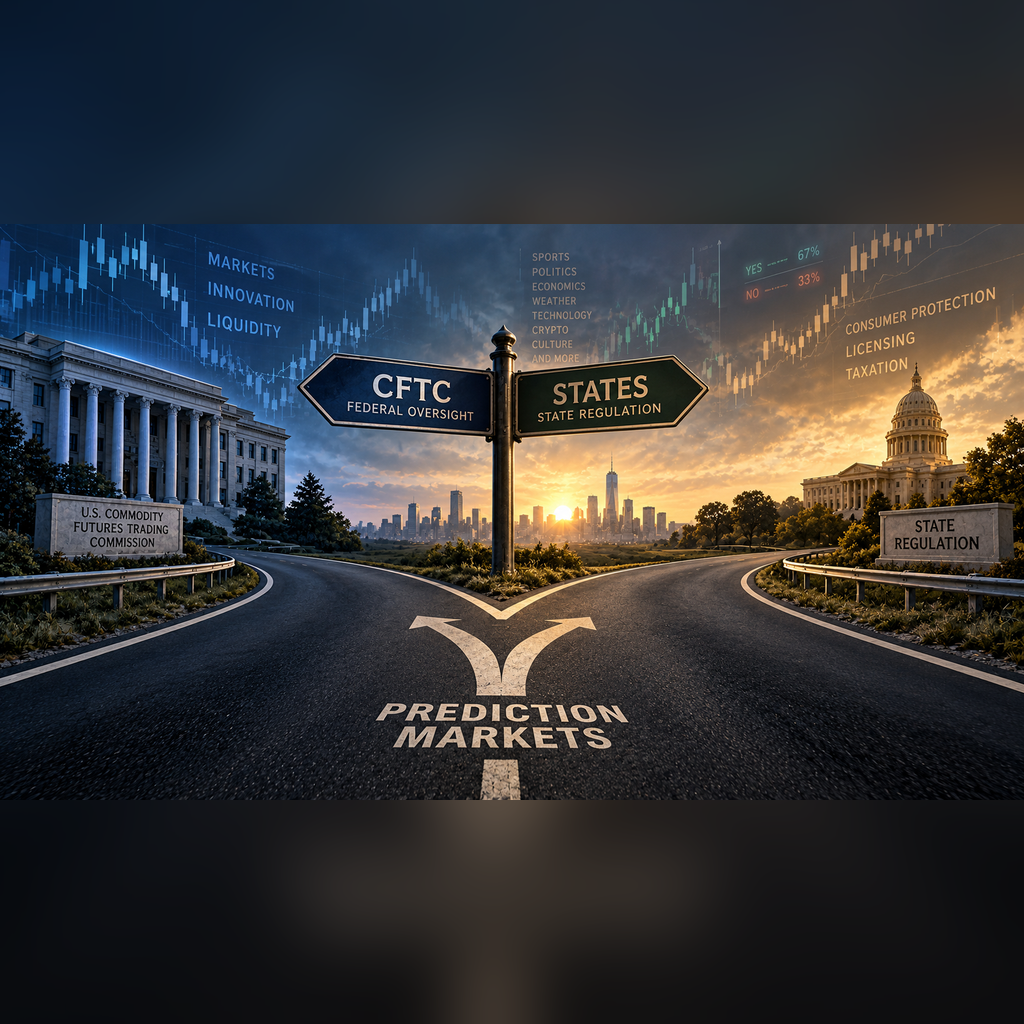
Prediction Markets at a Crossroads: Licensing, Compliance, and Future(s)
FEATURED
October 20, 2026
Prediction Markets at a Crossroads: Licensing, Compliance, and Future(s)
By: Kyra Pulliam
Last week I had the honor of attending the inaugural PREDICT Conference hosted by DealFlow Events in New York City. This event should not be confused with the NEXTPredict Summit, taking place October 22-23, or Predict 2026, scheduled for December 7-9, both of which will also be held in New York. If the growing number of prediction market conferences borders on excessive, it is easy to understand why: Prediction markets are the current hot topic as a novel industry with the potential to generate revenues rivaling, if not exceeding, traditional i-gaming products. Of course, that potential all depends on which way the legal winds blow. Much of the current discourse focuses on whether the Supreme Court will grant certiorari in…

Problem Gaming or Problem Industry Players?
October 14, 2026
Problem Gaming or Problem Industry Players?
By: Michelle Cohen
Over the summer, I attended the National Council on Problem Gambling’s (“NCPG”) annual conference in Nashville. NCPG is the nation’s leading nonprofit organization dedicated to reducing the harms associated with problem gambling. NCPG is a membership-supported organization whose members include major gaming companies, professional sports leagues, nonprofit organizations, and state government regulatory agencies. In Nashville, I learned from various stakeholders, including doctors, therapists, and individuals…
Sara Dalsheim on Successful Licensing, Marketing and Regulatory Strategies for iGaming Clients
October 12, 2026
Sara Dalsheim on Successful Licensing, Marketing and Regulatory Strategies for iGaming Clients
By: Ifrah Law
For businesses competing in the rapidly evolving iGaming industry, it is a huge advantage to have a lawyer who knows the game and has an intense desire to win. Sara Dalsheim combines her life-long passion for sports with diverse experience in sports betting and iGaming law. She is adept at guiding clients through regulatory and licensing processes, negotiating agreements, and structuring business partnerships that seek…
Seismic Shift on Lottery Courier Services in Texas
February 25, 2025
Seismic Shift on Lottery Courier Services in Texas
By: Ifrah Law
On Monday, February 24, the Texas Lottery Commission’s Executive Director, Ryan Mindell, announced that the Commission was exercising its discretionary authority under the State Lottery Act to keep the Texas Lottery honest, secure, and fair “by prohibiting lottery ticket courier services,” effective immediately. The Commission plans to give effect to the prohibition through administrative adjudication and notice-and-comment rulemaking. Mindell conveyed the news in a Policy…
The Gambling Industry’s Regulatory Lessons for Cryptocurrency
February 24, 2025
The Gambling Industry’s Regulatory Lessons for Cryptocurrency
By: Sara Dalsheim
While most of American population has mixed feelings on the results of the 2024 election; the cryptocurrency (“crypto”) industry does not. Crypto companies made up one-third of all direct corporate contributions to political action committees, and it resulted in 85% of all winning congressional candidates being supporters of the crypto industry. So, what does the win mean? Likely, a clear regulatory authority and rules over…
Crypto’s Gamble Pays Off: SEC Enforcement Stalls Under Trump Administration
February 21, 2025
Crypto’s Gamble Pays Off: SEC Enforcement Stalls Under Trump Administration
By: Jake Gray
The cryptocurrency industry’s political bet on Trump appears to be paying early dividends in his administration’s first month. The Securities Exchange Commission’s (“SEC”) rapid pivot–reorganizing its enforcement units and pausing major crypto litigation–signals a dramatic shift in the agency’s approach to digital asset regulation. In the past, we have analyzed several enforcement actions by the SEC against cryptocurrency companies that issued their own tokens. Our…
The Election Betting Experiment: Will Congress Rebottle This Genie?
January 8, 2025
The Election Betting Experiment: Will Congress Rebottle This Genie?
By: Jake Gray
Just this fall, Americans in all 50 states were able to put their money where they mouth was on the outcome of the 2024 Presidential Election—what many news outlets call, and even one platform itself has called, election betting. Betting, notably, is not legal in all 50 states. Before the Supreme Court’s ruling, sports betting was largely prohibited nationwide under PASPA, with only Nevada and…
Our Big Three Predictions for the Online Gaming Industry in 2025
January 6, 2025
Our Big Three Predictions for the Online Gaming Industry in 2025
By: Sara Dalsheim
In 2025, we will celebrate the seventh anniversary of the repeal of PASPA and the resulting increase in legalization and popularity of various offerings in the gaming industry – namely sports wagering and online casino gaming. We predict 2025 will bring the following to the industry: (1) further actions from state authorities to fight back against the illegal offshore market; (2) further clarifications from state…