Insights < BACK TO ALL INSIGHTS

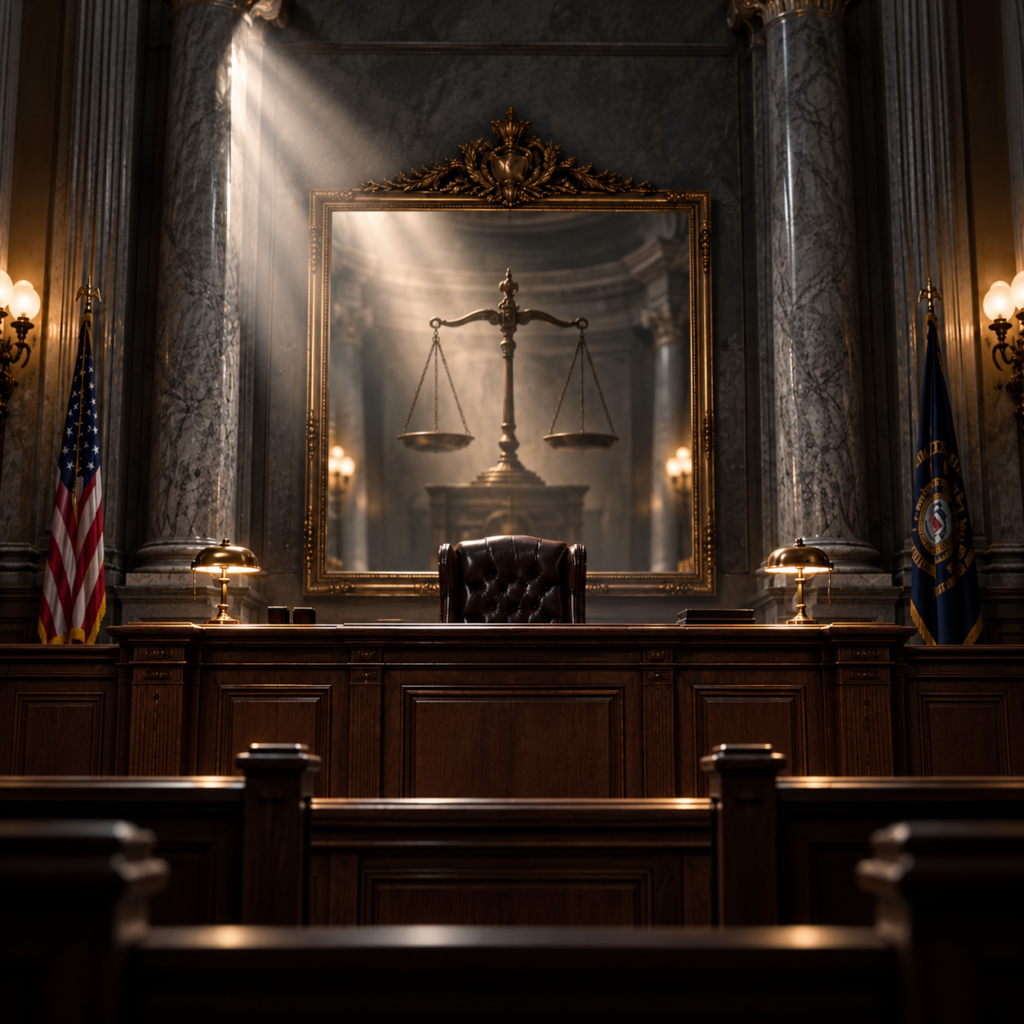
Judging the Judges
FEATURED
October 2, 2026
Judging the Judges
By: Lauren Scribner
Judges are in the business of holding people accountable for crimes and misconduct—but how do we hold judges accountable for their own ethical lapses? Recently, in a moment of frustration, Florida Second Circuit Judge J. Layne Smith told three attorneys practicing in his courtroom that he “would like to tell the deputy to pull his gun and shoot all three of [them] as far as [his] level of frustration right now.”[1] Yes—you read that correctly. A presiding judge vocalized his thought to have attorneys practicing in his courtroom shot by courtroom security. What should the consequence be for using such threatening language? A mere public reprimand and recusal from that case?[2] Or, should there be some sort of tangible punishment?…
Dismissive of Dismissal
September 25, 2026
Dismissive of Dismissal
By: James Trusty
During the two Trump administrations, a trend has begun to emerge of federal judges challenging the once-unrestricted authority of the Department of Justice (DOJ) to dismiss indictments. The longstanding framework of separation of powers suggests this judicial pushback is unsupported activism, but the judges claim the Federal Rules of Criminal Procedure (“Rules”) do not relegate their role to rubber stamping. Ultimately, this trajectory may lead…
In the age of AI, litigators must read between the lines—literally.
August 18, 2026
In the age of AI, litigators must read between the lines—literally.
By: Robert Ward
In the age of AI, litigators must read between the lines—literally. Any attorney who has litigated a case against a party proceeding pro se is familiar with the common refrain that courts liberally construe pro se filings.[1] This leniency was not enough for one Connecticut litigant. In a scheme that gives new meaning to the phrase “reading between the lines,” pro se plaintiff Matthew Elliot…
Officer Misconduct Reform Issues Highlighted in Brooklyn District Attorney’s Dismissal of Nearly 400 Convictions
September 20, 2022
Officer Misconduct Reform Issues Highlighted in Brooklyn District Attorney’s Dismissal of Nearly 400 Convictions
By: Jake Gray
On September 7, 2022, the Brooklyn district attorney’s office announced its request to vacate nearly 400 convictions, dating back to 1999, that were founded on testimony provided by officers who were later found guilty of crimes committed while on duty. Among the 13 officers’ crimes are murder, planting drugs, taking sex bribes, civil liberties violations, and perjury—crimes that called “into question the integrity of every…
More than a Mantra: Pitfalls of Excluding Time under Speedy Trial Analysis
July 1, 2022
More than a Mantra: Pitfalls of Excluding Time under Speedy Trial Analysis
By: James Trusty
This week the Second Circuit Court of Appeals issued a stinging reminder about the need for precision in the case of U.S. v. Pikus, No. 20-3080 (2d Cir. 2022). Aleksander Pikus was one of four defendants charged with money laundering conspiracy and related offenses for bilking Medicare and Medicaid through false billings. The scheme featured unnecessary ambulance rides to a Brooklyn medical clinic apparently run…
Michigan’s High Profile Boomerang
April 21, 2022
Michigan’s High Profile Boomerang
By: James Trusty
About one month before the 2020 election, the Department of Justice proudly announced their disruption of a scheme to kidnap Michigan Governor Gretchen Whitmer. Six men were arrested and referred to as “violent extremists.” Gov. Whitmer’s surrogates indicated that the blame was not fully on the gnarly bearded men whose pictures dominated newscasts around the country, but on Donald Trump, who had whipped up crowds…
Modern Day Ceasar Faces Brutal End
August 23, 2021
Modern Day Ceasar Faces Brutal End
By: James Trusty
Last week’s Second Circuit Court of Appeals opinion in U.S. v. Sinmayah Ceasar, 2021 WL 3640387 (2nd Cir. Aug. 18, 2021) provides some insight into the challenging area of defining a “reasonable” sentence and ascertaining the circumstances when appellate courts might overturn a judge’s sentencing decision for being “unreasonably” lenient. The case against Ceasar was not built in a day. The government obtained evidence that…
Time to Face the (Hidden) Music
August 2, 2021
Time to Face the (Hidden) Music
By: James Trusty
A Texas man named Guy Reffitt has found himself at the edge of the new legal frontier, a place where privacy rights and encrypted technology face aggressive prosecutors willing to push for their strongest criminal case. This Guy did not bring a lot of sympathy to the legal battle—he is alleged to have traveled from Wylie, Texas to the Capitol on January 6, 2021, with…