Insights < BACK TO ALL INSIGHTS

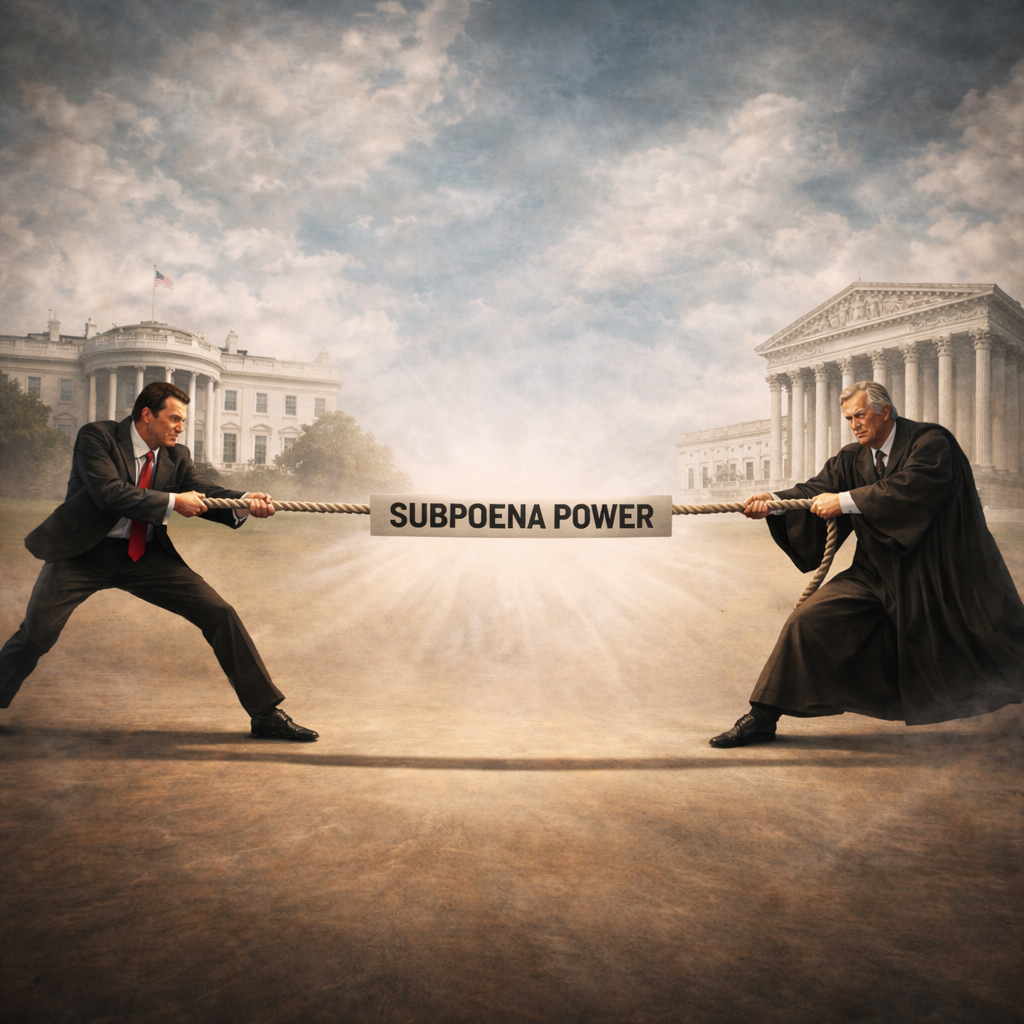
Overrun and Overreach: the New Challenge to Grand Jury Subpoenas
FEATURED
March 26, 2026
Overrun and Overreach: the New Challenge to Grand Jury Subpoenas
By: James Trusty
Most criminal law practitioners are quite familiar with clients receiving grand jury subpoenas. There are rituals we go through to figure out whether it’s a “friendly” subpoena, i.e. just trying to get business records from the client to be used against some other target, or whether it’s the visible start of a potential criminal prosecution against the client. Because the legal standard to justify issuing a subpoena is so low, an outright fight against the prosecutor issuing the subpoena is extremely uphill. A motion to quash is only granted “if compliance would be unreasonable or oppressive.”[1]Until a couple of weeks ago, that framework usually translated into successful challenges only when the subpoena’s request was so broad in terms of substance…
Through the Looking Glasses: Will the Public Accept Meta Ray-Bans?
March 17, 2026
Through the Looking Glasses: Will the Public Accept Meta Ray-Bans?
By: Nicole Kardell
What do a plastic grocery sack and a pair of Meta Ray-Bans have in common? The harm they can do to others who are powerless to their use. A grocer may pack a shopper’s groceries in a disposable plastic bag, and the shopper may be fine with the packing – the bag is cheap for both. But the environment ends up paying a hefty toll…
The New Corporate Enforcement Blueprint: DOJ’s “First-Ever” Department-Wide Corporate Enforcement Policy
March 16, 2026
The New Corporate Enforcement Blueprint: DOJ’s “First-Ever” Department-Wide Corporate Enforcement Policy
By: Robert Ward
Understanding the DOJ’s New Corporate Enforcement Framework On March 10, 2026, just weeks after the U.S. Attorney’s Office for the Southern District of New York (SDNY) released its updated voluntary corporate self-disclosure program for fraud and financial misconduct, the Department of Justice introduced its first Department‑wide Corporate Enforcement Policy (CEP). The CEP establishes a uniform approach for evaluating voluntary disclosures and cooperation across all DOJ…
The Bitcoin Bubble Hasn’t Burst Yet, But The First Signs Of Trouble Are Brewing
December 18, 2013
The Bitcoin Bubble Hasn’t Burst Yet, But The First Signs Of Trouble Are Brewing
By: Ifrah Law
By: Karl Smith and Casselle Smith The value of Bitcoin, the hottest and most widely traded virtual currency, plunged a little over a week ago, after China’s central bank issued a statement that the government is banning financial institutions from trading in the virtual currency.The price of a single Bitcoinfell from roughly $1200 on December 5th to less than $600, early morning December 8th. Thereafter…
Taking Advantage of a Video Poker Glitch Can Land you in Jail in Nevada
December 11, 2013
Taking Advantage of a Video Poker Glitch Can Land you in Jail in Nevada
By: Ifrah Law
Last month, federal prosecutors in Nevada filed a motion to dismiss an indictment that shined a bright light on overly broad federal criminal statutes and the abuse of prosecutorial discretion in using them. John Kane and Andre Nestor were each charged in an indictment in January 2011 with one count of conspiracy to commit wire fraud and one count of computer fraud in violation of…
Court Dismisses Loss Recovery Case, in Big Win For Fantasy Sports Industry
October 9, 2013
Court Dismisses Loss Recovery Case, in Big Win For Fantasy Sports Industry
By: Ifrah Law
Today, in a closely watched case in Illinois, a federal court dismissed a lawsuit brought under the Illinois Loss Recovery Act (ILRA) against daily fantasy sports site FanDuel, Inc. and daily fantasy sports player Patrick Kaiser, finding that the plaintiff lacked subject matter jurisdiction to bring the suit. This is one of several lawsuits that have been brought in Illinois courts against daily fantasy sports…
Appeals Court: Forced Rectal Search of Suspect Violates Fourth Amendment Law
October 8, 2013
Appeals Court: Forced Rectal Search of Suspect Violates Fourth Amendment Law
By: Ifrah Law
In a recent opinion, the US Court of Appeals for the 6th Circuit addressed whether it was constitutionally reasonable for police to use a doctor – in this case, a doctor “who is known to conduct unconsented intrusive procedures when suspects are presented by the police” – to forcibly recover drugs from a man’s rectum. Judge Julia Smith Gibbons’ dissent notwithstanding, the 6th Circuit found…
Colorado Defense Attorney Charged With Felony – Why?
September 18, 2013
Colorado Defense Attorney Charged With Felony – Why?
By: Nicole Kardell
A recent indictment in a state court in La Plata County, Colorado, has ruffled feathers in the defense bar. The accused was one of our own, criminal defense attorney Brian Schowalter. The charge was based on Schowalter’s refusal to turn over evidence he ostensibly held for a client. The evidence, an original letter, was apparently relevant to a homicide investigation involving the attorney’s client (though…