Insights < BACK TO ALL INSIGHTS

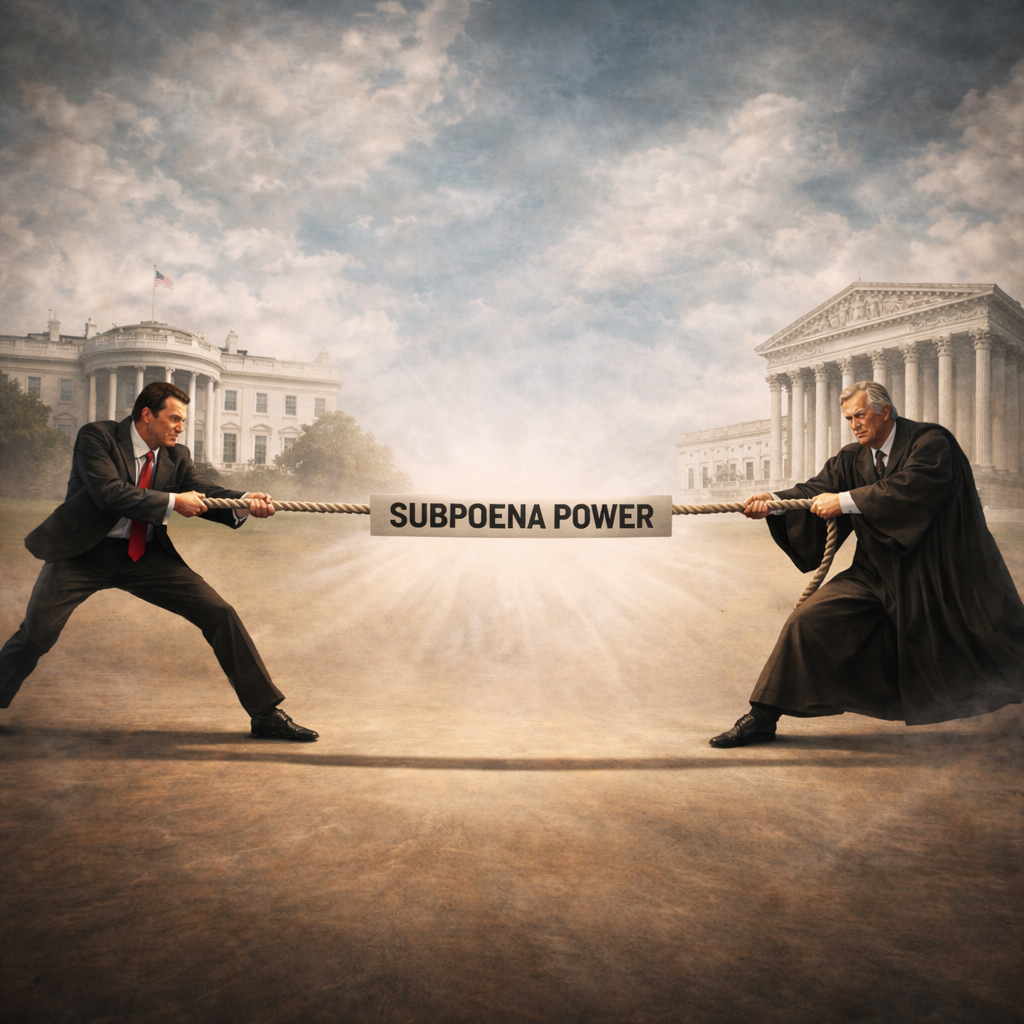
Overrun and Overreach: the New Challenge to Grand Jury Subpoenas
FEATURED
March 26, 2026
Overrun and Overreach: the New Challenge to Grand Jury Subpoenas
By: James Trusty
Most criminal law practitioners are quite familiar with clients receiving grand jury subpoenas. There are rituals we go through to figure out whether it’s a “friendly” subpoena, i.e. just trying to get business records from the client to be used against some other target, or whether it’s the visible start of a potential criminal prosecution against the client. Because the legal standard to justify issuing a subpoena is so low, an outright fight against the prosecutor issuing the subpoena is extremely uphill. A motion to quash is only granted “if compliance would be unreasonable or oppressive.”[1]Until a couple of weeks ago, that framework usually translated into successful challenges only when the subpoena’s request was so broad in terms of substance…
Through the Looking Glasses: Will the Public Accept Meta Ray-Bans?
March 17, 2026
Through the Looking Glasses: Will the Public Accept Meta Ray-Bans?
By: Nicole Kardell
What do a plastic grocery sack and a pair of Meta Ray-Bans have in common? The harm they can do to others who are powerless to their use. A grocer may pack a shopper’s groceries in a disposable plastic bag, and the shopper may be fine with the packing – the bag is cheap for both. But the environment ends up paying a hefty toll…
The New Corporate Enforcement Blueprint: DOJ’s “First-Ever” Department-Wide Corporate Enforcement Policy
March 16, 2026
The New Corporate Enforcement Blueprint: DOJ’s “First-Ever” Department-Wide Corporate Enforcement Policy
By: Robert Ward
Understanding the DOJ’s New Corporate Enforcement Framework On March 10, 2026, just weeks after the U.S. Attorney’s Office for the Southern District of New York (SDNY) released its updated voluntary corporate self-disclosure program for fraud and financial misconduct, the Department of Justice introduced its first Department‑wide Corporate Enforcement Policy (CEP). The CEP establishes a uniform approach for evaluating voluntary disclosures and cooperation across all DOJ…
What’s at the Bottom of the ‘Robosigning’ Scandal?
April 9, 2013
What’s at the Bottom of the ‘Robosigning’ Scandal?
By: Nicole Kardell
The problematic practice of robosigning – whereby banks and other lenders improperly foreclosed on properties through formulaically processing foreclosure documents – has been much in the news over the past couple of years. The feds have been investigating banks and individuals; state attorneys general have joined forces in pursuit of robosigners; and, unsurprisingly, there have been a number of class actions filed by consumers whose…
Judge Strikes Down FBI’s Use of ‘National Security Letters’
March 29, 2013
Judge Strikes Down FBI’s Use of ‘National Security Letters’
By: Ifrah Law
In a recent decision, U.S. District Judge Susan Illston of the Northern District of California struck down the FBI’s use of National Security Letters (NSLs) as unconstitutional. Unbeknownst to most Americans, the FBI has been issuing thousands of NSLs every year. The letters demand that recipients, such as banks and telephone companies, provide customers’ information such as their transactional records, phone numbers dialed, and email…
Court: Data on Unsecured Network May Qualify for 4th Amendment Protection
March 11, 2013
Court: Data on Unsecured Network May Qualify for 4th Amendment Protection
By: Ifrah Law
The vast increase in the use of wireless data networks has led to new legal issues regarding network users’ right to privacy. A recent opinion issued by the U.S. District Court for the District of Oregon indicates that, under some circumstances, individuals on an unsecured wireless network have a reasonable expectation of privacy entitling them to Fourth Amendment protection. As a result, police officers must…
Was This Identity Theft? Sixth Circuit Should Limit Meaning of That Term
March 5, 2013
Was This Identity Theft? Sixth Circuit Should Limit Meaning of That Term
By: Nicole Kardell
What’s in a name? When you think of identity theft, you typically think of someone taking a person’s name plus some other identifiers, like their address and Social Security number or credit card number, to go on a spending spree or drain the victim’s bank account. You may think of fraudulent impersonation. But what if someone falsely stated that another person gave him permission to…
Va. Court Declines to Decide Status of Poker Under State’s Gambling Law
March 4, 2013
Va. Court Declines to Decide Status of Poker Under State’s Gambling Law
By: Ifrah Law
On February 28, 2013, the Virginia Supreme Court issued an opinion in which it declined to address the legality of playing poker in the state but left open the possibility for the issue to be decided in a future case. The full opinion in the case, Daniels v. Mobley, is available here. Charles Daniels, a former poker hall operator who operated charitable bingo halls in…