Insights < BACK TO ALL INSIGHTS

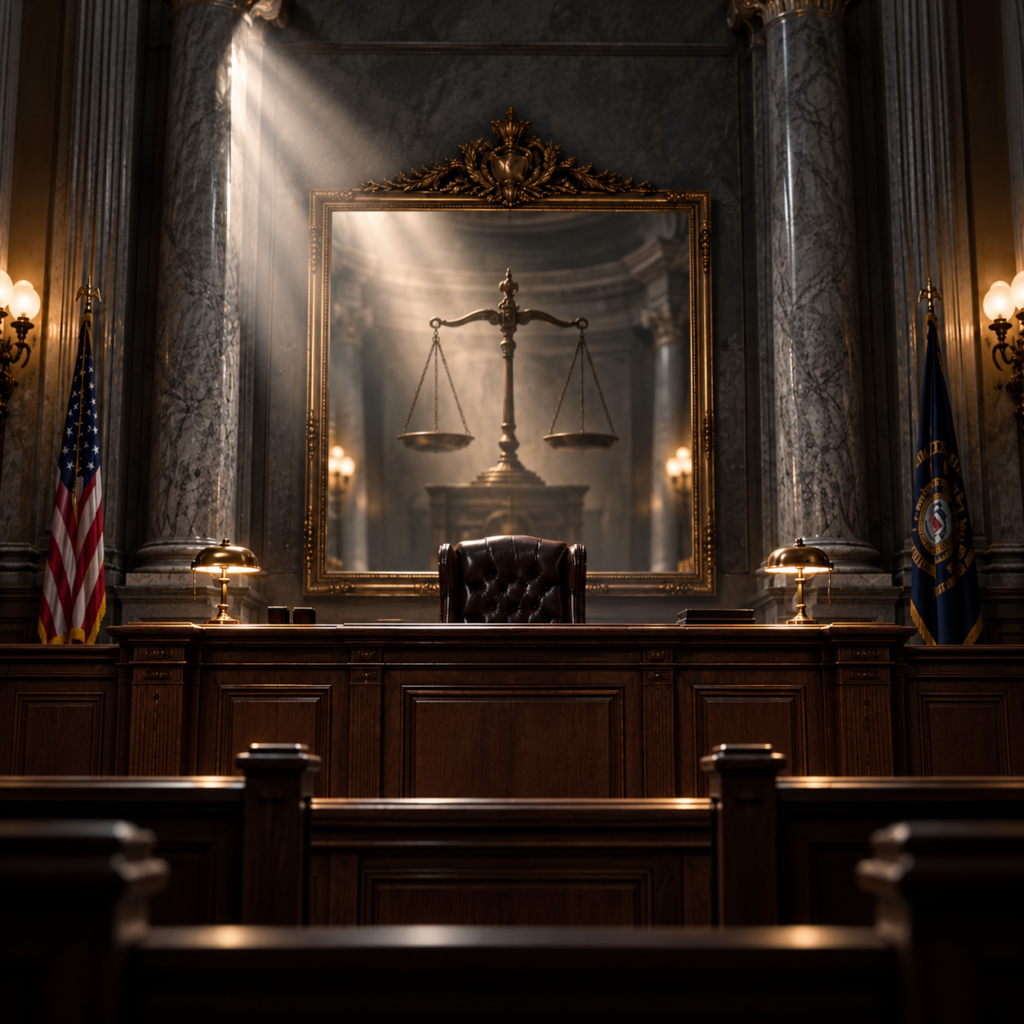
Judging the Judges
FEATURED
October 2, 2026
Judging the Judges
By: Lauren Scribner
Judges are in the business of holding people accountable for crimes and misconduct—but how do we hold judges accountable for their own ethical lapses? Recently, in a moment of frustration, Florida Second Circuit Judge J. Layne Smith told three attorneys practicing in his courtroom that he “would like to tell the deputy to pull his gun and shoot all three of [them] as far as [his] level of frustration right now.”[1] Yes—you read that correctly. A presiding judge vocalized his thought to have attorneys practicing in his courtroom shot by courtroom security. What should the consequence be for using such threatening language? A mere public reprimand and recusal from that case?[2] Or, should there be some sort of tangible punishment?…
Dismissive of Dismissal
September 25, 2026
Dismissive of Dismissal
By: James Trusty
During the two Trump administrations, a trend has begun to emerge of federal judges challenging the once-unrestricted authority of the Department of Justice (DOJ) to dismiss indictments. The longstanding framework of separation of powers suggests this judicial pushback is unsupported activism, but the judges claim the Federal Rules of Criminal Procedure (“Rules”) do not relegate their role to rubber stamping. Ultimately, this trajectory may lead…
In the age of AI, litigators must read between the lines—literally.
August 18, 2026
In the age of AI, litigators must read between the lines—literally.
By: Robert Ward
In the age of AI, litigators must read between the lines—literally. Any attorney who has litigated a case against a party proceeding pro se is familiar with the common refrain that courts liberally construe pro se filings.[1] This leniency was not enough for one Connecticut litigant. In a scheme that gives new meaning to the phrase “reading between the lines,” pro se plaintiff Matthew Elliot…
Abbott’s $1.6 Billion Pharmacy Law Settlement Stands as Cautionary Tale to Pharma Companies
May 29, 2012
Abbott’s $1.6 Billion Pharmacy Law Settlement Stands as Cautionary Tale to Pharma Companies
By: Ifrah Law
A recent settlement by global pharmaceutical giant Abbott Laboratories over its promotion of the drug Depakote shows that federal regulators remain prepared to pursue drug manufacturers for promoting unapproved uses of their products. Abbott has agreed to pay federal and state governments a total of $1.6 billion in criminal and civil fines and to plead guilty to a criminal misdemeanor violation of the Food and…
Worst Part of Wal-Mart Bribery Case Is Failure to Conduct Proper Investigation
April 24, 2012
Worst Part of Wal-Mart Bribery Case Is Failure to Conduct Proper Investigation
By: Jeff Ifrah
Over the weekend, The New York Times broke a major story, publishing a highly detailed 8,000-word article that seems to indicate that Wal-Mart not only engaged in a pattern of bribery of Mexican government officials in the mid-2000s but also that the company intentionally stifled an internal investigation of the alleged bribery and in fact directed most of its furor against the former employee who…
Suspect Extradited From Estonia to Face Massive Internet Fraud Charges
April 23, 2012
Suspect Extradited From Estonia to Face Massive Internet Fraud Charges
By: Ifrah Law
One of the features of crimes committed over the Internet is that they may be committed from anywhere in the world where a defendant has access a computer. A current case in New York shows that extradition likewise can reach around the globe. On April 19, 2012, Anton Ivanov was extradited from Estonia to face charges of conspiracy to commit wire fraud and computer intrusion,…
$25 Billion Mortgage Fraud Settlement Marks Turning Point for Industry
April 16, 2012
$25 Billion Mortgage Fraud Settlement Marks Turning Point for Industry
By: Ifrah Law
On April 4, the $25 billion national mortgage servicing settlement, which was announced in February, was finalized by a judge in the U.S. District Court for the District of Columbia. The settlement with the nation’s five largest mortgage servicers — Bank of America Corporation, JPMorgan Chase & Co., Wells Fargo & Company, Citigroup Inc., and Ally Financial Inc. (formerly GMAC) — was negotiated by 49…
Second Circuit YouTube Ruling Will Have Major Impact for Online-Piracy Debate
April 10, 2012
Second Circuit YouTube Ruling Will Have Major Impact for Online-Piracy Debate
By: Nicole Kardell
What had been touted as a great victory for Google in particular and for “Internet freedom” in general was just dealt a major blow when the U.S. Court of Appeals for the Second Circuit Court of Appeals overturned a lower court decision in Viacom’s lawsuit against Google and Google-owned YouTube. Viacom, along with the English Premier League and various film studios and television networks, sued…