Insights < BACK TO ALL INSIGHTS

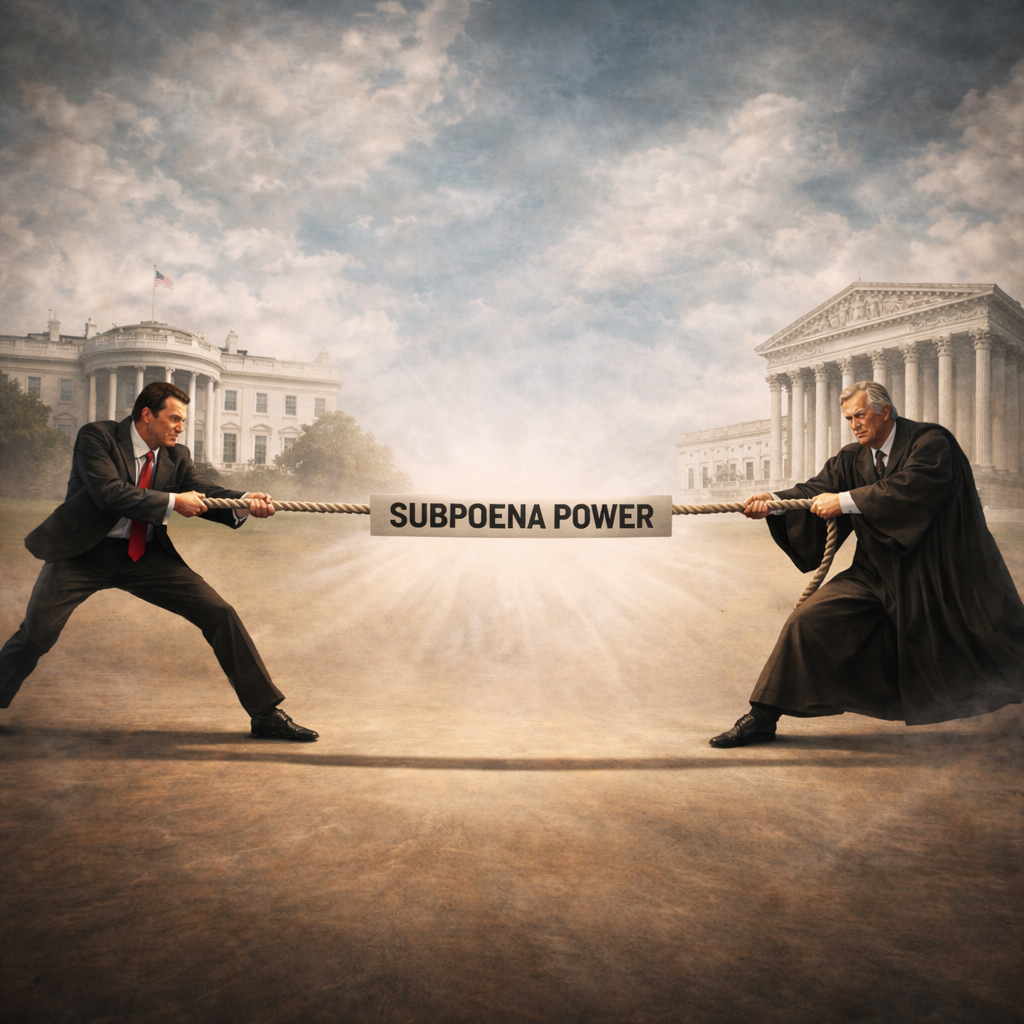
Overrun and Overreach: the New Challenge to Grand Jury Subpoenas
FEATURED
March 26, 2026
Overrun and Overreach: the New Challenge to Grand Jury Subpoenas
By: James Trusty
Most criminal law practitioners are quite familiar with clients receiving grand jury subpoenas. There are rituals we go through to figure out whether it’s a “friendly” subpoena, i.e. just trying to get business records from the client to be used against some other target, or whether it’s the visible start of a potential criminal prosecution against the client. Because the legal standard to justify issuing a subpoena is so low, an outright fight against the prosecutor issuing the subpoena is extremely uphill. A motion to quash is only granted “if compliance would be unreasonable or oppressive.”[1]Until a couple of weeks ago, that framework usually translated into successful challenges only when the subpoena’s request was so broad in terms of substance…
Through the Looking Glasses: Will the Public Accept Meta Ray-Bans?
March 17, 2026
Through the Looking Glasses: Will the Public Accept Meta Ray-Bans?
By: Nicole Kardell
What do a plastic grocery sack and a pair of Meta Ray-Bans have in common? The harm they can do to others who are powerless to their use. A grocer may pack a shopper’s groceries in a disposable plastic bag, and the shopper may be fine with the packing – the bag is cheap for both. But the environment ends up paying a hefty toll…
The New Corporate Enforcement Blueprint: DOJ’s “First-Ever” Department-Wide Corporate Enforcement Policy
March 16, 2026
The New Corporate Enforcement Blueprint: DOJ’s “First-Ever” Department-Wide Corporate Enforcement Policy
By: Robert Ward
Understanding the DOJ’s New Corporate Enforcement Framework On March 10, 2026, just weeks after the U.S. Attorney’s Office for the Southern District of New York (SDNY) released its updated voluntary corporate self-disclosure program for fraud and financial misconduct, the Department of Justice introduced its first Department‑wide Corporate Enforcement Policy (CEP). The CEP establishes a uniform approach for evaluating voluntary disclosures and cooperation across all DOJ…
More Big Pharma Companies Cough Up Big Dollars in DOJ Settlements
November 30, 2011
More Big Pharma Companies Cough Up Big Dollars in DOJ Settlements
By: Ifrah Law
The parade of major drug companies coughing up nine-digit or ten-digit dollar amounts in settlements with the U.S. government is continuing. GlaxoSmithKline recently broke a record by agreeing to pay the federal government $3 billion to settle an illegal pharmaceutical marketing case. This surpasses the previous record of $2.3 billion paid by Pfizer in 2009 over the marketing of its Bextra painkiller and other drugs….
Convicted of Fraud but Changed Their Lives; Appeals Court Takes Note
November 29, 2011
Convicted of Fraud but Changed Their Lives; Appeals Court Takes Note
By: Ifrah Law
The U.S. Court of Appeals for the 7th Circuit recently issued a notable decision in the case of United States v. Robertson, vacating and remanding the sentences of two defendants convicted of a mortgage fraud scheme because the sentencing judge failed to consider unusually strong evidence of self-motivated rehabilitation. In the late 1990’s, Henry and Elizabeth Robertson were involved in a mortgage fraud scheme through…
In Appeal of Construction Fraud Case, DOJ Seeks Tougher Sentences
November 17, 2011
In Appeal of Construction Fraud Case, DOJ Seeks Tougher Sentences
By: Ifrah Law
In a very rare case in which the government argued that it viewed criminal sentences as too lenient, the U.S. Department of Justice contended in an appeal to the U.S. Court of Appeals for the 1st Circuit on Nov. 7, 2011, that the sentences handed out to two government contractors convicted of fraud did not accurately reflect the seriousness of their crimes. Robert Prosperi, the…
Options for Suing the Federal Government Under Bivens Unlikely to Expand
November 7, 2011
Options for Suing the Federal Government Under Bivens Unlikely to Expand
By: Ifrah Law
In 2001, federal inmate Richard Lee Pollard sustained two broken elbows after tripping over a cart in a privately operated prison housing federal inmates. He sued five prison employees for their actions after his injuries. On Nov. 1, 2011, the Supreme Court held oral argument in Minneci v. Pollard and considered the possibility of creating a new federal remedy against private employees who work for…
House Panel Hears Arguments in Favor of Legal Online Poker
October 27, 2011
House Panel Hears Arguments in Favor of Legal Online Poker
By: Ifrah Law
On Oct. 25, 2011, the possibility of legal online poker in the United States was aired before the House Energy and Commerce Committee subcommittee on Commerce, Manufacturing, and Trade at a hearing entitled “Internet Gaming: Is There a Safe Bet?” The hearing was convened to discuss the “Internet Gambling, Prohibition, Poker Consumer Protection, and Strengthening UIGEA Act of 2011,” introduced in June by Rep. Joe…