Insights < BACK TO ALL INSIGHTS

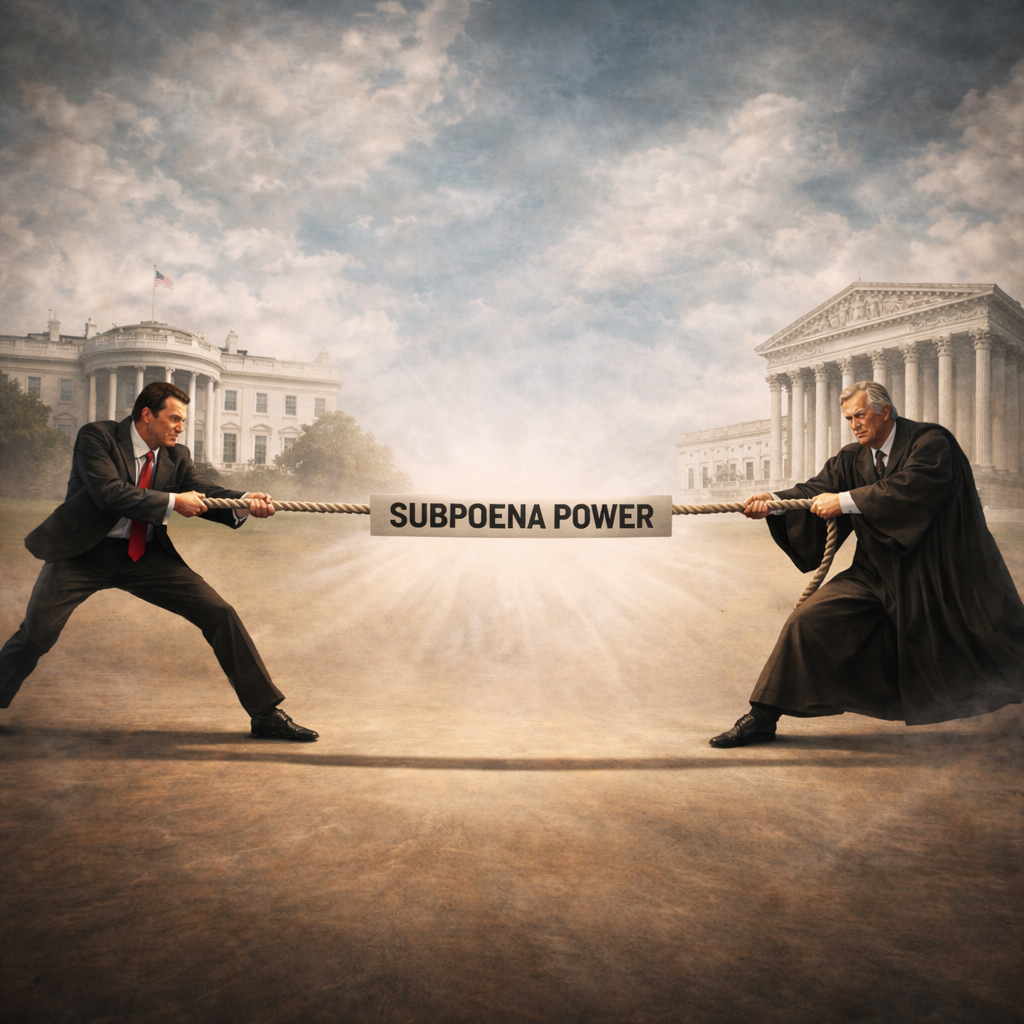
Overrun and Overreach: the New Challenge to Grand Jury Subpoenas
FEATURED
March 26, 2026
Overrun and Overreach: the New Challenge to Grand Jury Subpoenas
By: James Trusty
Most criminal law practitioners are quite familiar with clients receiving grand jury subpoenas. There are rituals we go through to figure out whether it’s a “friendly” subpoena, i.e. just trying to get business records from the client to be used against some other target, or whether it’s the visible start of a potential criminal prosecution against the client. Because the legal standard to justify issuing a subpoena is so low, an outright fight against the prosecutor issuing the subpoena is extremely uphill. A motion to quash is only granted “if compliance would be unreasonable or oppressive.”[1]Until a couple of weeks ago, that framework usually translated into successful challenges only when the subpoena’s request was so broad in terms of substance…
Through the Looking Glasses: Will the Public Accept Meta Ray-Bans?
March 17, 2026
Through the Looking Glasses: Will the Public Accept Meta Ray-Bans?
By: Nicole Kardell
What do a plastic grocery sack and a pair of Meta Ray-Bans have in common? The harm they can do to others who are powerless to their use. A grocer may pack a shopper’s groceries in a disposable plastic bag, and the shopper may be fine with the packing – the bag is cheap for both. But the environment ends up paying a hefty toll…
The New Corporate Enforcement Blueprint: DOJ’s “First-Ever” Department-Wide Corporate Enforcement Policy
March 16, 2026
The New Corporate Enforcement Blueprint: DOJ’s “First-Ever” Department-Wide Corporate Enforcement Policy
By: Robert Ward
Understanding the DOJ’s New Corporate Enforcement Framework On March 10, 2026, just weeks after the U.S. Attorney’s Office for the Southern District of New York (SDNY) released its updated voluntary corporate self-disclosure program for fraud and financial misconduct, the Department of Justice introduced its first Department‑wide Corporate Enforcement Policy (CEP). The CEP establishes a uniform approach for evaluating voluntary disclosures and cooperation across all DOJ…
Amicus Briefs Urge Reduction in Rubashkin Fraud Sentence
January 25, 2011
Amicus Briefs Urge Reduction in Rubashkin Fraud Sentence
By: Ifrah Law
We first posted about Sholom Rubashkin—the former plant manager at the now-defunct Agriprocessors, Inc. — back in May 2010, when Rubashkin was awaiting sentence for more than 80 counts of fraud in connection with his operation of the kosher slaughterhouse. Since then, Chief U.S. District Judge Linda Reade of the Northern District of Iowa sentenced Rubashkin to 27 years in prison, an action that sparked…
California Court OKs Warrantless Search of Cell Phone
January 19, 2011
California Court OKs Warrantless Search of Cell Phone
By: Ifrah Law
The text messages in a defendant’s cell phone are in no way different, for the purposes of a police search after an arrest, from the defendant’s clothing or a cigarette package. That was the holding of the California Supreme Court on January 3, 2011, in People v. Diaz, a case in which the state’s highest court approved the police’s warrantless search of the text message…
Why Is an Assault on Congress Member a Federal Crime?
January 12, 2011
Why Is an Assault on Congress Member a Federal Crime?
By: Ifrah Law
The charges against Jared Loughner for shooting Representative Gabrielle Giffords put into sharp focus a little-known federal statute, 18 U.S.C. 351. This law provides for a death penalty for killing a member of Congress, a presidential or vice presidential candidate, or a Supreme Court justice, as well as imprisonment up to life for attempting to kill such a person. Loughner is charged under this statute…
A Tragic Result of the Stevens Case
January 3, 2011
A Tragic Result of the Stevens Case
By: Ifrah Law
We have discussed the fallout from the Ted Stevens prosecution several times in this blog. See this post, this post, and this post. The Jan. 3, 2011, issue of the New Yorker magazine has a fascinating article about another, very sad result of that case – the September 26, 2010, suicide of Nicholas Marsh, a Department of Justice attorney who was part of the prosecution…
Judges Push Back Against Prosecutorial Abuses
December 23, 2010
Judges Push Back Against Prosecutorial Abuses
By: Ifrah Law
Prosecutorial overreaching is still occurring in courts across the nation, but judges are beginning to push back. In the Ted Stevens case, the former senator was prosecuted on charges that he failed to properly report gifts from a lobbyist—only for the government to later drop all charges against him, saying that his jury conviction should be dismissed because government prosecutors and investigators improperly withheld evidence…