Insights < BACK TO ALL INSIGHTS

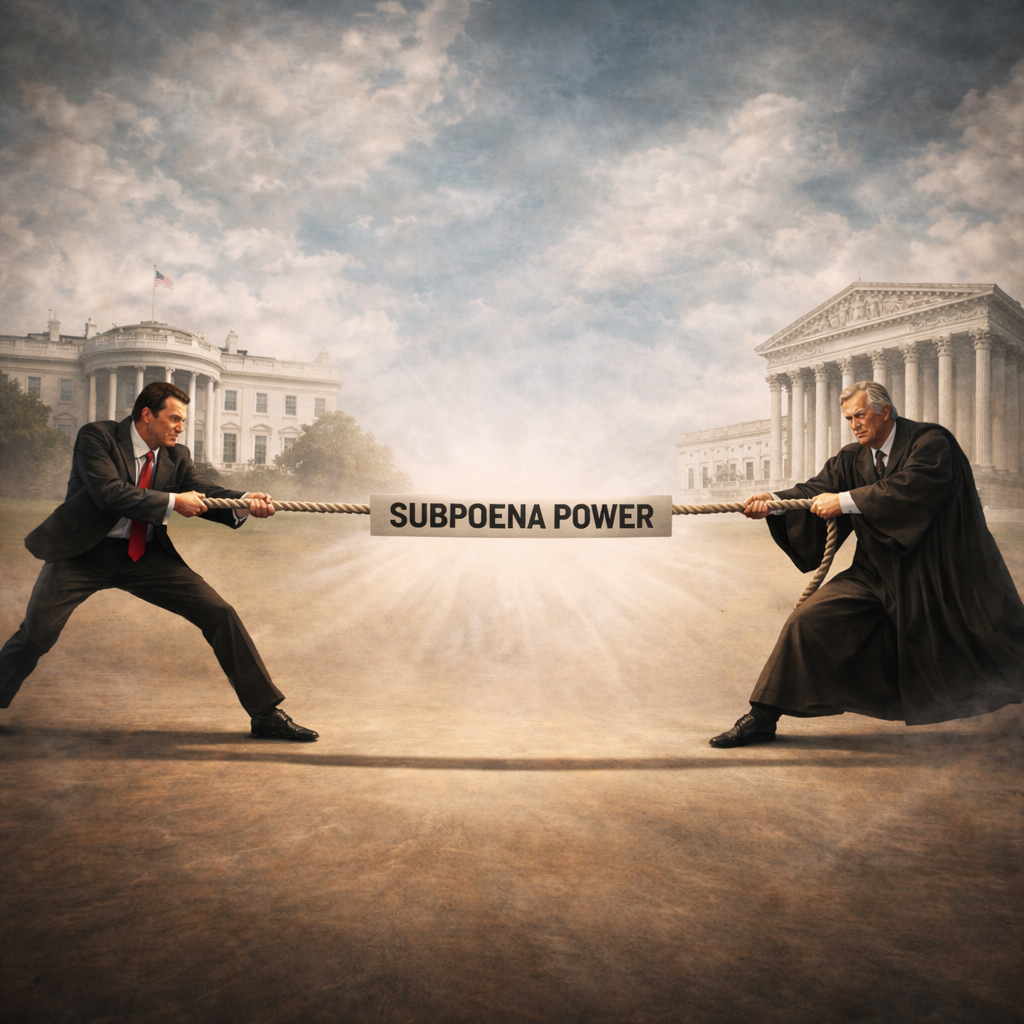
Overrun and Overreach: the New Challenge to Grand Jury Subpoenas
FEATURED
March 26, 2026
Overrun and Overreach: the New Challenge to Grand Jury Subpoenas
By: James Trusty
Most criminal law practitioners are quite familiar with clients receiving grand jury subpoenas. There are rituals we go through to figure out whether it’s a “friendly” subpoena, i.e. just trying to get business records from the client to be used against some other target, or whether it’s the visible start of a potential criminal prosecution against the client. Because the legal standard to justify issuing a subpoena is so low, an outright fight against the prosecutor issuing the subpoena is extremely uphill. A motion to quash is only granted “if compliance would be unreasonable or oppressive.”[1]Until a couple of weeks ago, that framework usually translated into successful challenges only when the subpoena’s request was so broad in terms of substance…
Through the Looking Glasses: Will the Public Accept Meta Ray-Bans?
March 17, 2026
Through the Looking Glasses: Will the Public Accept Meta Ray-Bans?
By: Nicole Kardell
What do a plastic grocery sack and a pair of Meta Ray-Bans have in common? The harm they can do to others who are powerless to their use. A grocer may pack a shopper’s groceries in a disposable plastic bag, and the shopper may be fine with the packing – the bag is cheap for both. But the environment ends up paying a hefty toll…
The New Corporate Enforcement Blueprint: DOJ’s “First-Ever” Department-Wide Corporate Enforcement Policy
March 16, 2026
The New Corporate Enforcement Blueprint: DOJ’s “First-Ever” Department-Wide Corporate Enforcement Policy
By: Robert Ward
Understanding the DOJ’s New Corporate Enforcement Framework On March 10, 2026, just weeks after the U.S. Attorney’s Office for the Southern District of New York (SDNY) released its updated voluntary corporate self-disclosure program for fraud and financial misconduct, the Department of Justice introduced its first Department‑wide Corporate Enforcement Policy (CEP). The CEP establishes a uniform approach for evaluating voluntary disclosures and cooperation across all DOJ…
Judge Weighs In on DOJ ‘Side Agreement’ With Bank
June 8, 2010
Judge Weighs In on DOJ ‘Side Agreement’ With Bank
By: Ifrah Law
In a rare occurrence, a so-called deferred prosecution agreement entered into by the U.S. Department of Justice with a target of a criminal investigation has been subject to scrutiny by a federal judge, and the result wasn’t favorable to the government. In fact, a judicial ruling in the case of a fired Miami bank executive appears to be a signal from the bench to the…
Is Google Ready to Protect Our Legal Rights?
June 7, 2010
Is Google Ready to Protect Our Legal Rights?
By: Ifrah Law
Is the government reading your e-mail messages? A routine law enforcement technique of using subpoenas instead of search warrants to obtain e-mail from internet service providers (ISPs) means that literally anyone who uses the Internet risks intrusion from unlawful government surveillance practices. Subpoenas can be issued under a much lower standard than the probable cause standard used for search warrants. They require only a reasonable…
Heritage, NACDL Session Weighs In on Criminal Intent
June 3, 2010
Heritage, NACDL Session Weighs In on Criminal Intent
By: Ifrah Law
An unusual coalition of the conservative Heritage Foundation and the National Association of Criminal Defense Lawyers (NACDL) recently issued a study entitled “Without Intent: How Congress Is Eroding the Criminal Intent Requirement in Federal Law.” See this blog’s discussion at Crime in the Suites: Has Congress Eroded the Intent Requirement in Criminal Law? and the discussions on the Letter of Apology and the Sentencing Law and…
Is Virginia Real?
May 26, 2010
Is Virginia Real?
By: Ifrah Law
U.S. Attorney Neil MacBride of the Eastern District of Virginia has been in the news of late. Last week, he announced plans to pursue prosecutions of high-profile securities-fraud cases in his district. For years, securities-fraud cases have been, with rare exception, primarily handled by the Southern District of New York. MacBride takes comfort in a December 2007 Fourth Circuit case that held that the Eastern…
Is Craigslist Eligible for Immunity?
May 22, 2010
Is Craigslist Eligible for Immunity?
By: Ifrah Law
Connecticut Attorney General Richard Blumenthal and a coalition of 39 attorneys general have long accused Craigslist of furthering prostitution and human trafficking. Blumenthal’s May 3, 2010, subpoena to Craigslist has reignited the debate over the online bulletin board’s responsibility for prostitution ads posted on its site. Craigslist is clearly fighting back. Its CEO, James Buckmaster, recently wrote on the official Craigslist blog, “As AG Blumenthal…