Insights < BACK TO ALL INSIGHTS

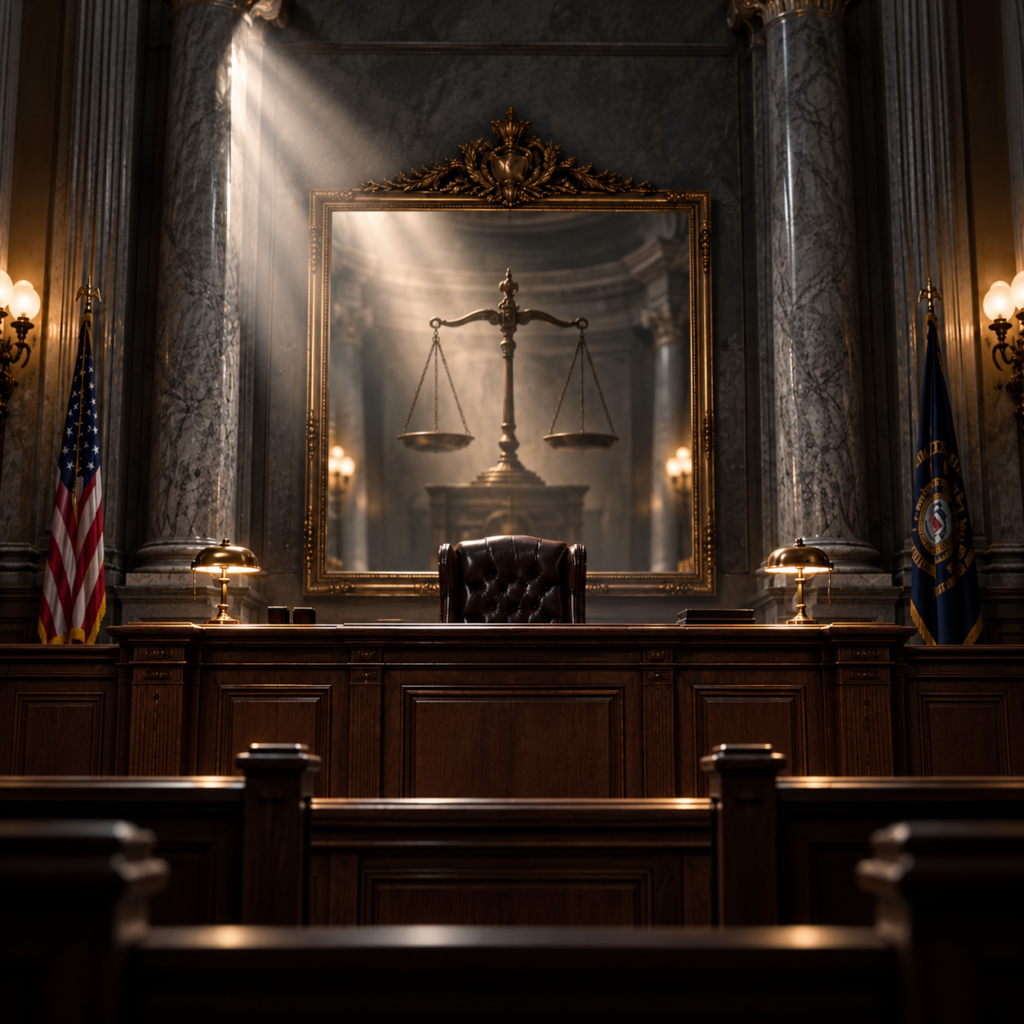
Judging the Judges
FEATURED
October 2, 2026
Judging the Judges
By: Lauren Scribner
Judges are in the business of holding people accountable for crimes and misconduct—but how do we hold judges accountable for their own ethical lapses? Recently, in a moment of frustration, Florida Second Circuit Judge J. Layne Smith told three attorneys practicing in his courtroom that he “would like to tell the deputy to pull his gun and shoot all three of [them] as far as [his] level of frustration right now.”[1] Yes—you read that correctly. A presiding judge vocalized his thought to have attorneys practicing in his courtroom shot by courtroom security. What should the consequence be for using such threatening language? A mere public reprimand and recusal from that case?[2] Or, should there be some sort of tangible punishment?…
Dismissive of Dismissal
September 25, 2026
Dismissive of Dismissal
By: James Trusty
During the two Trump administrations, a trend has begun to emerge of federal judges challenging the once-unrestricted authority of the Department of Justice (DOJ) to dismiss indictments. The longstanding framework of separation of powers suggests this judicial pushback is unsupported activism, but the judges claim the Federal Rules of Criminal Procedure (“Rules”) do not relegate their role to rubber stamping. Ultimately, this trajectory may lead…
In the age of AI, litigators must read between the lines—literally.
August 18, 2026
In the age of AI, litigators must read between the lines—literally.
By: Robert Ward
In the age of AI, litigators must read between the lines—literally. Any attorney who has litigated a case against a party proceeding pro se is familiar with the common refrain that courts liberally construe pro se filings.[1] This leniency was not enough for one Connecticut litigant. In a scheme that gives new meaning to the phrase “reading between the lines,” pro se plaintiff Matthew Elliot…
National Media Turns to Jim Trusty for Authoritative Opinions on the Country’s Most Important Investigations and Prosecutions
September 24, 2018
National Media Turns to Jim Trusty for Authoritative Opinions on the Country’s Most Important Investigations and Prosecutions
By: Ifrah Law
Ifrah Law partner Jim Trusty has become a staple in the national news lately: he is frequently asked to comment on the many investigations and prosecutions currently going on which involve former and current officials and operatives at the highest levels of government. With over 28 years of experience as a federal prosecutor with the Department of Justice and deep knowledge of white collar criminal…
ICOs Involving Non-Issued Cryptocurrency May Be Prosecuted Under Federal Securities Laws
September 19, 2018
ICOs Involving Non-Issued Cryptocurrency May Be Prosecuted Under Federal Securities Laws
By: Jeffrey Hamlin
This week, a federal district court in New York was the first to decide that federal securities laws may be used to prosecute fraud involving cryptocurrencies. In United States v. Zaslavskiy, Eastern District Judge Raymond Dearie held that the Securities Exchange Act of 1933 (“Exchange Act”) and Securities Act of 1933 (“Securities Act”) are broad enough to cover representations made in connection with virtual currency…
How to Raise Capital Through Registration Exempt ICOs
May 15, 2018
How to Raise Capital Through Registration Exempt ICOs
By: Jeff Ifrah
The SEC has strongly indicated that initial coin offerings (ICOs) will be treated as securities, and thus must comply with various registration and disclosure requirements before being used to raise capital. Companies do have, however, several options for possible exemptions from the regulatory requirements that apply to registered public offerings. This chart outlines potential exemptions to the regulatory requirements for ICOs and the criteria for…
Deputy AG Rod Rosenstein to Make First Supreme Court Appearance in Sentencing Case, Even as Rumors Continue to Swirl of Potential Firing
April 23, 2018
Deputy AG Rod Rosenstein to Make First Supreme Court Appearance in Sentencing Case, Even as Rumors Continue to Swirl of Potential Firing
By: Ifrah Law
Deputy Attorney General Rod Rosenstein will be arguing before the Supreme Court today for the first time in his nearly thirty-year government career even as rumors abound that Donald Trump is talking about firing him to cut off investigations into his administration’s Russia ties. Although the United States is usually represented before the Supreme Court by the Solicitor General, it is not uncommon for…
Congress Passes the Allow States and Victims to Fight Online Sex Trafficking Act of 2017
March 26, 2018
Congress Passes the Allow States and Victims to Fight Online Sex Trafficking Act of 2017
By: Jeffrey Hamlin
As of March 21, 2018, both chambers of Congress have approved H.R. 1865—the Allow States and Victims to Fight Online Sex Trafficking Act of 2017 (FOSTA). In a rare show of bipartisanship, both Houses approved the bill with veto-proof majorities—the House by a vote of 388 to 25 and the Senate by a vote of 97 to 2. But some free-speech advocates, internet-law experts, and…