Insights < BACK TO ALL INSIGHTS

Dismissive of Dismissal
FEATURED
September 25, 2026
Dismissive of Dismissal
By: James Trusty
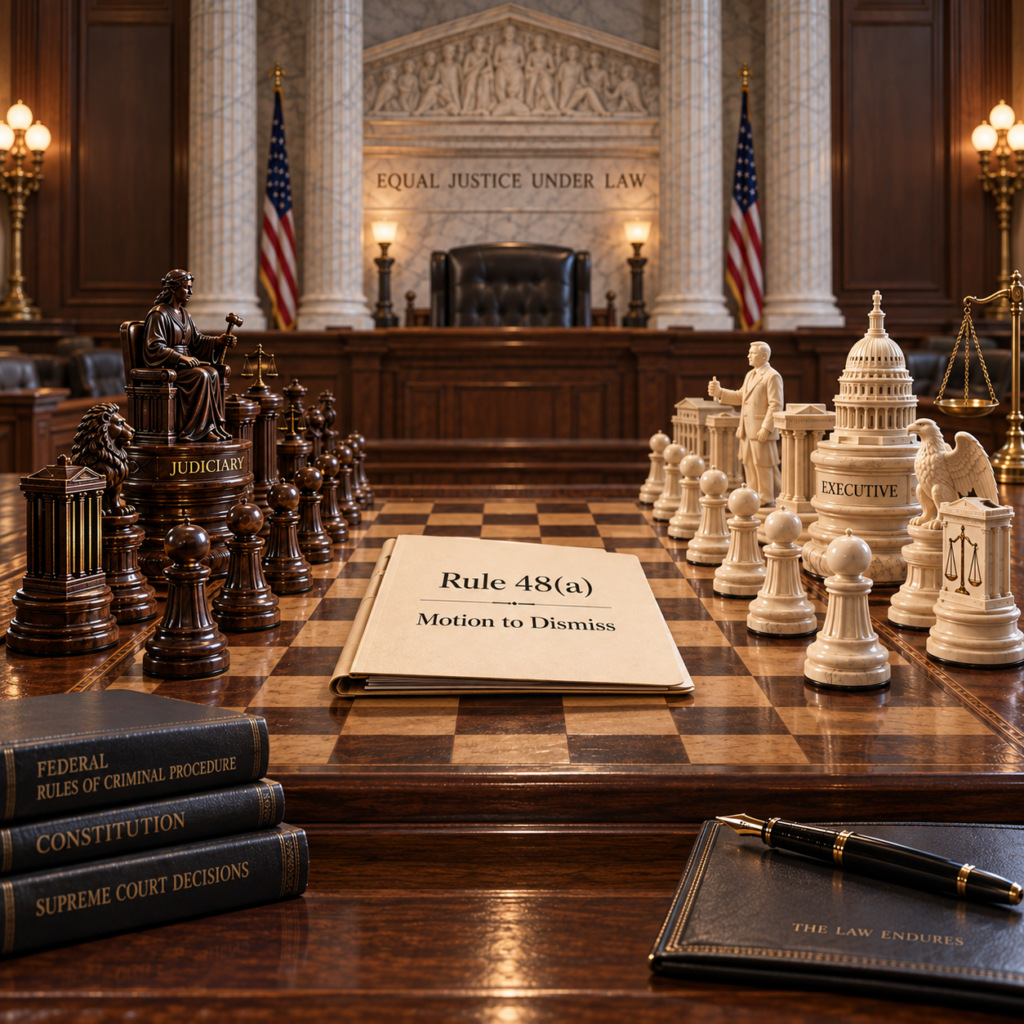
During the two Trump administrations, a trend has begun to emerge of federal judges challenging the once-unrestricted authority of the Department of Justice (DOJ) to dismiss indictments. The longstanding framework of separation of powers suggests this judicial pushback is unsupported activism, but the judges claim the Federal Rules of Criminal Procedure (“Rules”) do not relegate their role to rubber stamping. Ultimately, this trajectory may lead us to an impossible impasse—a game of chicken where reputations, relationships and the balance of power might be forever altered in the context of dismissal. Pursuant to Rule 48(a), “[t]he government may, with leave of court, dismiss an indictment.” Exactly what “leave of court” means in terms of judicial scrutiny is the challenging question. Some…
In the age of AI, litigators must read between the lines—literally.
August 18, 2026
In the age of AI, litigators must read between the lines—literally.
By: Robert Ward
In the age of AI, litigators must read between the lines—literally. Any attorney who has litigated a case against a party proceeding pro se is familiar with the common refrain that courts liberally construe pro se filings.[1] This leniency was not enough for one Connecticut litigant. In a scheme that gives new meaning to the phrase “reading between the lines,” pro se plaintiff Matthew Elliot…
The DOJ Steps Up for Military Families
June 29, 2026
The DOJ Steps Up for Military Families
By: Lauren Scribner
The Servicemembers Civil Relief Act (SCRA), 50 U.S.C. § 4025a, grants military spouses portability of their professional licenses. That means when a military spouse moves with his or her servicemember to the servicemember’s assigned duty station in a new state, the spouse’s professional license essentially moves with them.[1] In order to take advantage of this license portability benefit in the new state, the SCRA requires…
AI Conversations Feel Private. Could They Be Privileged?
June 11, 2025
AI Conversations Feel Private. Could They Be Privileged?
By: Robert Ward
The New York Times’ lawsuit against OpenAI continues to spark debate, and not just about copyright. Most recently, a federal magistrate judge ordered OpenAI to preserve chats that the company might otherwise have deleted at a user’s request. In response, OpenAI CEO Sam Altman suggested that it may be time for a version of the attorney-client or physician-patient privilege, but for AI. While any attempt…
It is Time for a “Second Look” at Legislative Efforts to Combat Mass Incarceration & Recidivism
May 19, 2025
It is Time for a “Second Look” at Legislative Efforts to Combat Mass Incarceration & Recidivism
By: Sara Dalsheim
Government efficiency and spending is a hot topic of controversy in the United States. But even in the context of heated “DOGE” fights, there are proven examples of government efficiency and reduced spending that are clearly working—the passing of measures like the Second Chance and First Step Acts in an effort for mass incarceration and recidivism reduction. The U.S. government spends a total of $80.7…
A Luigi Mangione Death Penalty Trial
April 15, 2025
A Luigi Mangione Death Penalty Trial
By: James Trusty
The Attorney General’s recent announcement that DOJ will seek the death penalty against Luigi Mangione raises a host of interesting legal and philosophical issues, and it almost certainly reflects a dramatic about-face from the Biden administration’s approach towards federal prosecutions for death-eligible offenses. Aside from having personally prosecuted three death penalty trials while I was an Assistant U.S. Attorney in Maryland and when I was…
Trouble in Paradise: White Lotus Character’s Legal Woes Illustrate Civil Forfeiture’s Overreach
April 14, 2025
Trouble in Paradise: White Lotus Character’s Legal Woes Illustrate Civil Forfeiture’s Overreach
By: Abbey Block
Last Sunday, millions of viewers tuned in to watch the season finale of White Lotus – a widely popular show that centers around the week-long vacation of several ultra-wealthy patrons of the fictional “White Lotus” resort in Thailand.[1] The show follows a dynamic cast of quirky characters as they navigate their opulent getaway. One of those characters in this most recent season was Timothy Ratliff…
Amending Arbitration Clauses – No Notice, Big Problem?
April 8, 2025
Amending Arbitration Clauses – No Notice, Big Problem?
By: Robert Ward
Many websites’ terms and conditions allow online service providers to make changes without providing prior notice to users. Often, the terms state that the user agrees to read the terms and conditions, and that continued use of the website constitutes acceptance of any modification. A recent Fourth Circuit decision highlights the potential risk that such unilateral change-in-terms provisions might pose to another common feature of…